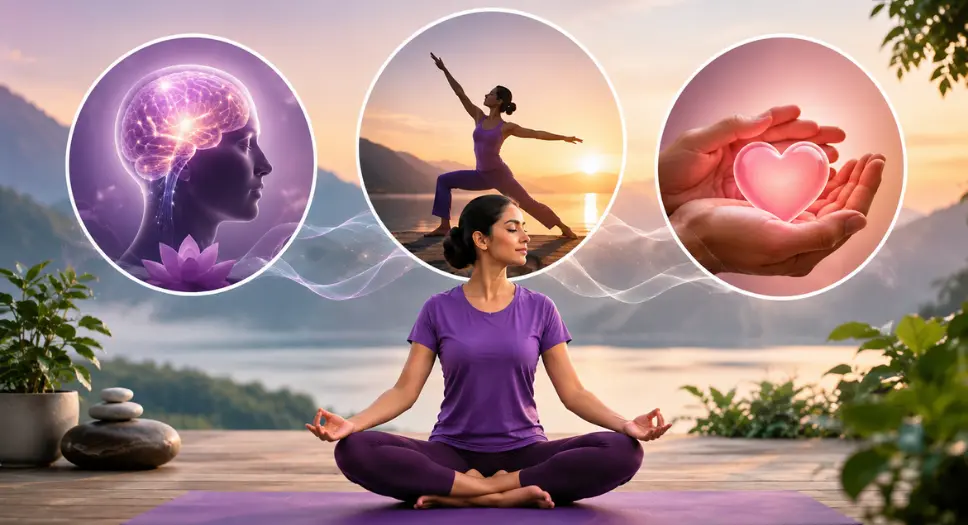
Yoga has been practiced for thousands of years across cultures, and for a long time the Western world kept it at arm’s length. Too spiritual, too slow, too unfamiliar. That’s changed significantly. Today yoga is one of the most widely practiced wellness activities in the world, and the scientific research backing its benefits has grown just as fast as its popularity.
What’s interesting is that the research keeps confirming what long-time practitioners already knew: the benefits of yoga work on multiple levels at once. It’s not just a stretching class. It’s not just a relaxation technique. Done consistently, it changes how your body moves, how your nervous system responds to stress, how well you sleep, and even how your heart functions.
This guide covers all of it. The physical benefits of yoga, the mental benefits of yoga, what it does for yoga for anxiety relief and yoga for heart health specifically, and how yoga meditation ties it all together.
What Is Yoga, Really?
Before getting into benefits, it helps to understand what yoga actually is, because most people have a partial picture.
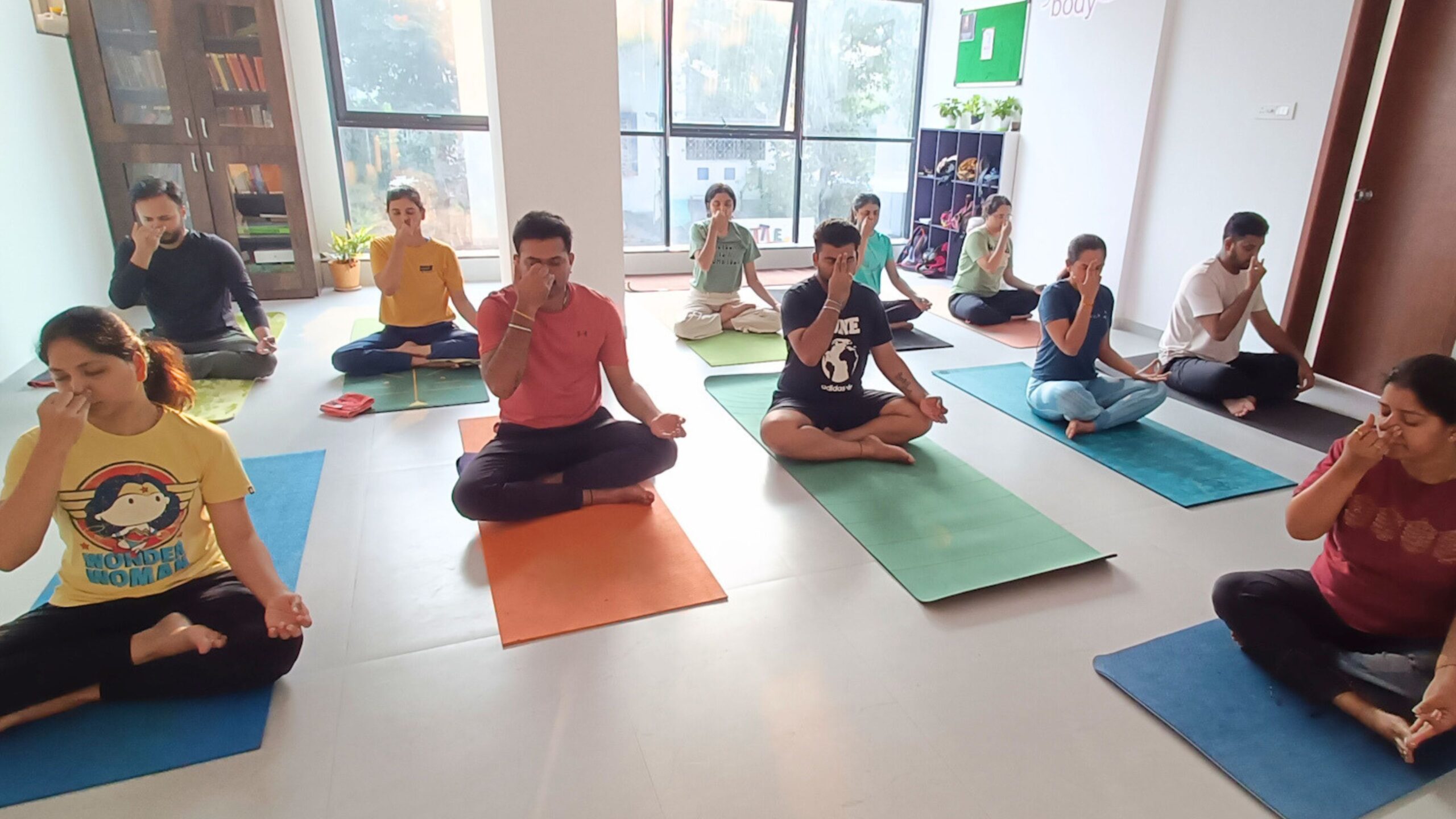
Yoga is a system that combines three core elements:
- Physical postures (asanas): structured movements and held positions that build strength, flexibility, and body awareness
- Breathing techniques (pranayama): deliberate control of the breath that directly regulates the nervous system
- Mental focus and meditation: training attention and awareness in ways that carry into everyday life
What makes yoga different from regular exercise is the integration of all three. You’re not just moving your body. You’re breathing in a specific way while doing it, and paying close attention to how the body feels. That combination is what produces effects that go beyond ordinary physical training.
The Different Styles
Not all yoga is the same, and picking the right style for your goals matters.
- Vinyasa: flowing sequences linked to breath, physically demanding, good for building fitness
- Hatha: slower paced, foundational, good for beginners learning the postures
- Yin: long, passive holds of 3 to 5 minutes, targets deep connective tissue, very calming
- Restorative: fully supported poses held for extended periods, almost purely about releasing tension
- Iyengar: precise alignment focus with props, excellent for injury recovery and learning correct form
- Ashtanga: a set sequence practiced the same way every time, disciplined and physically intense
A 60-minute Vinyasa class and a 60-minute Restorative class are completely different experiences. Knowing which one suits what you need saves a lot of frustration early on.
Physical Benefits of Yoga
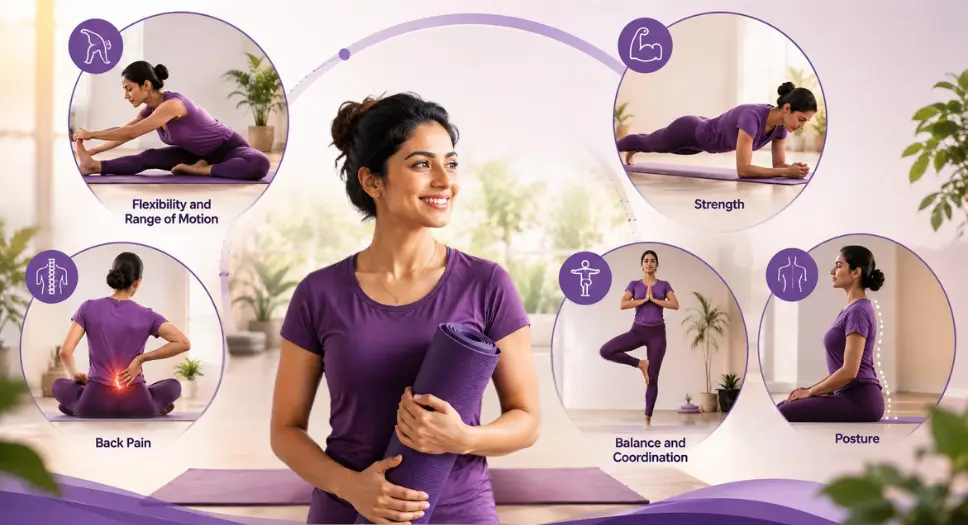
The physical benefits of yoga are often what bring people in, and they’re real, well-documented, and broader than most people expect.
Flexibility and Range of Motion
This is the benefit most people associate with yoga, and it’s real. But the reason it matters goes beyond being able to touch your toes.
Modern life systematically shortens certain muscles. Sitting for hours tightens hip flexors and hamstrings. Hunching over devices rounds the upper back and tightens the chest. Driving shortens the hip rotators. These restrictions accumulate over years and start affecting how you move, how you feel, and how much pain you carry.
Yoga works directly against these patterns. Regular practice restores range of motion in the hips, spine, shoulders, and ankles, not just for aesthetic flexibility, but for functional movement that makes daily life easier and reduces injury risk.
Most people notice meaningful improvement within four to six weeks of consistent practice. Athletes especially notice the difference, as tight muscles are a common source of performance limitations and injuries, and yoga addresses them more effectively than static stretching alone.
Strength
This surprises people who assume yoga is mostly passive. It isn’t.
Poses like Plank, Chaturanga, Warrior III, Crow, and Boat Pose are genuinely challenging. You’re using your own bodyweight as resistance across a wide range of positions and angles, which develops:
- Core strength: nearly every yoga pose engages the deep abdominal and spinal stabilizers
- Functional leg strength: built through Warriors, Chair Pose, and standing balance poses
- Shoulder and arm stability: developed through weight-bearing poses like Downward Dog and arm balances
- Hip and glute activation: critical for lower back health and athletic performance
The strength yoga builds is balanced and functional, not the kind that comes from machine-based isolation exercises. And unlike most strength training, yoga builds strength and flexibility simultaneously, which is a combination most other forms of exercise don’t offer.
Back Pain
Chronic back pain is one of the most common reasons people seek out yoga, and the research supports it as a genuine intervention. Studies have found that consistent yoga practice reduces lower back pain comparably to other first-line treatments like physical therapy.
The reason makes sense. Most chronic back pain has postural roots: weak spinal stabilizers, tight hip flexors, and compressed discs from prolonged sitting. Yoga strengthens the muscles that support the spine while releasing the ones that pull it out of alignment. Over time, that addresses the actual cause rather than just managing the symptoms.
Balance and Coordination
Balance is something most people don’t think about until they start losing it. Yoga’s single-leg poses like Tree, Warrior III, Half Moon, and Eagle engage the deep stabilizing muscles around the ankles, knees, and hips in ways that almost nothing in daily life does.
This trains proprioception, which is the nervous system’s sense of where the body is in space. Better proprioception means better coordination, more confidence in movement, and meaningfully reduced fall risk, especially as you age. Research specifically on yoga and balance in older adults consistently shows positive results, making it one of the most recommended practices for healthy aging.
Posture
Poor posture isn’t just an aesthetic issue. It affects breathing capacity, causes headaches, strains the neck and upper back, and compresses the spine over time.
Yoga addresses postural problems directly by strengthening the muscles that hold the body upright, including the mid-back, glutes, and deep core, while releasing the ones that pull it forward. Many people notice they’re sitting and standing taller after just a few weeks, not because they’re consciously trying to, but because the muscles supporting good posture have gotten stronger.
Mental Benefits of Yoga
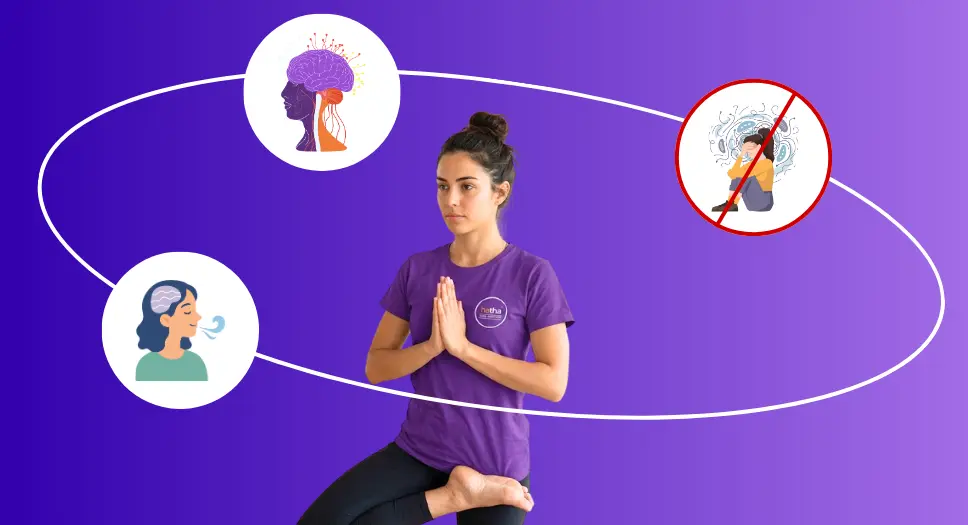
The mental benefits of yoga are arguably its most underrated side. Most people start for physical reasons and stay for what it does to their mind.
Stress Reduction
Stress is a physiological state, not just a feeling. When you’re stressed, your sympathetic nervous system is running the show. Cortisol is elevated, breathing is shallow, heart rate is up, and the body is primed for action. This is useful in short bursts and damaging when it’s chronic.
Yoga activates the parasympathetic nervous system, the “rest and digest” counterpart. The primary mechanism is slow, deliberate breathing. When you extend your exhale and breathe fully, it sends a signal to the brain that the body is safe. In response:
- Cortisol levels drop
- Heart rate slows
- Blood pressure decreases
- Muscle tension releases
- The mind shifts out of rumination
This isn’t subjective. Studies measuring cortisol before and after yoga sessions consistently find significant reductions. People who practice regularly tend to have lower baseline stress markers and recover from stressful events faster than non-practitioners.
Focus and Mental Clarity
Yoga demands presence. When you’re balancing on one leg or moving through a challenging sequence, your nervous system can’t afford to wander. It needs to be fully there. That’s not a side effect of yoga; it’s a core part of what makes it effective.
Over time, this practice of directing and holding attention becomes a skill that generalizes. Regular practitioners report being more focused during work, less prone to distraction, and better at staying present in conversations. Part of this is attention training, and part of it is simply that a less anxious mind is a clearer one.
Emotional Regulation
One of yoga’s underappreciated benefits is what it does to emotional reactivity. The practice involves sitting with physical discomfort without reacting, holding a challenging pose, breathing through it, and noticing the urge to give up without immediately acting on it. That’s a skill with direct emotional applications.
People who practice consistently often describe feeling less reactive in stressful situations, better able to pause before responding, and more emotionally stable overall. The research on yoga and emotional regulation supports this, as it’s associated with reduced emotional reactivity and improved mood stability over time.
Sleep Quality
Poor sleep and chronic stress feed each other in a cycle that’s hard to break. Yoga interrupts that cycle from both ends.
Physically, yoga reduces the muscle tension and physical restlessness that makes it hard to settle. Mentally, it lowers the cortisol and anxious mental activity that causes the mind to race at night. Research consistently shows that regular yoga practice:
- Reduces the time it takes to fall asleep
- Improves sleep depth and quality
- Decreases nighttime waking
- Increases overall sleep satisfaction
Gentle styles practiced in the evening, like Yin, Restorative, or a short Hatha sequence, are particularly effective because they specifically activate the parasympathetic response right before bed.
Yoga for Anxiety Relief
Yoga for anxiety relief is one of the most searched and most evidence-backed applications of the practice. Anxiety affects a significant portion of the population, and yoga addresses it in ways that are both immediate and cumulative.
The Nervous System Connection
Anxiety is fundamentally a nervous system state. The body is stuck in sympathetic activation, the threat response, even when there’s no actual threat. The heart races, breathing is shallow, muscles are tense, and the mind keeps scanning for danger. Most anxiety treatments work by interrupting this cycle in some way.
Yoga addresses it through the breath. Your breath is the one part of the autonomic nervous system you can consciously control, and changing your breathing pattern changes your physiological state. Slow, extended exhales in particular activate the vagus nerve, the main pathway of the parasympathetic system, and trigger a cascade of calming responses throughout the body.
Breathing Techniques That Work
These are evidence-backed techniques you can use anytime, not just during yoga:
- 4-7-8 breathing: inhale for 4 counts, hold for 7, exhale slowly for 8. The extended exhale is the active ingredient and is particularly effective for acute anxiety and trouble falling asleep.
- Box breathing: inhale 4, hold 4, exhale 4, hold 4. Straightforward and reliable. Used clinically for anxiety and panic because it breaks the fast, shallow breathing pattern that sustains the anxious state.
- Alternate nostril breathing (Nadi Shodhana): close one nostril, inhale through the other, switch, exhale. Balances nervous system activity and creates mental clarity. Takes a little practice but is worth it.
Even two to three minutes of any of these can produce a noticeable shift in how you feel.
Best Yoga Styles for Anxiety
Not all yoga calms anxiety equally. For people with high baseline anxiety, vigorous styles can sometimes overstimulate rather than settle the nervous system. Gentler styles tend to work better:
- Yin yoga: passive poses held for 3 to 5 minutes. The nervous system has time to actually settle rather than just moving from one thing to the next.
- Restorative yoga: fully supported by props with no effort required to hold any position. The physical experience of being completely supported is itself calming.
- Gentle Hatha: unhurried movement, accessible poses, with a focus on breath connection.
That said, some people with anxiety do well with more vigorous yoga because the physical exertion burns off stress energy. It’s worth experimenting to find what your nervous system responds to best.
How Often and How Long
Three sessions a week produces noticeable anxiety reduction for most people within four to six weeks. Daily practice of even 15 to 20 minutes produces more pronounced results. The nervous system adapts through consistent repetition, and occasional long sessions are less effective than shorter, regular ones.
Yoga for Heart Health
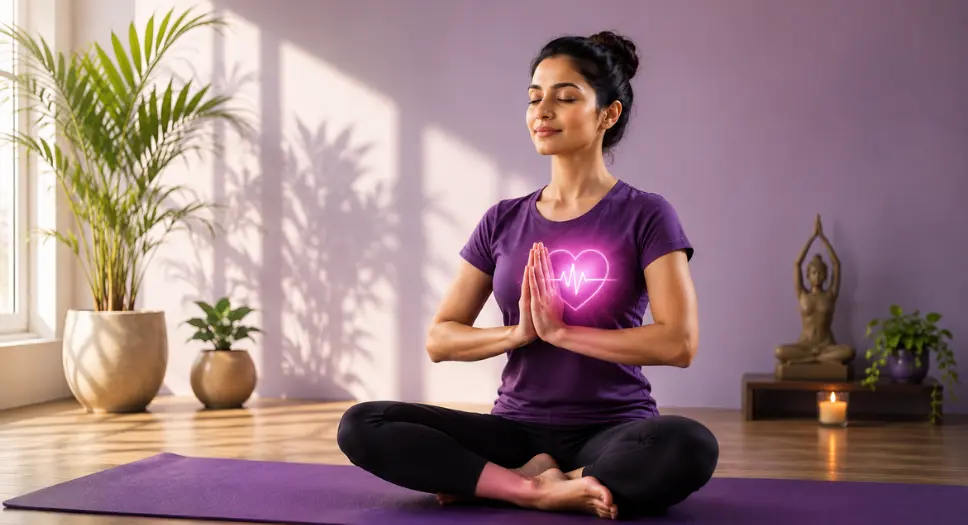
Yoga for heart health is a growing area of research, and the findings are hard to ignore. Cardiovascular disease remains the leading cause of death globally, and most of its risk factors, including chronic stress, poor sleep, high blood pressure, inflammation, and blood sugar dysregulation, are exactly what yoga targets.
What the Research Shows
Regular yoga practice has been linked to meaningful improvements across multiple cardiovascular risk markers:
- Blood pressure: some studies show reductions of 10 to 15 mmHg in people with hypertension, which is clinically significant
- LDL cholesterol: consistent reductions reported in multiple trials
- Resting heart rate: a reliable marker of cardiovascular fitness and efficiency
- Inflammation: yoga reduces markers of systemic inflammation, which is a core driver of arterial disease
- Blood sugar: improved insulin sensitivity with regular practice, relevant for metabolic and heart health
The underlying mechanism is largely stress reduction. Chronic stress elevates cortisol, which damages arterial walls, increases blood pressure, and drives inflammation. Anything that consistently lowers stress has downstream effects on the heart, and yoga does this reliably.
Effective Poses for Heart Health
You don’t need to practice intensely to support cardiovascular health. Some of the most effective poses are among the gentler ones:
- Legs-Up-the-Wall (Viparita Karani): reverses venous blood flow, lowers blood pressure, and calms the nervous system. One of the most effective poses for immediate stress reduction.
- Supported Bridge: a gentle chest opener that improves circulation and activates the parasympathetic system
- Cobra and Camel: open the front body, expand breathing capacity, and improve circulation to the heart
- Warrior I and II: build lower body strength, which assists blood return to the heart
- Seated forward folds: calming for the nervous system and gently stimulate the vagus nerve
Yoga works best as part of a complete approach to heart health, alongside walking or light cardio, sensible nutrition, adequate sleep, and stress management. It’s not a replacement for other healthy habits, but it supports all of them.
Yoga Meditation
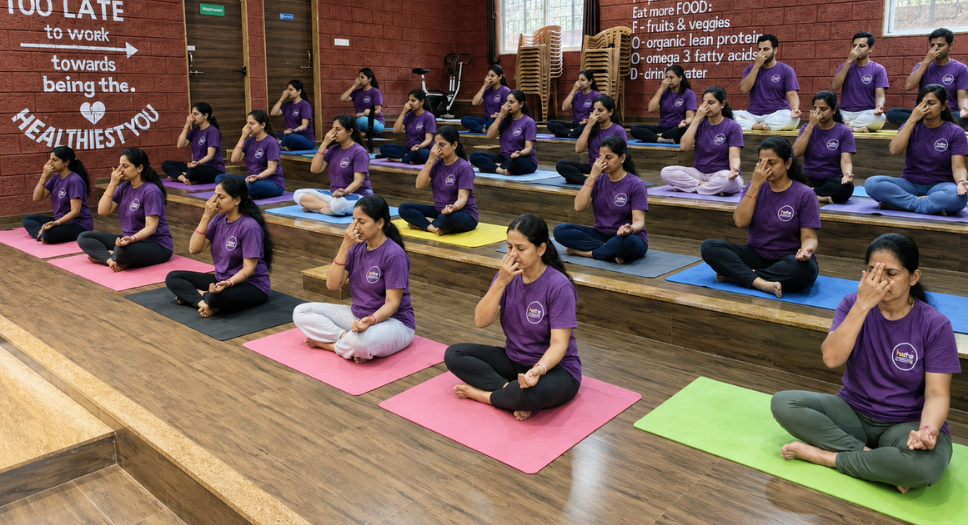
Yoga meditation is where the physical and mental sides of the practice fully merge, and for many people it becomes the most valuable part.
Most yoga classes end with Savasana, several minutes lying completely still in what’s called Corpse Pose. New students sometimes skip this or underestimate it. That’s a mistake.
Savasana is when the nervous system integrates what just happened. The physical work is done, and now the body and mind settle into the state that all that movement was building toward. Tension that was released during poses settles fully. The mind quiets without effort. It’s also, in a meaningful sense, a meditation and a very approachable one for people who find sitting meditation difficult.
Why Yoga and Meditation Work Well Together
Meditation on its own is hard for many people. Sitting still with a busy mind and restless body is frustrating, especially at first. Yoga solves that problem by preparing the body before the mind needs to be still.
The physical practice burns off restless energy, releases tension that would otherwise be distracting, and shifts the nervous system into a receptive state. By the time you sit or lie down to meditate, both body and mind are genuinely ready for it. The two practices reinforce each other:
- Yoga prepares the body for stillness
- Meditation trains the mind to be present
- Together they produce a depth of calm that neither achieves as effectively alone
For people dealing with high stress, anxiety, or difficulty sleeping, combining the two is worth trying. Starting with even five minutes of quiet breath focus after a yoga session is enough.
Who Is Yoga For?
One of yoga’s genuine strengths is its adaptability. There’s no body type, fitness level, or age that excludes someone from practicing.
- Older adults: gentle and chair-based yoga builds balance, maintains mobility, and reduces fall risk. One of the most evidence-supported practices for healthy aging.
- Athletes: yoga improves recovery time, reduces injury risk, builds the mental focus that performance depends on, and develops flexibility that sport-specific training typically ignores.
- People who sit at desks: yoga addresses almost every physical consequence of prolonged sitting, including tight hips, rounded upper back, weak core, compressed spine, and neck pain.
- People with anxiety or stress: often see the most dramatic changes. The nervous system regulation effects are real and they accumulate.
- People with chronic pain: yoga has strong evidence for lower back pain specifically, and growing evidence for other chronic pain conditions.
- Complete beginners: you have the most to gain. No existing fitness or flexibility is needed or expected.
If you have a significant health condition, it’s worth talking to your doctor before starting and finding a teacher with relevant experience. Yoga is highly adaptable, but it’s better to get that guidance upfront.
Getting Started: What Actually Helps
Getting started with yoga is straightforward. Getting started in a way that leads to consistent practice takes a little more thought.
What you need:
- A yoga mat
- Comfortable clothes you can move in
- A class, studio, or reliable online resource
That’s it. No special equipment, no specific level of fitness required.
What makes it stick:
- Start with genuinely beginner content. Many classes labeled “beginner” are not. Look for slower pacing, basic poses, and explicit instruction on alignment and breath. Tell teachers it’s your first class. Organizations like the Hatha Yoga Institute are worth checking out for this reason — Hatha classes tend to move slowly and spend real time on foundational alignment, which makes them a natural entry point for total beginners.
- Practice at least three times a week. Once a week produces some benefit but not much. Three times is the threshold where consistent change happens.
- Give it six weeks. The first few sessions feel awkward and unfamiliar. The real benefits take a few weeks of consistency to develop. Judging yoga after two sessions is like judging a new instrument after two lessons.
- Prioritize frequency over length. Three 30-minute sessions beat one 90-minute session when you’re building a habit.
- Try different styles before deciding. Yoga is not one thing. If one style doesn’t click, another might. Hatha is a good baseline to start with since it’s typically slower-paced than styles like Vinyasa or Ashtanga — a Hatha Yoga Institute class is a reasonable first stop before branching out. The version you’ll actually practice regularly is the right one.
Yoga won’t fix everything, and it works best as one part of a generally healthy lifestyle rather than a substitute for other habits. But as a practice that simultaneously improves how your body moves, how your nervous system handles stress, how your heart functions, and how well you sleep, all with no cost and no prerequisites, it’s genuinely hard to find a comparable option.