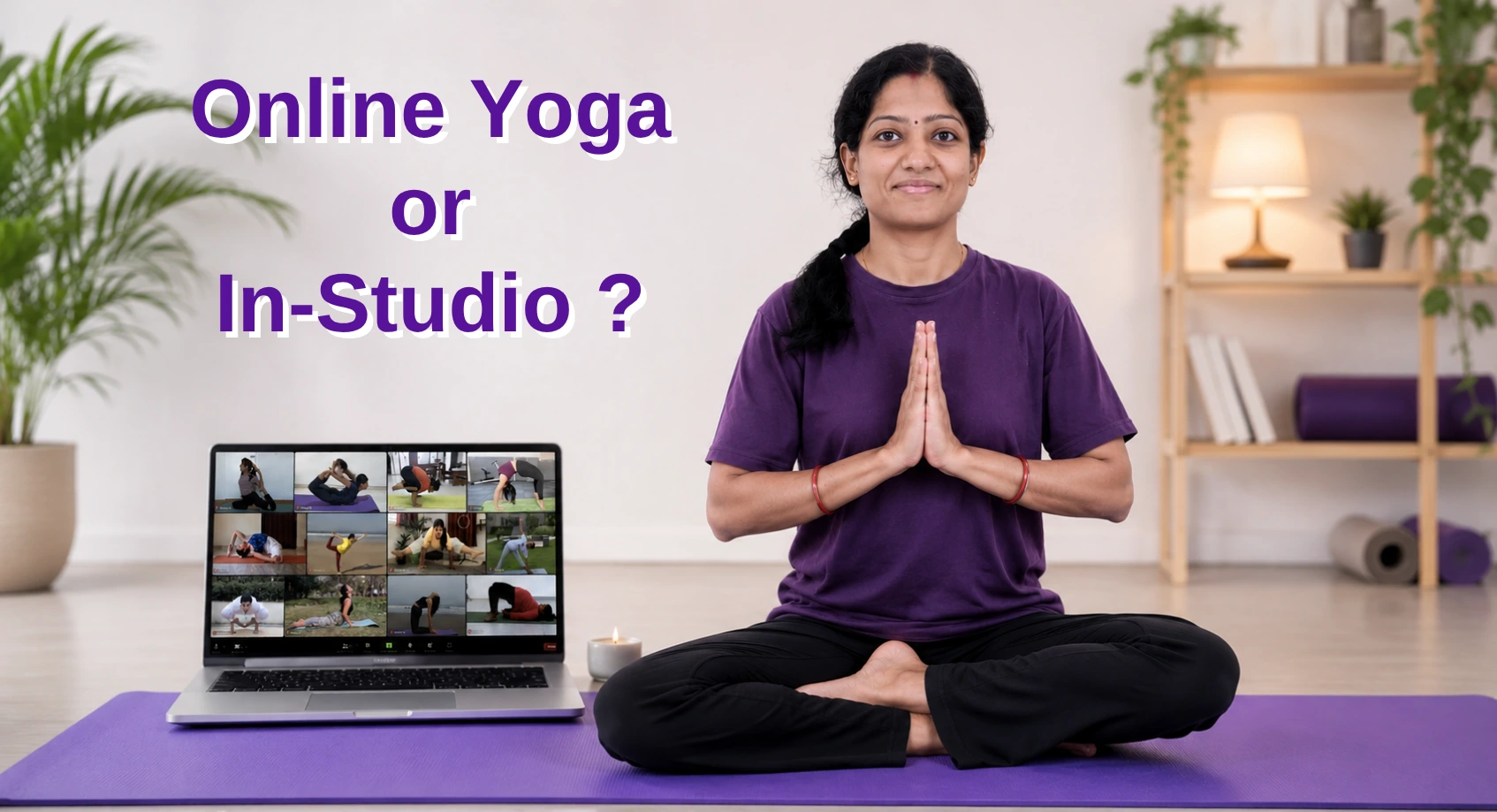
Yoga has moved far beyond the four walls of a studio. A decade ago, if you wanted to practice yoga seriously, you had one real option: drive to a studio, roll out your mat next to strangers, and follow a live instructor. Today, that picture has changed completely. With a laptop, a phone, or even a smart TV, anyone can join online yoga classes from their living room, a hotel room, or a quiet corner of their office.
This shift has sparked a genuine debate among practitioners, beginners, and even seasoned yogis: is it better to practice yoga online, or does the traditional in-studio experience still hold an edge that no screen can replace? The honest answer is that both have real strengths and real limitations, and the right choice depends heavily on your goals, your schedule, your budget, and even your personality.
In this guide, we’ll break down everything you need to know, the pros and cons of both formats, how to decide which one fits your lifestyle, and why a hybrid approach might actually be the smartest path forward for most people.
The Rise of Online Yoga: Why It's Booming
The popularity of yoga sessions online isn’t a passing trend. It’s a structural shift in how people approach fitness and wellness. Busy schedules, remote work culture, and the growing demand for flexible self-care routines have all pushed people toward digital platforms.
A few reasons this format has exploded in popularity include:
- Remote and hybrid work has made people more comfortable doing everything from home, including fitness routines.
- Wellness apps and YouTube channels have made high-quality instruction available for free or at low cost.
- People increasingly prefer privacy while building confidence in a new practice, especially beginners who feel self-conscious in a studio.
- Global access means you can learn from instructors in different cities or countries without ever leaving your home.
Whether someone is searching for online classes yoga for the first time or looking to deepen an existing practice, the sheer convenience of digital platforms has made this format incredibly attractive.
What Exactly Are Online Yoga Classes?
Before comparing the two formats, it helps to define what we’re actually talking about. Online yoga classes typically fall into a few categories:
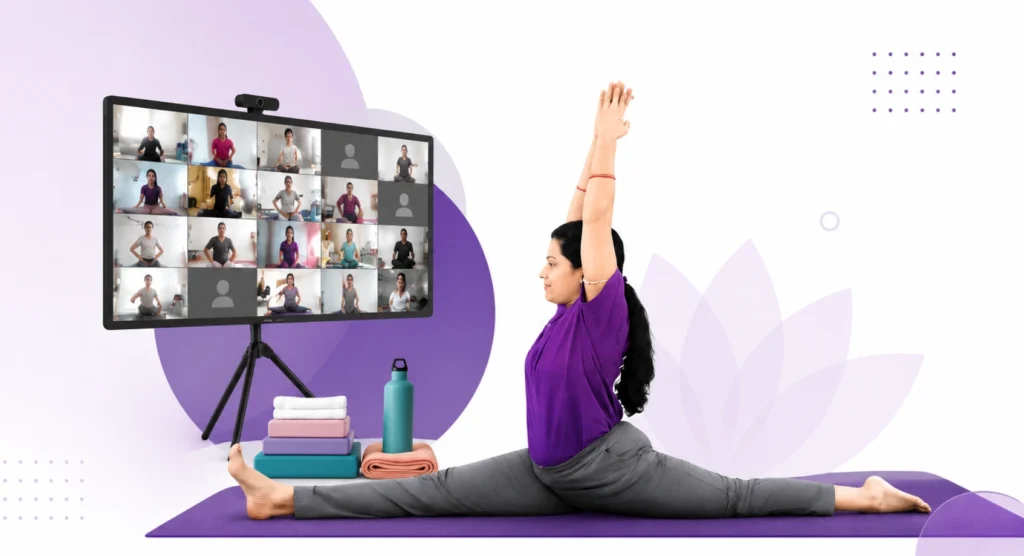
- Live virtual classes: Real-time sessions streamed through platforms like Zoom, where an instructor guides the class and can sometimes see and correct participants.
- Pre-recorded video courses: Structured yoga courses online that you can follow at your own pace, often organized into beginner, intermediate, and advanced tracks.
- App-based programs: Subscription apps that offer daily routines, progress tracking, and personalized recommendations based on your goals.
- Hybrid memberships: Studios that record their in-person classes and make them available digitally for members who can’t attend physically.
This flexibility is part of what makes online practice so appealing, you’re not locked into a single format or schedule.

Pros of Online Yoga Classes
- Unmatched Convenience: There’s no commute, no need to pack a bag, and no pressure to arrive ten minutes early to grab a good spot. You simply open your laptop or phone and begin. For people with packed schedules, this alone can be the deciding factor in whether they practice consistently or skip yoga altogether.
- Lower Cost Over Time: Studio memberships can be expensive, especially in major cities. Online yoga classes and subscription-based yoga courses online are often significantly cheaper, and many platforms offer free trial periods or even fully free content libraries.
- Practice Anywhere, Anytime: Traveling for work? Staying with family for the holidays? It doesn’t matter. As long as you have an internet connection, you can join yoga sessions online from virtually anywhere in the world. This kind of location independence is impossible to replicate in a physical studio.
- A Judgment-Free Zone for Beginners: Many people avoid yoga studios simply because they feel intimidated. Practicing yoga online removes that social pressure entirely. You can fumble through a pose, pause the video, or restart a sequence without anyone watching.
- Huge Variety of Styles and Instructors: A single studio might only offer a handful of instructors and styles. Online, you have access to thousands of teachers across nearly every yoga tradition, Hatha, Vinyasa, Ashtanga, Yin, restorative, and more. You can sample different teaching styles until you find the one that resonates with you.
- Flexible Scheduling: Studios operate on fixed class times. Online platforms let you choose online classes yoga content that fits your day, whether that’s a 7 a.m. session before work or a midnight wind-down flow.
Cons of Online Yoga Classes
Despite the convenience, practicing online isn’t without its drawbacks.
- Limited accountability: Without the social commitment of a scheduled in-person class, it’s easy to skip sessions or lose motivation.
- Technical issues: Poor internet connections, lagging video, or audio delays can disrupt the flow of a session, particularly during live classes.
- Lack of community: Yoga has historically been a communal practice. Practicing alone at home, while peaceful, can feel isolating compared to the shared energy of a group class.
- Space constraints: Not everyone has a quiet, spacious area at home free of distractions, pets, family members, or cramped furniture.
What Is In-Studio Yoga?
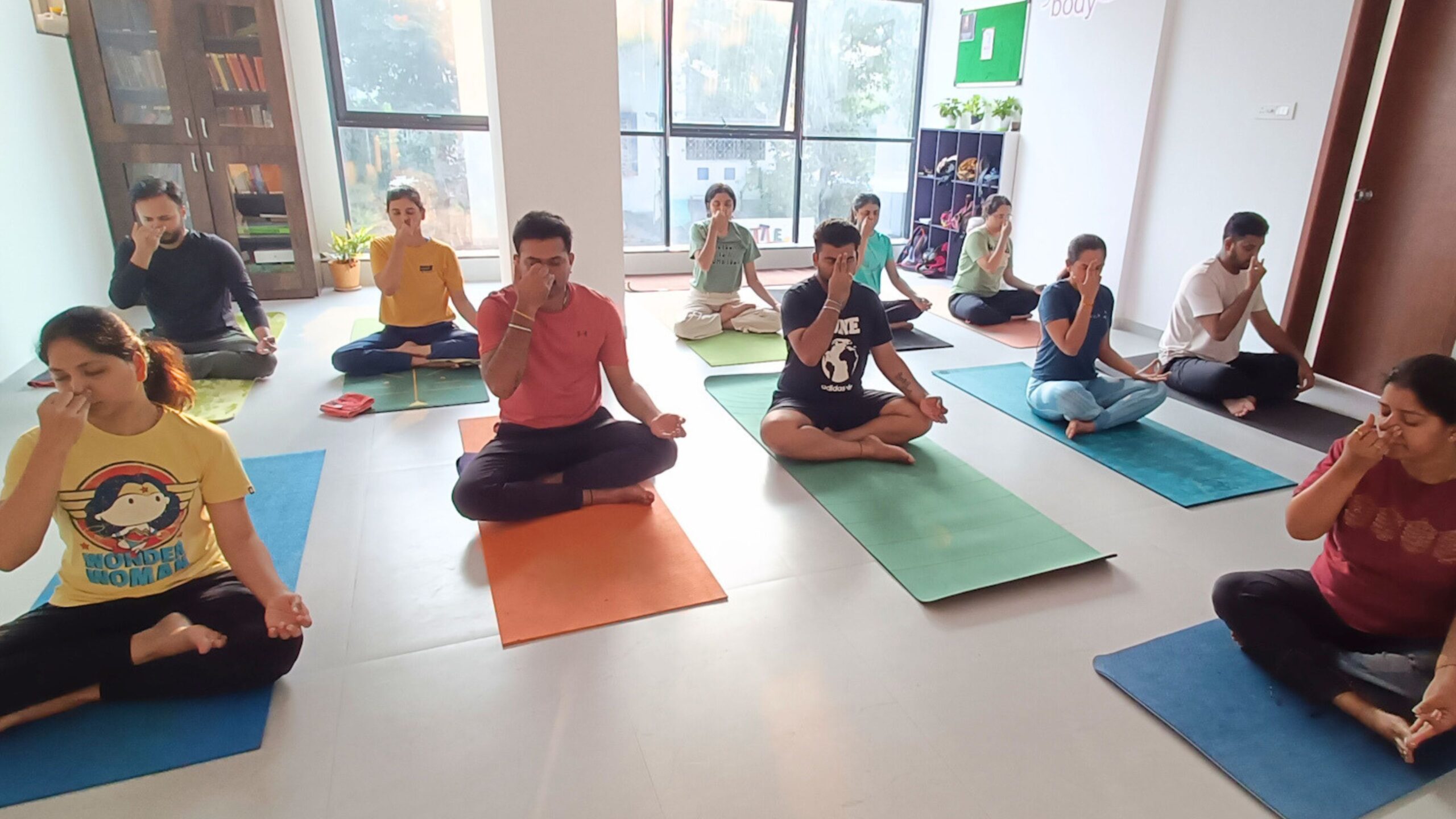
In-studio yoga refers to the traditional, in-person practice where students gather in a dedicated space led by a live instructor. This format has been the standard for centuries and still holds enormous value, particularly for those serious about technique, alignment, and the deeper philosophical aspects of yoga.
Pros of In-Studio Yoga
1. Real-Time, Hands-On Correction: This is arguably the single biggest advantage of in-studio practice. An experienced instructor can physically adjust your posture, correct misalignments, and prevent injuries in ways that simply aren’t possible through a screen.
2. Stronger Sense of Community: Practicing alongside other people creates a shared energy that many practitioners describe as motivating and even spiritually grounding. Studios often build a genuine community, with regulars who know each other, group workshops, and social events.
3. Fewer Distractions: A dedicated studio space is designed specifically for practice, no laundry piling up in the corner, no phone notifications, no family members walking through the room. This focused environment often leads to deeper concentration and a more immersive experience.
4. Structured Accountability: When you’ve committed to a specific class time and paid for a membership, you’re far more likely to show up consistently. This built-in accountability is something online platforms struggle to replicate.
5. Access to Specialized Equipment: Studios often provide props like bolsters, blocks, straps, and sometimes even heated rooms for specific styles like hot yoga, equipment that many home practitioners don’t have readily available.
6. Deeper Philosophical and Spiritual Guidance: Many studios, especially those rooted in traditional practices, offer more than just physical postures. They incorporate breathing techniques, meditation, and philosophical teachings that are harder to convey through a pre-recorded video.
Cons of In-Studio Yoga
In-studio practice has its own set of limitations.
- Higher cost: Studio memberships, drop-in fees, and travel expenses can add up quickly compared to digital alternatives.
- Fixed schedules: You’re bound to specific class times, which can be difficult for people with unpredictable work hours or family obligations.
- Commute time: Travel to and from the studio adds extra time to every session, which can discourage consistency.
- Intimidation factor: Beginners may feel self-conscious practicing in front of more experienced students.
- Limited variety: A single studio typically offers a narrower range of instructors and styles compared to the vast online ecosystem.
- Less privacy: For people who prefer to practice without being observed, the communal studio setting can feel uncomfortable.
How to Decide What's Best for You
Choosing between online yoga classes and in-studio sessions isn’t about picking the objectively “better” option, it’s about matching the format to your personal circumstances. Here are a few questions worth asking yourself.
1. Consider Your Schedule
If your work hours are unpredictable or you travel often, yoga sessions online offer the flexibility you need. If you have a consistent routine and can commit to fixed times, a studio membership might work just as well.
2. Consider Your Experience Level
Complete beginners often benefit from at least a few in-studio sessions to learn proper alignment and breathing techniques before transitioning to yoga online for ongoing practice. Once the fundamentals are in place, online classes become much safer and more effective.
3. Consider Your Budget
If cost is a major factor, online classes yoga platforms and apps are typically far more affordable, especially when you factor in commute costs and studio membership fees.
4. Consider Your Personality
Some people thrive on the social energy of group classes, while others prefer the solitude and privacy of practicing at home. Be honest with yourself about which environment actually motivates you to show up consistently, because consistency matters more than the format itself.
5. Consider Your Goals
If your primary goal is stress relief, flexibility, and general wellness, yoga courses online can absolutely deliver results. If you’re working toward advanced poses, teacher certification, or a deeper spiritual practice, in-person guidance from an experienced teacher becomes increasingly valuable.
The Hybrid Approach: Best of Both Worlds
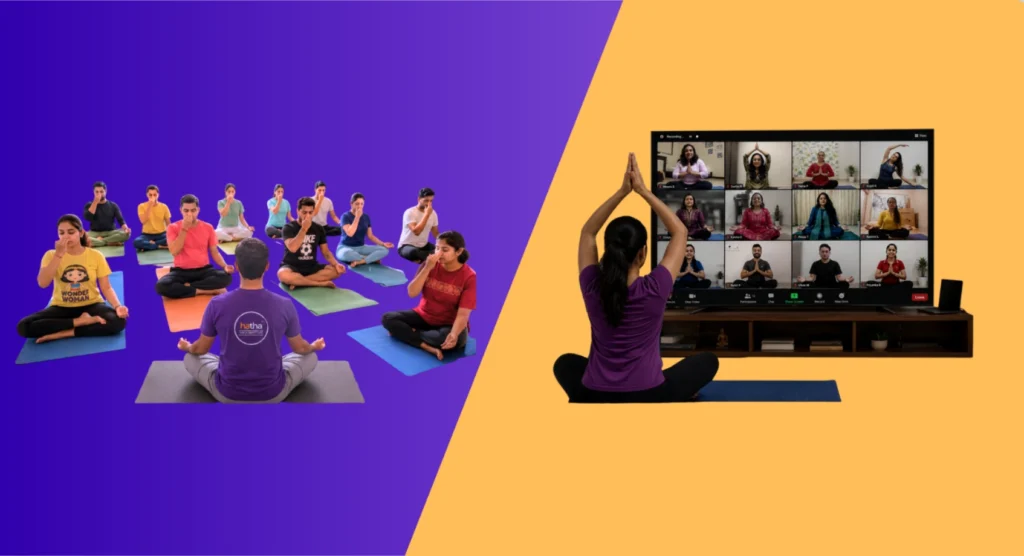
For many practitioners, the smartest solution isn’t choosing one format exclusively, it’s blending both. A common and highly effective approach looks like this:
- Attend in-studio classes once or twice a week for hands-on correction, community, and structured accountability.
- Fill in the rest of your week with online yoga classes for convenience and flexibility.
- Use yoga courses online to explore new styles or deepen your understanding of specific techniques between studio sessions.
- Join yoga sessions online during travel or busy periods when studio visits aren’t possible, so your practice never fully stops.
This hybrid model lets you enjoy the structure and personal attention of in-studio practice while still benefiting from the flexibility that digital platforms provide.
A Note on Quality, Wherever You Practice
Regardless of which format you choose, the quality of instruction matters far more than the medium itself. A poorly taught studio class can be just as risky as an unstructured online video, and a well-designed online program led by a qualified instructor can be just as effective as an in-person session.
This is where institutions with a strong teaching foundation make a real difference. The Hatha Yoga Institute, for example, is known for its structured approach to traditional Hatha yoga, blending classical alignment principles with practical, modern teaching methods. Whether you’re attending in person or exploring their online classes yoga offerings, the emphasis remains on proper technique, safe progression, and genuine understanding of the practice rather than just following along with movements. For anyone serious about building a sustainable yoga habit, learning from a credible, experienced institute like this can make the transition between online and in-studio practice far smoother.
Common Questions People Ask Before Choosing
1. Is yoga practiced online as effective as in-studio yoga?
Effectiveness largely depends on the quality of instruction and your own consistency rather than the format itself. A well-structured program of online yoga classes, taught by a qualified instructor with clear cueing and visual demonstrations, can deliver real improvements in flexibility, strength, and stress reduction. The main difference lies in the depth of personalized feedback, something in-studio sessions naturally provide through physical adjustments.
2. Can beginners start with yoga online instead of going to a studio?
Yes, many beginners start with yoga online successfully, especially when they choose programs that focus heavily on alignment cues and slow, methodical instruction. That said, scheduling even one or two in-person sessions early on can help build a safer foundation, particularly for poses that involve inversions, deep backbends, or significant weight-bearing on the wrists and shoulders.
3. How do I know if an online instructor is qualified?
Look for certifications from recognized yoga alliances, years of teaching experience, and reviews or testimonials from real students. Reputable platforms and institutes are usually transparent about their instructors’ training backgrounds, which is worth checking before committing to any yoga courses online.
4. Is it cheaper to do yoga sessions online than join a studio?
In most cases, yes. Yoga sessions online typically cost a fraction of what a studio membership requires, and many platforms offer monthly or annual plans that work out to just a few dollars per class. When you also factor in transportation costs and time saved, the financial advantage of online practice becomes even more noticeable for budget-conscious practitioners.
5. Should I switch between online and in-studio depending on the season?
Absolutely, this is actually a common and practical strategy. Many practitioners lean on online classes yoga content during colder months, travel periods, or busy work seasons, and return to in-studio sessions when their schedule opens up. There’s no rule that says you have to pick one format permanently; your practice can adapt as your life changes.
Tips for Getting the Most Out of Either Format
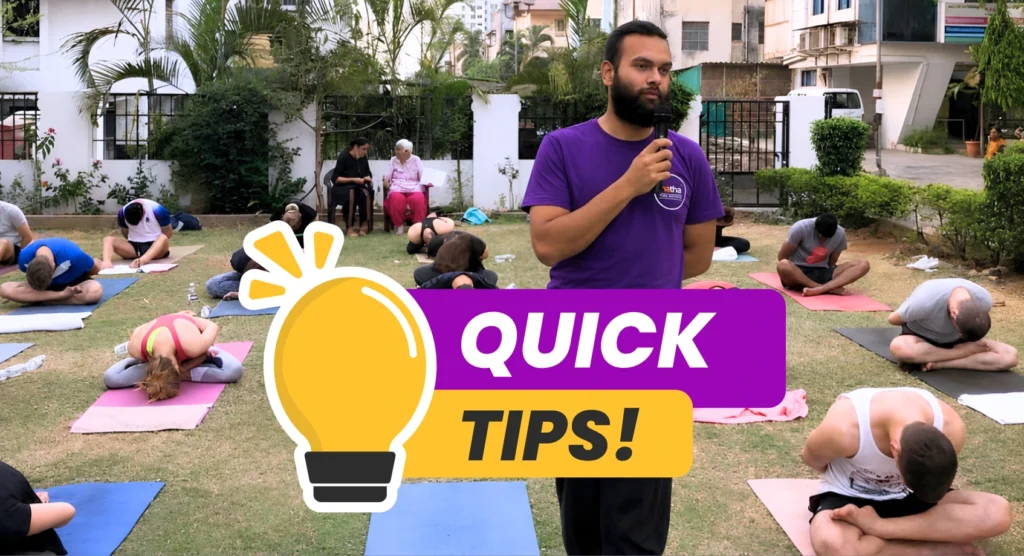
No matter which path you choose, a few simple habits can dramatically improve your results.
- Set a consistent schedule: Whether you’re attending a studio or logging into online yoga classes, treat your sessions like fixed appointments rather than optional activities.
- Invest in basic props: A good mat, a couple of blocks, and a strap go a long way, especially for home practitioners following yoga online routines without studio equipment.
- Track your progress: Keep a simple journal or use an app to note which poses feel easier over time, this keeps motivation high during both online and in-studio practice.
- Don’t skip the warm-up: It’s tempting to jump straight into a flow, especially with pre-recorded yoga courses online, but proper warm-ups significantly reduce injury risk.
- Listen to your body: Without an instructor present during solo online sessions, it’s even more important to recognize your own limits and avoid pushing into pain.
- Mix things up occasionally: Trying a new style or a different instructor, whether through online classes yoga content or a studio workshop, keeps the practice fresh and prevents plateaus.
Final Thoughts
There’s no universal right answer when it comes to online yoga classes versus in-studio practice. Both formats offer real, meaningful benefits, and both come with trade-offs worth considering carefully.
If flexibility, affordability, and privacy matter most to you, yoga online is likely the better fit. If hands-on correction, community, and structured accountability are your priorities, in-studio classes will probably serve you better. And if you want the best of both, a hybrid approach combining studio sessions with online classes yoga content can offer the most well-rounded experience.
Ultimately, the best yoga practice is the one you actually stick with. Whether that means rolling out your mat at home for yoga sessions online or driving to a local studio twice a week, consistency, patience, and quality instruction will always matter more than the format you choose.
Ready to Begin? Practice with Hatha Yoga Institute
If you’re looking for a place to start, or a more structured way to continue, the Hatha Yoga Institute offers both in-studio sessions and flexible online yoga classes led by experienced, certified instructors. Their programs are built around proper alignment, safe progression, and the traditional principles of Hatha yoga, making them a solid choice whether you’re a complete beginner or looking to deepen an existing practice. Explore their yoga courses online or visit a studio session to experience the difference that expert guidance can make.