Have you ever noticed how some days you wake up feeling clear-headed and calm, other days you’re buzzing with restless energy before you’ve even had coffee, and other days you can barely drag yourself off the couch? If you’ve experienced all three of those states, congratulations, you’ve already met the trigunas, even if nobody introduced you formally.
The word sounds intimidating at first, like something you’d only encounter in a dusty Sanskrit textbook. But once you understand what it actually means, you’ll probably realize you’ve been navigating these three energies your entire life without a name for them. Trigunas simply means “three qualities.” In Sanskrit, “tri” is three and “guna” is a quality or strand, almost like a thread woven into fabric. And according to yogic philosophy, everything in the material world, including your mind, your mood, your food, and even your yoga practice, is woven from three of these threads: sattva, rajas, and tamas.
I want to walk you through what each of these actually feels like in real life, not just in theory, because that’s where this knowledge becomes genuinely useful. Once you can recognize which guna is running the show in a given moment, you gain something powerful: the ability to pause and choose a different response instead of being swept along by whatever mood happens to be dominant.
So What Exactly Are the Trigunas?
This idea comes from Samkhya philosophy, one of the oldest systems of thought in India, and it later became deeply woven into yoga itself. You’ll find it discussed at length in the Bhagavad Gita and referenced throughout the Yoga Sutras of Patanjali. The basic claim is this: nothing in nature is made of just one quality. Everything, from a rock to a rainstorm to your own racing thoughts at 2am, is a blend of sattva, rajas, and tamas in different proportions.
Here’s a simple way to picture it:
- Sattva is the quality of clarity, light, and balance
- Rajas is the quality of movement, passion, and drive
- Tamas is the quality of heaviness, inertia, and resistance
Nobody is purely one guna. You’re not “a sattva person” the way you might be a Gemini or an introvert. Instead, you’re a constantly shifting mixture of all three, and usually one of them is louder than the others at any given moment. Yoga doesn’t ask you to get rid of rajas and tamas altogether, honestly you couldn’t if you tried, since both serve real purposes. The goal is simply to tilt the balance toward sattva more often, so that clarity leads instead of restlessness or dullness.

Sattva: When Everything Feels Clear
Think about the last time you felt genuinely at peace. Not numb, not distracted, just quietly settled and clear in your mind. That’s sattva. It’s often described as the “highest” of the three gunas because it’s associated with wisdom, truth, and balance, but I’d rather describe it as the state where you actually like your own decisions.
When sattva is dominant, your breath tends to slow down on its own. Your thoughts stop racing. You make choices that feel aligned with who you actually want to be, rather than reactive choices driven by fear or craving. People often describe this state as lightness, both physically and mentally.
You’ll know sattva is present when you notice things like:
- Your breath feels steady, even when something stressful happens
- You can think clearly without spiraling into anxious “what ifs”
- Kindness and honesty feel natural, not forced
- Sleep comes easily and feels genuinely restful
- You feel okay even when circumstances aren’t perfect
- You’re curious instead of defensive when someone challenges you
One thing worth clearing up: sattva isn’t the same as being passive or emotionally flat. A sattvic person can still feel joy, grief, excitement, all of it, deeply. The difference is that their actions come from clarity instead of compulsion. In practice, you build more sattva through steady habits: regular meditation, breathwork, mindful movement, honest self-reflection, and simply giving yourself enough quiet space to actually hear your own thoughts.

Rajas: The Fire That Gets Things Done
Now think about the opposite feeling: that restless, driven energy that gets you out of bed, fuels your to-do list, and pushes you to chase a goal even when you’re tired. That’s rajas, and honestly, without it, nothing would ever get done. Rajas is ambition. It’s the spark behind creativity, the hunger for achievement, the urge to build something.
But here’s the catch, and most of us know this one intimately: rajas has a shadow side. Too much of it and you’re wired but exhausted, competitive to the point of burnout, unable to sit still even when your body is begging you to rest. A rajasic mind often gets stuck chasing “more,” more success, more validation, more stimulation, and peace always feels one accomplishment away, which of course means it never actually arrives.
Signs that rajas has taken the wheel might include:
- Thoughts that won’t slow down, even in bed at night
- A strong urge to compete or prove something
- Snapping at people when things move too slowly
- Overcommitting to work, workouts, or obligations
- Craving spicy, stimulating, or highly processed food
- Feeling bored or agitated the moment you try to relax
In healthy doses, rajas is what gets you onto your yoga mat consistently and gives you the drive to grow. The problem is when it never turns off. If you’ve ever felt like you literally can’t rest even when you have nothing to do, that’s rajas running unchecked. Dynamic practices like Vinyasa or Ashtanga can actually be a great outlet here, letting that fiery energy move through the body so it can settle rather than staying bottled up.

Tamas: The Weight That Pulls You Down
Then there’s the flip side entirely. Tamas is heaviness, fog, inertia. It’s the Sunday afternoon you spent scrolling your phone instead of doing the one thing you actually needed to do. It’s the mental fog that makes even small decisions feel exhausting. Tamas pulls downward and inward, toward stagnation.
To be fair, tamas isn’t the villain of this story either. Deep, dreamless sleep is tamasic. The stillness of matter itself is tamasic. Rest, in the right amount, is necessary and good. The trouble starts when tamas overstays its welcome and a person, or a situation, gets stuck.
You might recognize excess tamas by:
- Feeling sluggish or sleepy no matter how much rest you get
- A brain fog that makes it hard to focus on anything
- Avoiding responsibilities or hard conversations
- Reaching for heavy, processed, or stale comfort food
- A creeping sense of pessimism or “what’s the point”
- Digging in your heels against any kind of change
On the mat, tamas looks like skipping practice again and again, or feeling completely unmotivated to check in with yourself honestly. Here’s something important though: the fix for tamas isn’t to force yourself into an intense workout the moment you notice it, because that usually backfires and feels like too much. It works better to gently stir some rajas first, a short walk, some fresh air, one small task completed, which builds just enough momentum to eventually rise toward sattva.
How These Three Actually Work Together
Here’s what I think trips people up the most: they expect the trigunas to be fixed personality types, like you’re either a sattva person or a rajas person. That’s not how it works at all. These qualities shift constantly based on what you eat, who you spend time with, how much sleep you got, even what time of day it is. You might feel genuinely sattvic during morning meditation, then rajasic by 11am in back-to-back meetings, then tamasic after a heavy lunch. All in one day.
A few patterns are worth knowing:
- All three are always present. Even someone who feels mostly calm and clear still has traces of rajas and tamas running quietly underneath.
- One usually leads at a time. They’re all in the mix, but one tends to dominate your thoughts and actions in any given moment.
- They tend to move in sequence. You usually can’t jump straight from tamas to sattva. You need rajas as a bridge, since it takes energy to break inertia.
- Your environment shapes your inner state. What you eat, watch, and who you spend time with all quietly nudge you toward one guna or another.
- Noticing is itself sattvic. The simple act of catching yourself and thinking “oh, this is tamas talking” is already a sattvic move, because it takes clarity to notice.
This is part of why so many yoga classes start with movement before settling into stillness. If you’re feeling heavy and foggy, jumping straight into silent meditation often doesn’t work, your mind just wanders or you fall asleep. Gentle activity first helps clear the fog enough that stillness actually becomes accessible.

Where Yoga Fits Into All This
Honestly, yoga as a whole practice can be thought of as a toolkit for shifting the gunas toward sattva. Every piece of it, ethics, posture, breath, meditation, is designed with this in mind, even if it’s not always stated explicitly.
- Asana can go either way depending on how you practice it. Fast, heat-building sequences help burn through tamasic heaviness, while slow, mindful holds build sattvic body awareness.
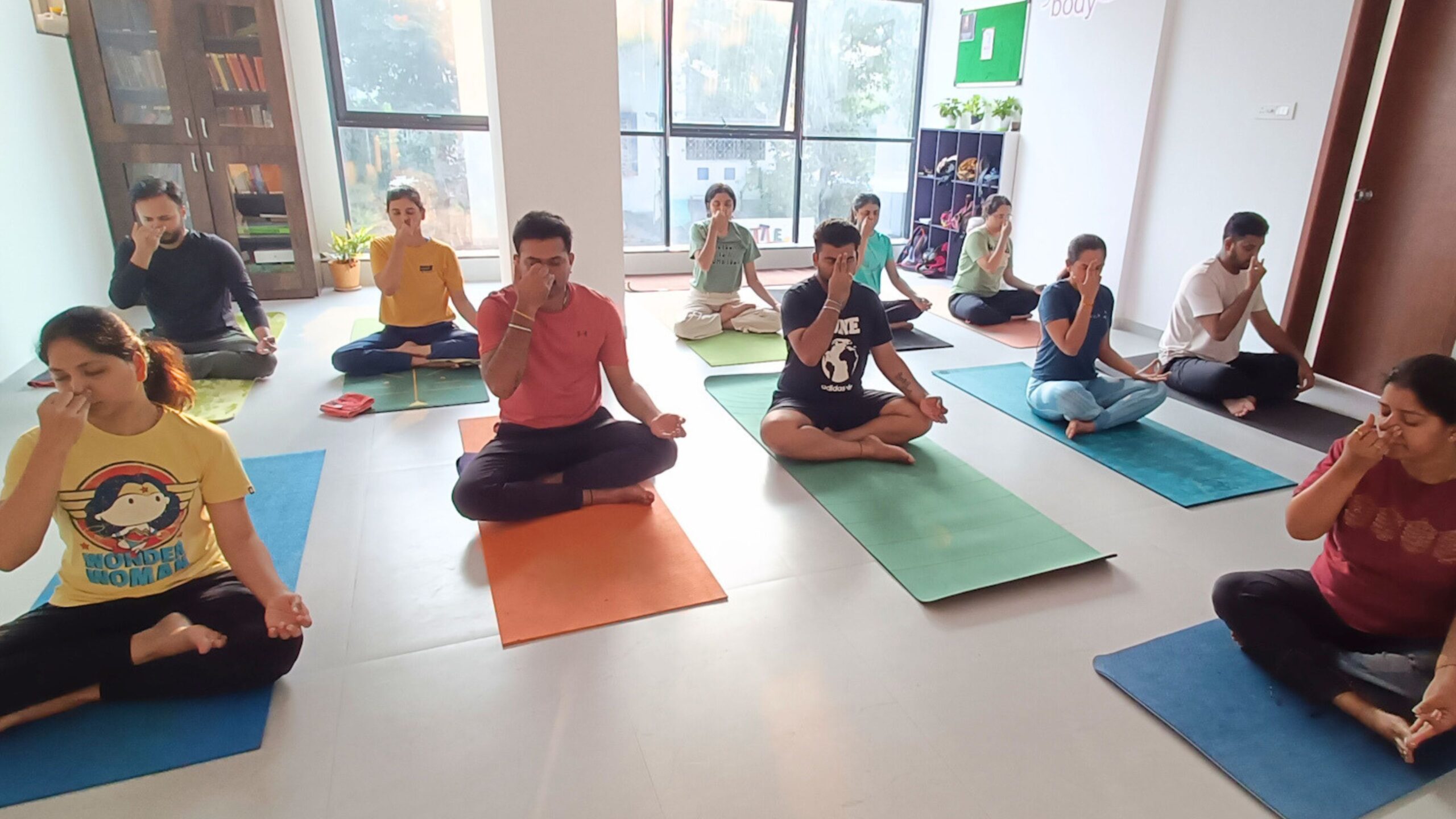
- Pranayama, or breathwork, is one of the fastest ways to shift your state. It can calm an overactive rajasic mind or wake up a dull tamasic one, often within minutes.
- Meditation trains you to observe your mind instead of getting swept up in it, which over time builds lasting sattva.
- Yamas and niyamas, the ethical guidelines of yoga, like honesty and contentment, quietly chip away at rajasic craving and tamasic neglect just by how you choose to live.
- What you eat and how you rest matters more than people give it credit for. Your diet and sleep habits directly feed whichever guna is already dominant.
- Who you surround yourself with counts too. Calm, grounded company tends to reinforce sattva, while chaotic or draining environments feed rajas or tamas.
None of this works by forcing yourself into constant calm through sheer willpower, that usually just creates more rajas. It works by respecting the natural rhythm: using energy when you need to break stagnation, then guiding that energy gently toward stillness through breath and awareness.
Small, Real Ways to Invite More Sattva Into Your Day
People often ask me some version of “okay but how do I actually get more sattva?” There’s no magic formula, but a few small, consistent habits tend to make a real difference over time:
- Give yourself even ten quiet minutes in the morning before you touch your phone
- Eat simple, fresh food, and try not to eat late at night or to the point of discomfort
- Cut back on doom-scrolling or aggressive news cycles when you can
- Journal honestly, even just a few lines, instead of letting thoughts loop endlessly in your head
- Get outside. Nature has a way of calming the nervous system that scrolling never will
- Choose company that leaves you feeling steadier, not drained
- Protect your sleep schedule, since both too little and too much sleep tend to increase heaviness
- Notice one thing you’re grateful for before bed, it shifts focus away from craving and toward contentment
None of these need to be done perfectly. This isn’t about becoming a flawless, permanently zen version of yourself overnight, that’s not realistic and honestly not the point. It’s about small, repeated choices that slowly tip the scale.

Why This Still Matters, Even Now
We live in a culture that often glorifies constant hustle, which is rajas dressed up as ambition, or leans hard into numbing comfort and distraction, which is tamas dressed up as self-care. The wisdom of the trigunas offers something different: a reminder that the goal isn’t relentless activity or complete shutdown, it’s clarity.
Once you understand this framework, you gain a gentler way to talk to yourself. Instead of “I’m so lazy,” you might notice “tamas is heavy today.” Instead of “why can’t I ever relax,” you might recognize “this is rajas running the show right now.” That small shift, from harsh self-judgment to simple observation, is itself a quietly sattvic act. And it tends to open the door to real change far more effectively than self-criticism ever does.
Want to Feel This, Not Just Read About It? Hatha Yoga Institute Can Help
Reading about the trigunas is one thing. Actually feeling that shift in your own body is something else entirely. If this has sparked some curiosity, Hatha Yoga Institute offers a genuinely welcoming space to explore it firsthand. Their classes weave together traditional Hatha postures, breathwork, and meditation, all aimed at helping students move through tamasic heaviness, put rajasic energy to good use, and settle, gradually, into sattvic calm.
Whether you’re brand new to yoga or you’ve been practicing for years, the teachers at Hatha Yoga Institute meet you where you are, with practical, grounded guidance rooted in real yogic tradition, not just trendy wellness language. Instead of only reading about sattva, rajas, and tamas, you get to feel them shift, breath by breath, class by class.

Bringing It All Together
treat the people around you. Learning to notice which one is currently in charge gives you something genuinely valuable: a moment of choice instead of automatic reaction.
Yoga, at its core, is a long, patient practice of working with these three energies, easing the weight of tamas, putting the fire of rajas to good use, and steadily building toward the clarity of sattva. You’re not aiming for some permanent, unshakeable state of peace, that’s not how life works, and it’s not really the goal. The real goal is simpler: noticing the shifts as they happen, and having a few tools on hand to meet them with a little more grace each time.
So the next time you catch yourself feeling foggy, wired, or genuinely calm, pause for a second and ask which guna might be behind it. That small moment of noticing, more than any perfect routine, is where real change quietly begins.