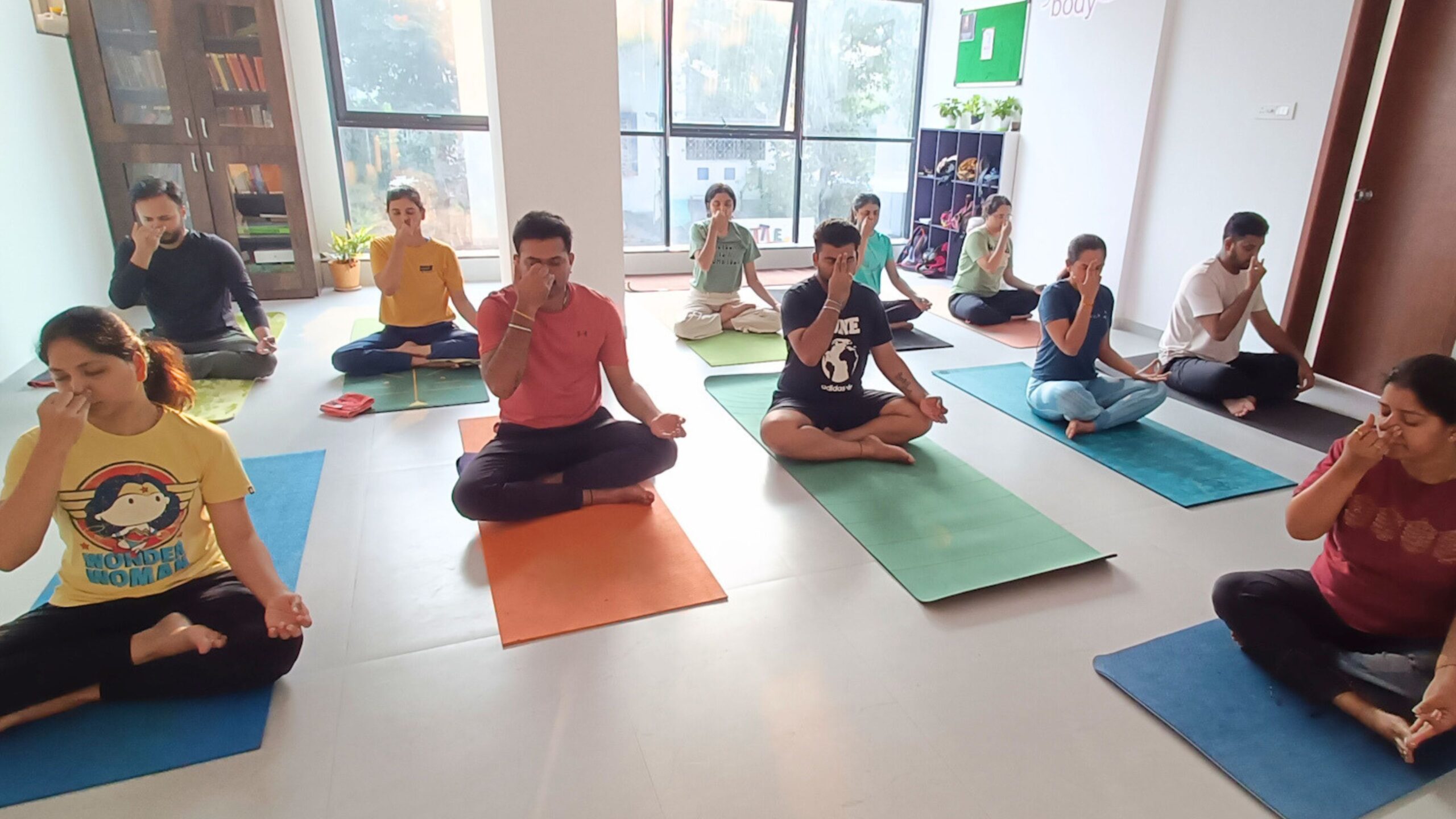
Yoga does not consist only of physical practices and breathing techniques. It is the science of total transformation of the person and, therefore, requires a certain level of readiness from the one practicing this path. In ancient texts such as the Hatha Yoga Pradipika, apart from describing various asanas and pranayama practices, the ancient rishis described the required personality qualities of a sadhak that he has to develop in order to succeed in this path. They are called the 6 Sadhak Tattva, or the six qualities of a true seeker.
It often happens that those who start yoga practice do it with great passion and dedication only to lose interest after a couple of weeks. And many sadhaks, despite all efforts to practice regularly, cannot get the deeper effects of yoga due to their internal attitudes incompatible with the practice of yoga. This is why the ancient rishis emphasized the importance of having the qualities described besides the practice itself.
In this blog, we will discuss the six tattvas, why they are important for the practitioner and how to develop them in real life. Be it a beginner just starting to practice or a serious yogi preparing for advanced sadhana.
What Is Sadhak Tattva?
The term “sadhak” means a spiritual seeker or someone who is doing sadhana with the objective of growth within himself or herself. The term “tattva” means a truth or essential quality. Sadhak Tattva thus means the essential characteristics of an individual which help him/her to become a successful spiritual seeker.
In the yogic scriptures, there are six such qualities which are essential for a person and without which any practice becomes unreliable, superficial, and ephemeral. These six qualities are:
- Utsah (Enthusiasm and Zeal)
- Sahas (Courage and Boldness)
- Dhairya (Patience and Steadfastness)
- Tattva Jnana (Discriminative Knowledge)
- Nischaya (Determination to Stay on the Path)
- Janasangha Parithyaga (Aloofness from Company)
Let us now understand each of these in depth.

1. Utsah: The Fire of Enthusiasm
Utsah is the first, and perhaps the most crucial, quality of the sadhak. Utsah means enthusiasm, zeal, eagerness to perform one’s practice of yoga with pleasure rather than duty. A person without utsah cannot enjoy practice and, as we all know, mechanical performance hardly leads to any significant results.
Imagine yourself looking forward to your morning practice. You would certainly attend your sessions regularly, try hard, and stay interested in learning new things. Conversely, if yoga was something you had to do, then practice was the last thing on your mind when something happened in your life.
Utsah helps to keep practicing even though no visible changes are being made yet. Yoga is a process that usually requires a lot of time, and people become disillusioned with their practice after two-three weeks of doing the same asana every day. This is exactly the point at which utsah becomes the driving force of the practitioner.
How to Cultivate Utsah
- Set a clear personal reason for practicing yoga rather than following it blindly
- Celebrate small milestones instead of only focusing on the end goal
- Surround yourself with a community or teacher who inspires consistent practice
- Read or listen to yogic philosophy to reconnect with the deeper purpose behind the practice
- Vary your routine occasionally so it does not become monotonous

2. Sahas: The Courage to Face Your Own Reality
The second principle, Sahas, as defined in verse 16 of the Hatha Yoga Pradipika, is the courage to face the reality of your own being. It is not about physical bravado alone, it is the inner boldness to look honestly at your own strengths, weaknesses, and patterns without flinching away.
Sahas is the one which gives a novice the chance to perform a difficult asana for the first time or a meditator to stay with the unpleasant feeling and do nothing about it. There are many people who are unable to go further and get stuck on one level simply because they are unwilling to face the reality of who they truly are, hiding instead behind excuses, distractions, or denial.
Without sahas there is no movement towards progress; if one does not have the courage to face themselves honestly, then there is no way for them to see the real power of yoga.
How to Cultivate Sahas
- Start with small challenges in practice and gradually increase difficulty
- Practice under the guidance of an experienced teacher who can push you safely
- Reframe discomfort as a sign of growth rather than a signal to stop
- Journal about fears related to practice and examine them honestly
- Remind yourself that courage is built through repeated small acts, not one giant leap

3. Dhairya: The Anchor of Patience
Dhairya, meaning patience and steadfastness, is arguably the quality most tested in modern times. We live in a world of instant results, quick fixes, and constant comparison. Yoga, however, works on a completely different timeline. Flexibility, strength, mental clarity, and spiritual insight all unfold gradually, often invisibly, over months and years.
Dhairya is the quality that allows a sadhak to continue practicing even when progress feels invisible. It is the calm acceptance that transformation takes time, and that consistency matters more than speed. Many practitioners quit right before they would have seen real change, simply because they lacked the dhairya to wait it out.
This quality also plays a crucial role in dealing with plateaus, injuries, or periods of low motivation. A patient practitioner treats setbacks as part of the process rather than as failures.
How to Cultivate Dhairya
- Focus on the process of practice rather than obsessing over outcomes
- Track your journey through a practice journal to notice subtle progress over time
- Practice patience in daily life situations, not just on the mat
- Avoid comparing your progress to others who may be on a different path
- Remember that even the most advanced yogis started as beginners

4. Tattva Jnana: Discriminative Knowledge
The fourth quality, Tattva Jnana, as defined in verse 16 of the Hatha Yoga Pradipika, is discriminative knowledge, the ability to discriminate between activities that are conducive and those that are non-conducive for sadhana. It is not knowledge for its own sake, but the practical wisdom to know what genuinely supports your growth and what quietly works against it.
A sadhak with proper Tattva Jnana practices with awareness rather than blind repetition. They can tell the difference between food, company, habits, and routines that nourish their sadhana and those that drain it. This discriminative knowledge protects practitioners from injury, from misinformation, and from superficial practice that never touches the deeper layers of yogic transformation.
How to Cultivate Tattva Jnana
- Regularly review which daily habits support your sadhana and which ones quietly undermine it
- Study foundational texts such as the Hatha Yoga Pradipika, Patanjali’s Yoga Sutras, or the Bhagavad Gita
- Learn the anatomical and physiological basis of asanas and pranayama
- Ask questions during classes rather than passively following instructions
- Learn from qualified teachers who can help you distinguish helpful practice from harmful practice

5. Nischaya: Determination to Stay on the Path
Nischaya, as defined in verse 16 of the Hatha Yoga Pradipika, is the determination to stay on the path, no matter what comes. Once a sadhak decides to walk the path of yoga, this quality ensures that the decision is not easily shaken by obstacles, criticism, or temporary lack of motivation.
Determination is different from enthusiasm. Utsah gives the initial spark, but Nischaya is what sustains the commitment long after the spark has settled into routine. Life will always present valid-sounding excuses to skip practice: fatigue, busy schedules, bad weather, or simply not feeling like it. Nischaya is the inner resolve that says, “I will show up anyway, no matter what comes.”
This firm determination is what separates those who practice yoga occasionally from those who transform their lives through it.
How to Cultivate Nischaya
- Set a fixed time and place for practice to build a strong habit structure
- Make a written commitment or take a personal vow regarding your practice
- Anticipate obstacles in advance and plan how to work around them
- Focus on identity rather than motivation, think of yourself as a practitioner, not someone who occasionally does yoga
- Review your intentions regularly to renew your resolve

6. Janasangha Parithyaga: Aloofness from Company
The final tattva, Janasangha Parithyaga, as defined in verse 16 of the Hatha Yoga Pradipika, means staying aloof from the company of common people and their influences, while not considering others to be inferior. This is an important distinction, it does not ask a sadhak to look down on anyone or withdraw from society altogether, it simply asks for conscious boundaries around the everyday chatter, gossip, and distracting influences that can dilute the focus needed for sadhana.
Modern distractions such as excessive screen time, negative social circles, or overcommitted schedules often quietly erode a yoga practice. Janasangha Parithyaga asks the sadhak to honestly evaluate what influences are helping their growth and what is holding them back, and to make conscious choices accordingly, always with humility rather than judgment towards others.
How to Cultivate Janasangha Parithyaga
- Identify daily habits that consistently interfere with practice time
- Create a dedicated, distraction-free space for yoga and meditation
- Limit time spent in environments or company that drain your energy or motivation
- Simplify your daily routine to make room for consistent sadhana
- Practice staying aloof from unnecessary influences without feeling superior to anyone
Why These Six Qualities Work Together
The Six Sadhak Tattva do not work in isolation from each other but are rather connected in a whole system. Utsah helps you get going; sahas helps you face yourself honestly; dhairya makes you steady on the path of slow progress; Tattva Jnana adds the discrimination needed to practice safely and correctly; Nischaya ensures your dedication no matter what comes, and finally, Janasangha Parithyaga creates the free space required for all this to happen.
A person with strength in just one or two of these traits would face difficulties even with those qualities. For example, a person with good utsah but no dhairya will probably soon exhaust himself; a person with good Nischaya but poor Tattva Jnana will keep doing his practice wrong, possibly damaging himself physically or getting stuck at a certain point.

Bringing These Qualities Into Daily Practice
Working on these six tattvas in themselves is sadhana. It needs the very qualities that are described by them, the enthusiasm for starting something new, the courage to look into oneself, the patience that will help these qualities develop, the knowledge, the determination to work on oneself, and the willingness to give up those things that don’t help anymore.
There is a simple and obvious technique to start, that is, self-reflection every day. After each session of practice, just ask yourself which of the six qualities were present in you that day and which of them require your attention. Gradually, this very awareness will strengthen these weak spots.
Guidance plays an absolutely crucial role in all this. Working under the guidance of an experienced mentor within the framework of classes creates an ideal ground for developing utsah, getting the sahas for experimenting, and being disciplined with dhairya and Nischaya.
Learn These Principles at Our Hatha Yoga Institute
If you are truly serious about developing the qualities of a genuine sadhak, learning in the right environment makes all the difference. At our Hatha Yoga Institute, we go beyond teaching asanas and pranayama techniques. Our courses are rooted in traditional yogic philosophy, including timeless teachings like the 6 Sadhak Tattva, so that students not only build physical strength and flexibility but also cultivate the inner qualities needed for lasting transformation.
Our experienced teachers guide students step by step, helping them build utsah through inspired teaching, develop sahas through safe and progressive challenges, and strengthen dhairya and Nischaya through structured, disciplined practice schedules. Whether you are a beginner looking to start your yoga journey or an aspiring teacher pursuing a Yoga Teacher Training Certification, our programs are designed to nurture both the body and the deeper qualities of a true practitioner.
We invite you to join our Hatha Yoga Institute and experience yoga the way it was originally meant to be practiced: with depth, discipline, and genuine inner transformation.

Common Questions About Sadhak Tattva
- Is Sadhak Tattva mentioned in any classical yoga text? Yes, the concept originates from the Hatha Yoga Pradipika, one of the foundational texts of Hatha Yoga. The text explains that success in yoga sadhana depends as much on the practitioner’s inner qualities as on correct technique.
- Can beginners develop these six qualities right away? These qualities are not switches that turn on overnight. They develop gradually through consistent practice, honest self-reflection, and guidance from experienced teachers. A beginner can absolutely start cultivating utsah and sahas from day one, while dhairya and Nischaya tend to strengthen with time and repetition.
- Which of the six tattvas is the most important? All six work together as a system, so no single quality stands alone. That said, many teachers consider dhairya especially critical in the modern world, since impatience is one of the biggest reasons practitioners abandon their sadhana too early.
- How long does it take to build these qualities? There is no fixed timeline. Some practitioners notice a shift in their utsah and sahas within a few weeks of consistent practice, while deeper qualities like Tattva Jnana and Janasangha Parithyaga often take months or years of sincere sadhana to mature fully. The key is steady, honest effort rather than rushing the process.
- Do I need a teacher to develop Sadhak Tattva? While self-practice can help, a qualified teacher provides structure, accountability, and correction that significantly accelerates the development of these qualities. Learning within a guided environment, such as at a dedicated Hatha Yoga institute, often makes the difference between a fleeting hobby and a lasting transformation.
Conclusion
The 6 Sadhak Tattva, namely Utsah, Sahas, Dhairya, Tattva Jnana, Nischaya, and Janasangha Parithyaga, form the essential foundation upon which a meaningful yoga practice is built. These are not abstract philosophical ideas reserved for advanced yogis; they are practical qualities that any sincere practitioner can cultivate starting today.
As you move forward on your own yogic path, remember that technique alone will only take you so far. It is the inner qualities of the sadhak, the enthusiasm to begin, the courage to face yourself honestly, the patience to persist, the discrimination to practice wisely, the determination to stay on the path no matter what comes, and the humility to stay aloof from unhelpful influences, that ultimately determine how deep and how transformative your yoga journey becomes.