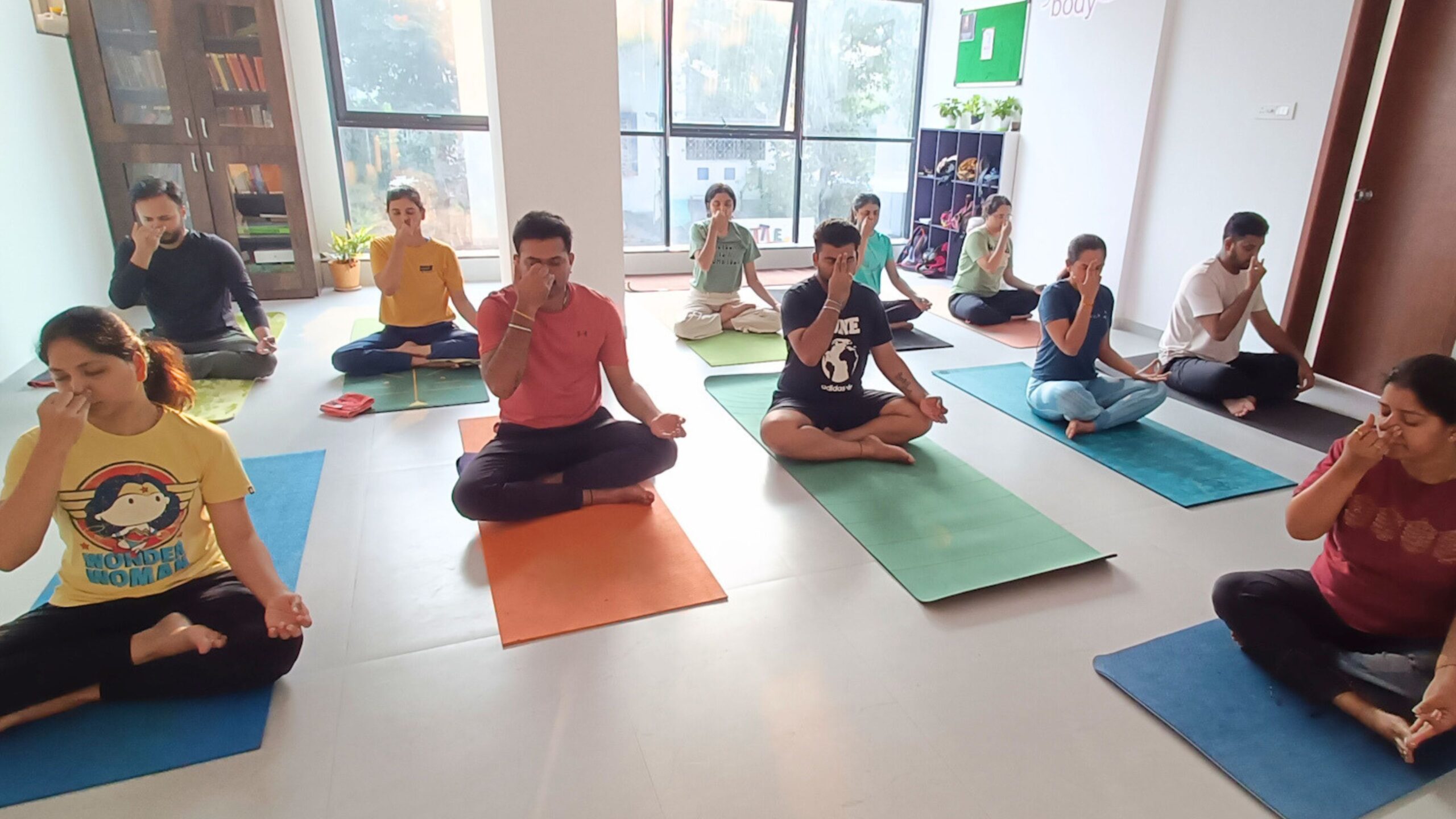
Yoga has moved far beyond the studio mat. It is now woven into corporate wellness programs, hospital therapy departments, school curriculums, luxury resorts, and millions of living rooms through online classes. This expansion has created a genuine boom in yoga teacher jobs, but it has also made the job market more competitive and, at times, confusing for newly certified instructors.
If you have just completed your training and are wondering how to actually turn your certification into a paycheck, this guide walks you through everything you need to know. From understanding the different types of yoga job opportunities to building a standout resume, negotiating pay, and exploring online yoga teacher jobs, this is your complete roadmap into the profession.
Understanding the Yoga Job Market Today
The wellness industry has grown into a multi-billion-dollar global sector, and yoga sits at its core. As more people prioritize mental health, flexibility, and stress management, the demand for qualified instructors continues to climb. But not all yoga teacher jobs look the same, and understanding the landscape helps you target the right opportunities instead of applying blindly.
Broadly speaking, the market for a yoga instructor today includes:
- Traditional studio teaching positions, both full-time and freelance.
- Gym and fitness chain roles where yoga is offered alongside other group classes.
- Corporate wellness programs hiring instructors for on-site or virtual sessions.
- Private and semi-private one-on-one instruction for individual clients.
- Resort, spa, and retreat-based teaching, often including travel opportunities.
- School and university programs incorporating yoga into physical education or wellness curriculums.
- Therapeutic and medical settings, including hospitals and rehabilitation centers.
- Fully remote, digital-first teaching through apps, platforms, and personal online studios.
Each of these paths comes with different expectations, pay structures, and required experience levels, which is why it helps to clarify your goals before diving into applications.
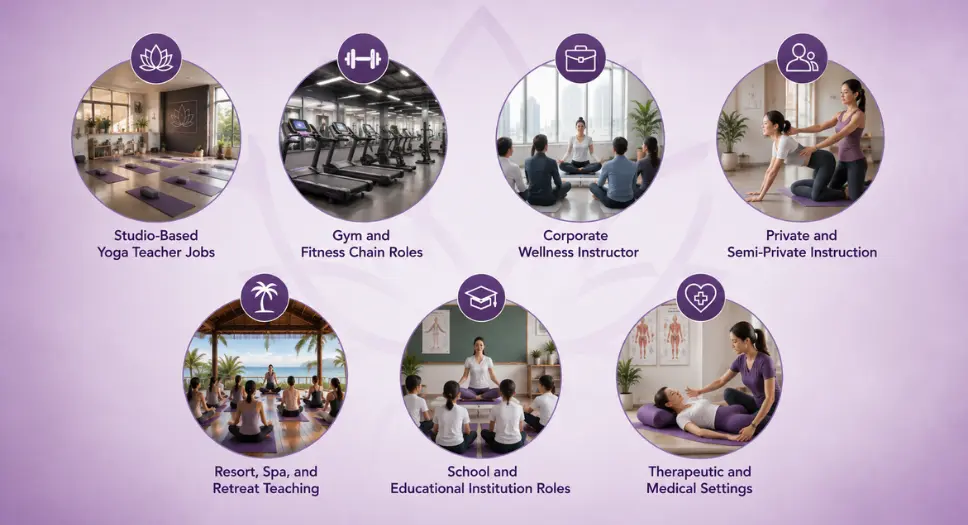
Types of Yoga Teacher Jobs You Can Pursue
1. Studio-Based Yoga Teacher Jobs
This is the most traditional entry point for a new yoga instructor. Studios typically hire teachers on a per-class basis, though some larger studios offer part-time or full-time contracts with benefits. Studio teaching is a great way to build community, get consistent feedback, and develop your teaching voice in front of live students.
- Pay is often per class, ranging based on location, studio size, and your experience level.
- Many studios require a minimum 200-hour certification before hiring.
- Building a loyal student following can lead to more classes and better pay over time.
2. Gym and Fitness Chain Roles
Large fitness chains frequently hire instructors to teach yoga as part of their group fitness schedule. These yoga trainer jobs tend to be more structured, often following a standardized class format or choreography provided by the company.
- Pay is usually stable and predictable, often hourly or per session.
- These roles can offer excellent experience for teachers early in their careers.
- Class sizes tend to be larger, which helps build confidence teaching bigger groups.
3. Corporate Wellness Instructor
As companies invest more in employee wellbeing, corporate yoga job opportunities have grown significantly. Instructors may teach in-office sessions, virtual lunchtime classes, or wellness retreats organized by HR departments.
- These roles often pay well due to corporate budgets.
- Teaching style needs to be adaptable, since participants range from complete beginners to experienced practitioners.
- Building relationships with corporate wellness coordinators can lead to long-term, recurring contracts.
4. Private and Semi-Private Instruction
Many instructors build a thriving career, or a strong side income, through private teaching. This involves working one-on-one or with small groups, often at a client’s home or a private studio space.
- Rates for private sessions are typically significantly higher than group classes.
- This path requires strong interpersonal skills and the ability to customize sessions to individual needs.
- Word-of-mouth referrals are often the biggest driver of new private clients.
5. Resort, Spa, and Retreat Teaching
For instructors who love to travel, resort and retreat-based yoga teacher jobs offer a unique lifestyle. These positions can be seasonal, contract-based, or part of an ongoing residency program at wellness resorts.
- Many roles include accommodation and meals as part of the compensation package.
- Retreat teaching often requires additional skills like meditation facilitation or workshop leading.
- These jobs are highly competitive and often favor teachers with more advanced training or specialties.
6. School and Educational Institution Roles
Yoga is increasingly being introduced into schools and universities as part of physical education, stress management programs, or extracurricular offerings. A yoga instructor working in this space often needs additional training in working with children or teenagers.
- These roles tend to offer stable, recurring schedules.
- Background checks and child safety certifications are often required.
- Pay can vary widely depending on whether the institution is public or private.
7. Therapeutic and Medical Settings
Hospitals, rehabilitation centers, and mental health clinics increasingly incorporate yoga therapy into patient care. These specialized yoga trainer jobs typically require advanced training beyond a standard 200-hour certification, often including yoga therapy or trauma-informed yoga education.
- These positions can be deeply rewarding for teachers interested in the therapeutic side of yoga.
- Additional certifications in anatomy, yoga therapy, or trauma-sensitive teaching are usually required.
- Pay and demand for these specialized roles continue to grow as healthcare systems recognize the value of mind-body practices.

The Rise of Online Yoga Teacher Jobs
Perhaps the biggest shift in the industry over the past several years has been the explosion of online yoga teacher jobs. What started as a necessity during global lockdowns has become a permanent and thriving segment of the profession.
Online teaching now includes several distinct formats:
- Live virtual classes taught through video platforms, either independently or through an app or studio.
- Pre-recorded course creation for platforms where students purchase or subscribe to structured yoga programs.
- One-on-one virtual private sessions, often booked through scheduling platforms.
- Yoga app instructor roles, where established apps hire instructors to film content for their subscriber base.
- Social media-based teaching, where instructors build an audience and monetize through memberships, sponsorships, or digital products.
Benefits of Online Yoga Teaching
- Removes geographic limitations, allowing you to teach students anywhere in the world.
- Offers flexible scheduling, which is ideal for teachers balancing other jobs or family responsibilities.
- Lower overhead costs since there is no need to rent physical studio space.
- Opens the door to passive income through recorded courses and digital content.
Challenges to Consider
- The online space is highly saturated, requiring strong marketing and personal branding skills.
- Building trust and a genuine connection with students can be harder without in-person interaction.
- Technical skills, such as basic video editing and platform management, become part of the job.
- Income can be inconsistent at first, especially before building a loyal audience.
For new instructors willing to invest in building an online presence, online yoga teacher jobs can eventually become one of the most flexible and scalable career paths in the industry.
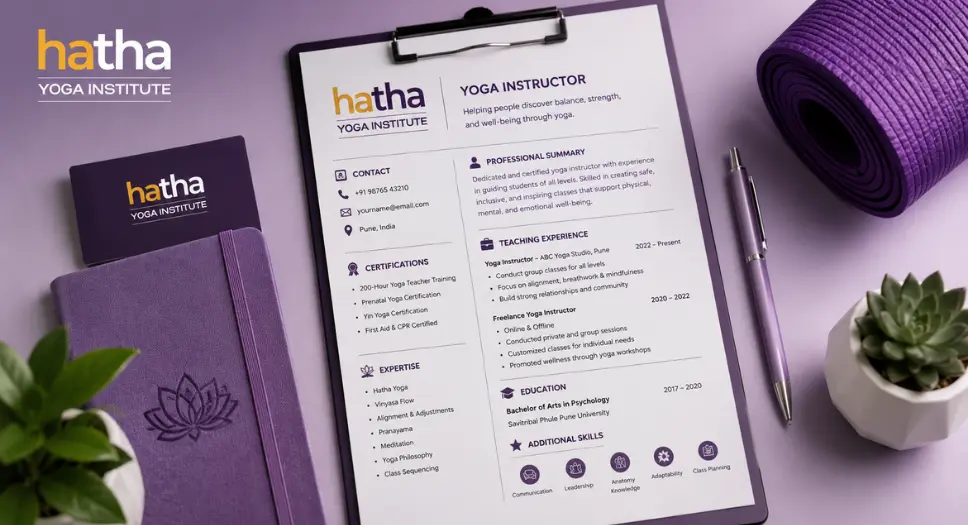
How to Build a Strong Yoga Instructor Resume
Before applying to any yoga job, your resume and application materials need to reflect both your qualifications and your teaching personality. Key elements to include:
- Your certification level and issuing body, such as a 200-hour or 500-hour credential.
- Any specialized training, including prenatal, yin, restorative, or therapeutic yoga.
- Teaching experience, even if it includes practicum hours from your training program.
- A short, authentic teaching philosophy that reflects your style and values.
- Links to social media or a personal website showcasing your teaching, if available.
- Any additional relevant skills, such as meditation facilitation, breathwork, or nutrition knowledge.
A well-organized, professional application significantly increases your chances of standing out among other new instructors applying for the same yoga teacher jobs.
Tips for Landing Your First Yoga Teaching Job
- Start local. Reach out to studios in your area, even for substitute teaching opportunities, to build experience and relationships.
- Offer free or discounted classes initially. This helps you gain confidence and collect testimonials for your resume.
- Network within the wellness community. Attend workshops, trainings, and community events to meet studio owners and fellow teachers.
- Build an online presence early. Even a simple social media profile showcasing your practice can attract opportunities.
- Be flexible with class formats. Being willing to teach different styles, such as vinyasa, hatha, or restorative, increases your hireability.
- Ask for feedback. Constructive feedback from mentors or senior teachers accelerates your growth as a yoga instructor.
- Stay consistent with continuing education. Employers value teachers who continue learning beyond their initial certification.
How Training Quality Impacts Job Opportunities
The quality of your original training plays a major role in how competitive you are in the job market. Employers and studios often look closely at where a candidate trained, not just the certification itself. This is why choosing a respected, well-structured training program matters just as much as the certification title on your resume.
Institutes with a strong reputation for authentic, comprehensive training, such as the Hatha Yoga Institute, tend to produce graduates who are better prepared for real-world teaching challenges. A solid foundation in classical alignment, anatomy, and teaching methodology gives new instructors a noticeable edge when applying for competitive yoga teacher jobs, whether in studios, corporate settings, or online platforms. If you are still early in your certification journey, choosing a training program known for producing job-ready graduates can make your transition into the workforce significantly smoother.
Salary Expectations for New Yoga Instructors
Compensation for yoga trainer jobs varies widely depending on location, teaching format, and experience level. While it is difficult to give exact numbers due to regional differences, some general patterns hold true across the industry:
- Studio class rates are typically the lowest starting point but offer valuable experience.
- Private sessions and corporate contracts tend to offer significantly higher pay per hour.
- Online teaching income can range dramatically, from modest side income to substantial full-time earnings for established instructors.
- Specialized skills, such as therapeutic yoga or prenatal training, often command higher rates due to lower competition.
New instructors should expect an adjustment period where income builds gradually as reputation, experience, and client base grow.
Final Thoughts
The path to a fulfilling career in yoga is no longer limited to teaching a single class at a local studio. Today’s yoga teacher jobs span traditional studios, corporate wellness programs, resorts, schools, therapeutic settings, and a rapidly growing digital landscape through online yoga teacher jobs. Each path offers its own rewards, challenges, and income potential.
Success as a yoga instructor comes down to a combination of solid training, consistent practice, adaptability, and a genuine passion for helping others. Whether you dream of teaching sunrise classes on a beach retreat or building a global online yoga brand from home, the opportunities available today are more diverse than ever before. Invest in quality training, stay committed to your own growth, and approach the job search with patience and persistence, and you will find your place within this thriving and meaningful profession.