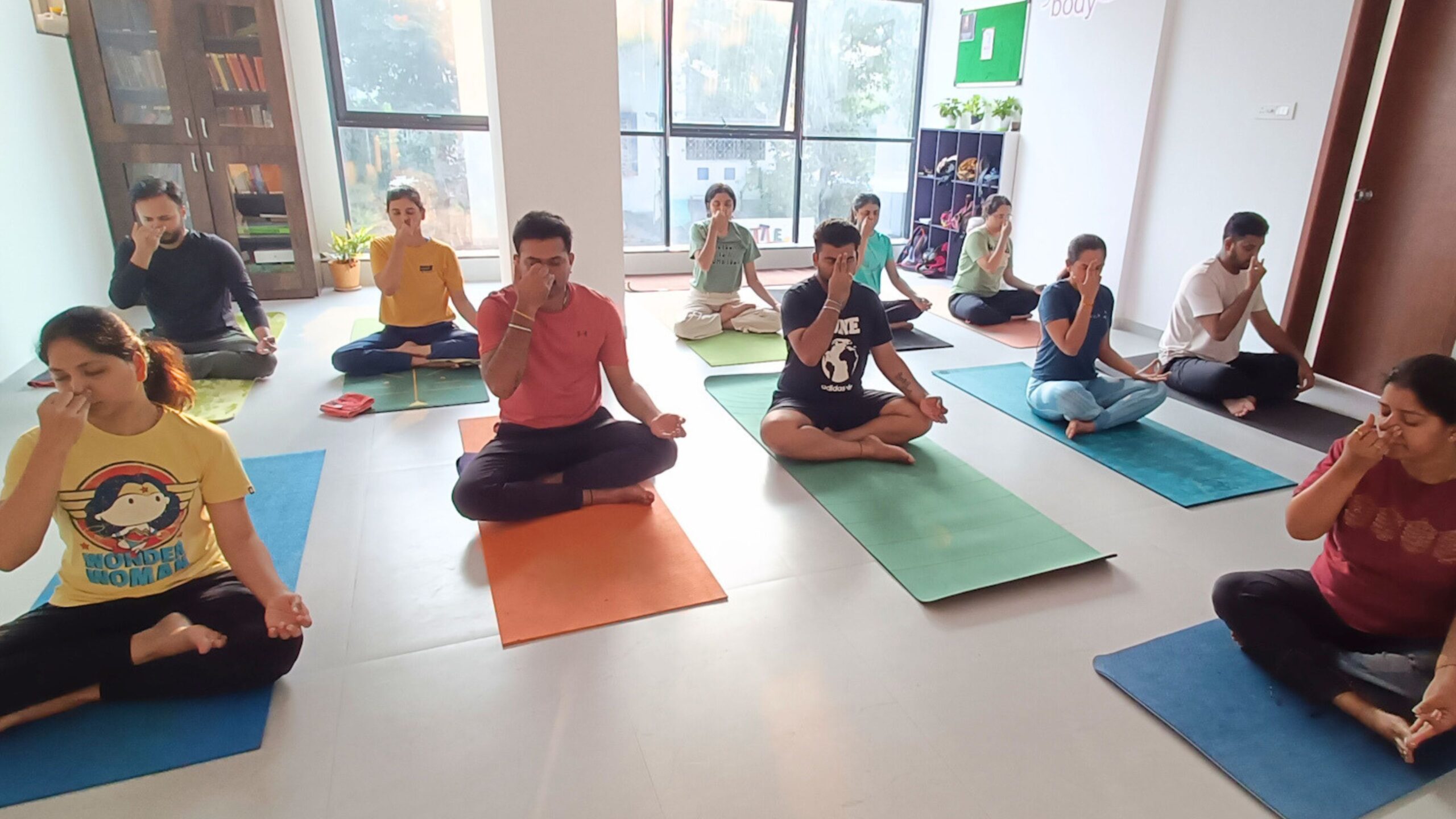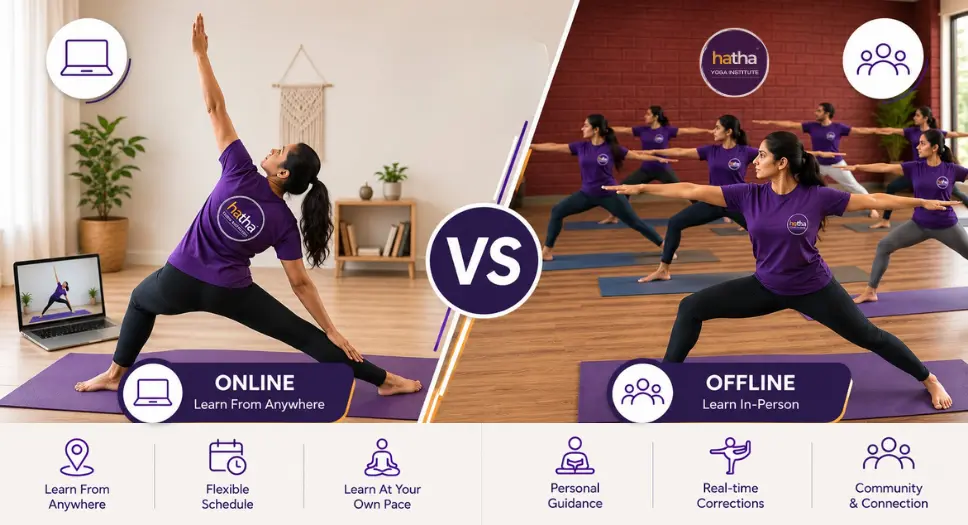
Yoga has grown from a quiet spiritual practice into a global movement, and with that growth has come a booming demand for qualified instructors. If you are passionate about yoga and dream of teaching it professionally, you have likely already searched for a yoga teacher training program. But almost immediately, a big question arises: should you choose an online yoga teacher training course, or should you enrol in a traditional, in-person program?
In recent years, online yoga teacher training has become the preferred choice for a growing number of aspiring instructors, thanks to its flexibility, affordability, and accessibility. In this blog, we will take a closer look at what makes online training such a compelling option today, while also giving offline training its fair due, so you can make an informed decision that fits your lifestyle, learning style, and career goals.
What Is Online Yoga Teacher Training?
Online yoga teacher training is a modern, digital approach to becoming a certified yoga teacher. Students attend live or recorded classes from home, interact with instructors through video calls, submit assignments digitally, and connect with fellow trainees globally through group chats, forums, and virtual meetups. This format gained popularity after 2020 when travel restrictions forced the wellness industry to adjust quickly. Many students discovered they preferred the flexibility, affordability, and comfort it offered. Today, online programs have significantly improved, featuring structured curriculums, live interactive sessions, small breakout groups for practice teaching, and recorded content that students can revisit anytime.

Why Online Yoga Teacher Training Has Grown So Popular
- Global accessibility: You can enrol in a reputable yoga teacher training program from anywhere in the world, without needing a visa, flight, or long-term leave from work.
- Learn at your own pace: Recorded sessions let you rewatch difficult concepts, pause during busy weeks, and revisit material as you build your teaching skills over time.
- Lower financial barrier: Without accommodation, travel, or food costs, online training removes a major obstacle that used to keep many aspiring instructors from pursuing certification at all.
- Comfort and familiarity: Practicing and studying in your own space, with your own props, mat, and routine, can actually deepen your personal practice rather than disrupt it.
- Wider choice of schools and mentors: Instead of being limited to schools near you or destinations you can travel to, online training lets you choose from instructors and institutes across the globe, based purely on curriculum quality and teaching style.
- Better fit for working professionals and parents: Since sessions can often be scheduled around your day, online training makes it realistic for people with jobs, children, or other responsibilities to still complete a full certification.
- Technology-enabled practice teaching: Modern platforms use breakout rooms, screen sharing, and multiple camera angles, allowing instructors to give detailed feedback that closely mirrors an in-person classroom experience.
What Is Offline Yoga Teacher Training?
Offline, or in-person, yoga teacher training is the traditional model. Students travel to a physical location, such as an ashram, yoga school, or wellness retreat, and live and train alongside their peers, often in an immersive residential setting for two to four weeks. Classes occur face-to-face, and students practice asanas, pranayama, meditation, and teaching methodology under direct supervision. This format is closely linked to India’s yogic traditions, where many students travel to cities like Rishikesh, Goa, or Mysore to complete their certification in an authentic cultural and spiritual environment. It remains a valuable option for those who can dedicate the time, budget, and flexibility that travel requires.
Key Differences Between Online and Offline Training
1. Flexibility and Convenience
- Online yoga teacher training allows you to study at your own pace, fitting classes around a job, family responsibilities, or other commitments, with recorded sessions available for review whenever you need them.
- Many online schools offer multiple batch timings across time zones, so you can join sessions that suit your daily routine.
- Offline training, by contrast, requires you to commit to a fixed schedule for the full duration of the course, with little to no room for flexibility once it begins.
2. Cost Considerations
- Online yoga teacher training programs are generally far more affordable, since there are no costs for accommodation, meals, flights, or visas.
- You save significantly on travel expenses, which can otherwise run into hundreds or even thousands of dollars depending on your location and the training destination.
- Offline programs bundle in the cost of lodging, food, and sometimes transfers, which can make the total investment considerably higher.
3. Learning Environment and Comfort
- With online yoga teacher training, you remain in your familiar environment, which can help you integrate new techniques into your daily life immediately, rather than having to readjust after returning home from a retreat.
- You can set up a dedicated, quiet practice space at home, using your own equipment, at a time of day when you feel most focused.
- Offline training places you in a dedicated retreat setting, often surrounded by nature, which supports immersion but requires adapting to shared living arrangements.
4. Hands-On Correction and Feedback
- Many online programs now use multiple camera angles, smaller batch sizes, and dedicated breakout sessions to give detailed, individualized feedback on alignment and posture, closely approximating in-person correction.
- Instructors in strong online yoga teacher training programs give precise verbal cues that compensate for the lack of physical touch, and many students find this builds a deeper, more independent understanding of their own alignment.
- Offline programs offer physical, hands-on adjustments, which can be valuable for absolute beginners still developing body awareness.
5. Community and Networking
- Online yoga teacher training builds community through live video sessions, dedicated group chats, and social media groups, connecting you with fellow trainees from many different countries and backgrounds.
- Many online schools also organize optional in-person meetups or retreats for their graduates, giving you the option to meet your cohort later if you choose.
- Offline training creates close, intensive bonds formed by living together for weeks, though this community is naturally smaller and more geographically limited.
6. Practical Teaching Practice
- Online programs use breakout rooms for supervised practice teaching, letting you lead a small virtual class and receive real-time feedback, a format that mirrors the growing world of virtual yoga instruction.
- Since more studios and individual clients now take classes online, practicing your teaching skills in a virtual yoga teacher training environment prepares you directly for a genuinely modern teaching career.
- Offline programs offer supervised in-person practice teaching, which builds confidence specifically for physical classroom settings.
7. Certification Value and Recognition
- Both formats can offer internationally recognized certifications, most commonly through Yoga Alliance, provided the school is properly registered and accredited, regardless of whether the training was delivered online or offline.
- Employers and studios generally care far more about the quality of your certification and your teaching ability than the format in which you trained.
- A small number of traditional studios may still show a preference for offline, culture-rooted training, though this is becoming less common as online yoga teacher training becomes mainstream.
8. Self-Discipline and Motivation
- Online yoga teacher training does require a degree of self-motivation, since there is no external structure physically forcing you to show up each day.
- Most reputable online programs address this directly, using live sessions, attendance tracking, and structured weekly milestones to keep students on track.
- Offline training removes this burden almost entirely through a fixed daily schedule, though this structure comes at the cost of flexibility.
Who Should Choose Online Yoga Teacher Training?
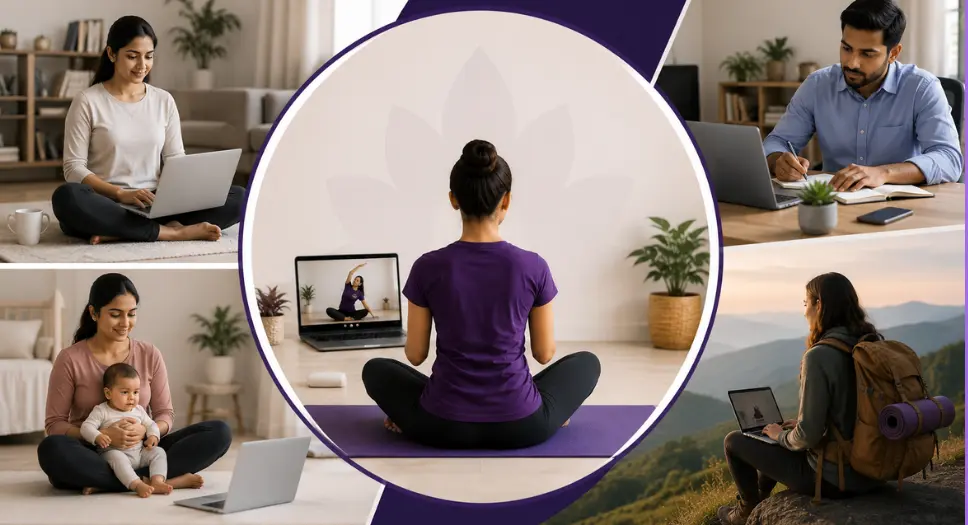
Online yoga teacher training tends to be the better fit for most modern learners, especially if you:
- Have a full-time job, family responsibilities, or a busy schedule that makes travel difficult.
- Want to save money while still earning a recognized, respected certification.
- Prefer studying from the comfort of your own home, on your own equipment.
- Live far from established yoga training.
- destinations and cannot easily relocate for weeks.
- Want to build skills specifically suited to teaching virtual or hybrid classes in the future.
- Value the ability to learn from expert instructors anywhere in the world, not just those near you.
Who Should Choose Offline Yoga Teacher Training?
Offline training may be the better choice if you:
- Can take extended time off work or personal commitments.
- Value hands-on, in-person correction and mentorship.
- Want a deeply immersive, culturally rooted experience.
- Thrive in structured environments with fixed daily routines.
Is There a Middle Ground? Hybrid Yoga Teacher Training
Many modern schools now offer hybrid programs that combine online theory sessions with a shorter, in-person practicum. This model lets students complete philosophy, anatomy, and lecture-based content online at their own pace, while still setting aside a shorter, focused period for hands-on practice and assessment. A hybrid yoga teacher training can be an excellent middle ground for those who want the flexibility of online learning without giving up some in-person practice.
Career Opportunities After Yoga Teacher Training
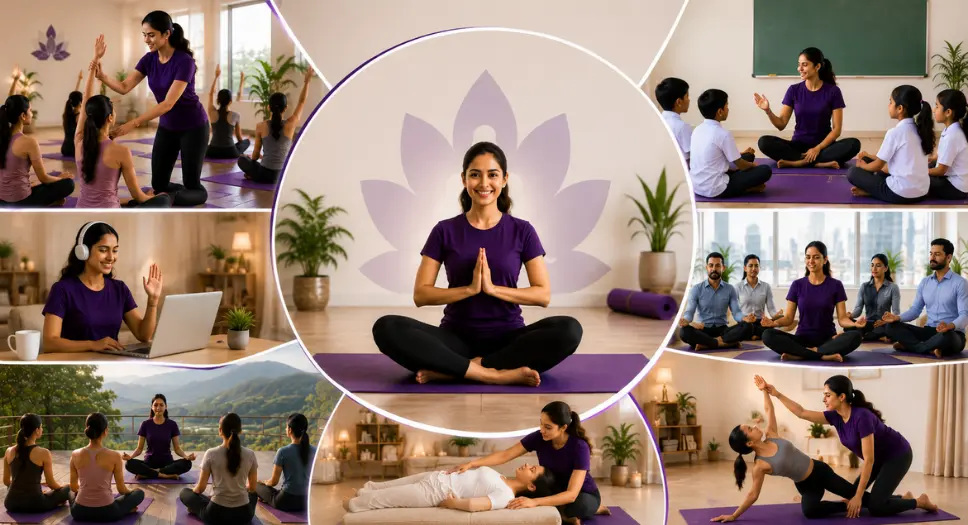
Whichever format you choose, completing a yoga teacher training opens doors to a wide range of career paths, and online training in particular sets you up well for the direction the industry is heading.
- Online content creation and virtual classes: Graduates of online programs are often naturally comfortable building their own virtual classes, YouTube channels, or subscription-based platforms.
- Private online coaching: One-on-one virtual coaching is one of the fastest-growing niches for newly certified instructors, letting you build a client base without geographic limits.
- Studio teaching: Many graduates also go on to teach group classes at local yoga studios or fitness centres, applying their training in a physical setting.
- Corporate wellness and retreats: Companies hire yoga instructors for virtual wellness sessions, while experienced teachers of either format often go on to lead their own retreats and workshops.
- Specialized teaching: Both formats can be a launching point for further specialization in areas like prenatal yoga, yoga therapy, or kids’ yoga.
A Word About Choosing the Right School
Regardless of which format you choose, the single most important factor is the quality and credibility of the school itself. Look for:
- Yoga Alliance registration or equivalent recognized accreditation.
- Experienced, qualified lead instructors.
- Clear curriculum covering asana, anatomy, philosophy, pranayama, and teaching methodology.
- Live interactive sessions rather than pre-recorded content alone, if you choose an online program.
- Positive reviews and testimonials from past graduates.
- Transparent information about fees, schedules, and certification process
This is where Hatha Yoga Institute stands out as a trusted name in yoga education. Hatha Yoga Institute offers a well-structured online yoga teacher training program designed to give aspiring instructors a solid foundation in traditional Hatha yoga, combined with live interactive sessions, small batch sizes, and personalized feedback that closely mirrors an in-person experience, all from the comfort of your home. For those who prefer an in-person experience, Hatha Yoga Institute also offers offline yoga teacher training, ensuring you can choose the format that best suits your life, without compromising on the depth or authenticity of your training. Whether you prefer the flexibility of learning online or the immersive experience of an in-person retreat, Hatha Yoga Institute’s programs are built to help you grow into a confident, capable yoga teacher.

Frequently Asked Questions
1. Is online yoga teacher training as legitimate as offline training?
Yes, provided the school is properly accredited. Certification legitimacy depends on the school’s registration status, most commonly through Yoga Alliance, not on whether the training was delivered online or offline. A well-accredited online yoga teacher training program carries the same recognized certification as an offline one.
2. Can I build real relationships and community in an online program?
Yes. While the dynamic is different from living together in person, many online cohorts form close, supportive communities through regular live video sessions, shared assignments, and group discussions that continue long after the course ends.
3. Is online yoga teacher training rigorous enough to make me job-ready?
Strong online programs include live assessments, supervised practice teaching, detailed assignments, and exams that are every bit as demanding as an offline course. The key is choosing a school with live interactive sessions rather than one built entirely on pre-recorded content.
4. Do I need prior experience to start an online yoga teacher training program?
No. Reputable schools, including Hatha Yoga Institute, design their yoga teacher training curriculum for practitioners at various levels, not just advanced yogis.
5. How can I stay disciplined and get the most out of an online program?
Set up a dedicated, distraction-free practice space at home, treat live sessions like fixed appointments on your calendar, participate actively in breakout rooms rather than watching passively, and connect with fellow students to build accountability.
6. Is online yoga teacher training cheaper than offline training?
Generally, yes. Online programs remove the costs of travel, accommodation, meals, and visas, making certification accessible to a much wider range of aspiring instructors compared to a residential offline program.
7. Can I combine online and offline training?
Absolutely. Many schools now offer hybrid programs that pair online theory with a shorter, in-person practicum, giving you the flexibility of online learning along with some hands-on practice and community time.
Final Thoughts
For most aspiring instructors today, online yoga teacher training offers the strongest combination of flexibility, affordability, and accessibility, without compromising on the quality of your certification, provided you choose a reputable, accredited school. Offline training still holds real value for those who can dedicate the time and budget to an immersive, culturally rooted experience, and a hybrid approach can offer the best of both worlds for some learners.
Think honestly about your schedule, budget, learning style, and long-term teaching goals. Whichever path you choose, what matters most is committing fully to the process, practicing consistently, and choosing a reputable school that will genuinely prepare you to teach with confidence and integrity. Both roads can lead you to the same destination: becoming a skilled, certified yoga teacher ready to share the practice with others.