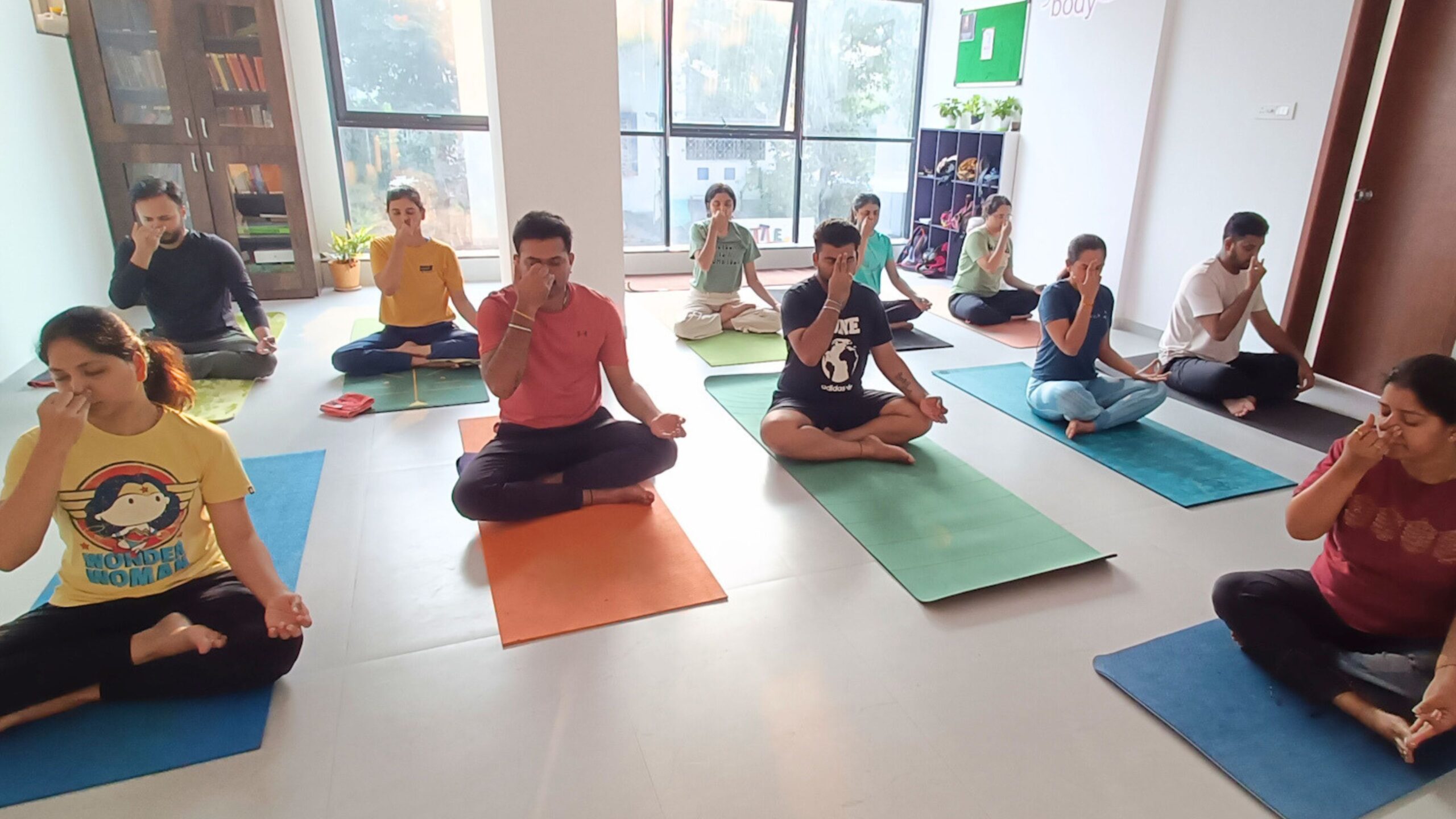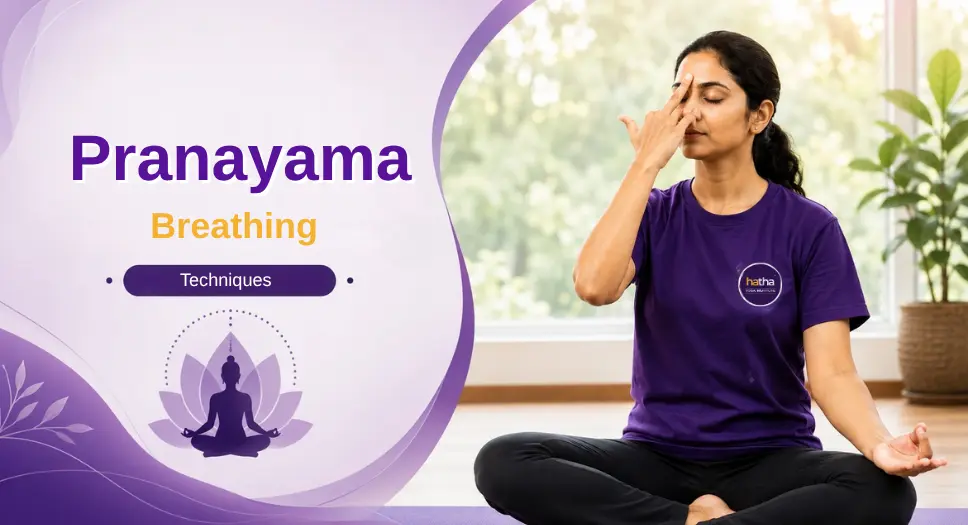
We live in a world that rarely slows down. Stress accumulates quietly in the shoulders, in shallow breathing, in a mind that races from one worry to the next. Yet one of the oldest and most powerful antidotes to this modern restlessness has been right under our noses, quite literally. Pranayama, the ancient yogic science of breath control, offers a direct pathway to calm, clarity, and vitality that anyone can access, anytime.
The word pranayama comes from two Sanskrit roots: prana, meaning life force or vital energy, and ayama, meaning extension or expansion. Together, they describe a practice that goes far beyond simple breathing exercises. Pranayama treats the breath as a bridge between the body and the mind, and between the conscious and unconscious systems that govern our health. When we learn to work with the breath intentionally, we gain a tool that can calm anxiety within minutes, balance the nervous system over time, and with dedicated practice, unlock deeper states of meditation and inner awareness.
This guide walks you through the foundational concepts of pranayama breathing and four essential pranayama techniques that you can begin integrating into your daily life. Whether you are completely new to yoga or have some experience, these practices meet you where you are.
Understanding the Three Phases of Breath in Pranayama
Before diving into specific techniques, it is important to understand how pranayama breathing techniques structure the breath. Every pranayama practice is built on three fundamental components:
1. Pooraka: Complete Inhalation. Pooraka refers to the full, conscious inhalation of breath. In pranayama, this is not a casual inhale but a deliberate, complete filling of the lungs. The practitioner draws breath slowly and fully, expanding the chest and abdomen.
2. Rechaka: Complete Exhalation. Rechaka is the full, controlled exhalation. Just as important as the inhalation, the exhale in pranayama is slow, steady, and thorough, releasing not just carbon dioxide but also tension, mental noise, and stagnant energy.
3. Kumbhaka: Breath Retention. Kumbhaka is perhaps the most transformative element of pranayama yoga. It refers to the deliberate holding of breath, and it comes in two forms:
- Antar Kumbhaka is internal breath retention, where the breath is held after a full inhalation.
- Bahir or Bahya Kumbhaka, also known as Shunyaka, is external breath retention, where the breath is held after a complete exhalation.
There is also an advanced form called Kevala Kumbhaka, which is a spontaneous, effortless breath retention that arises during deep states of meditation. This is not something that can be forced or practiced by beginners; it emerges naturally in experienced yogis as a sign of profound stillness.
The Ideal Ratio for Pranayama Practice
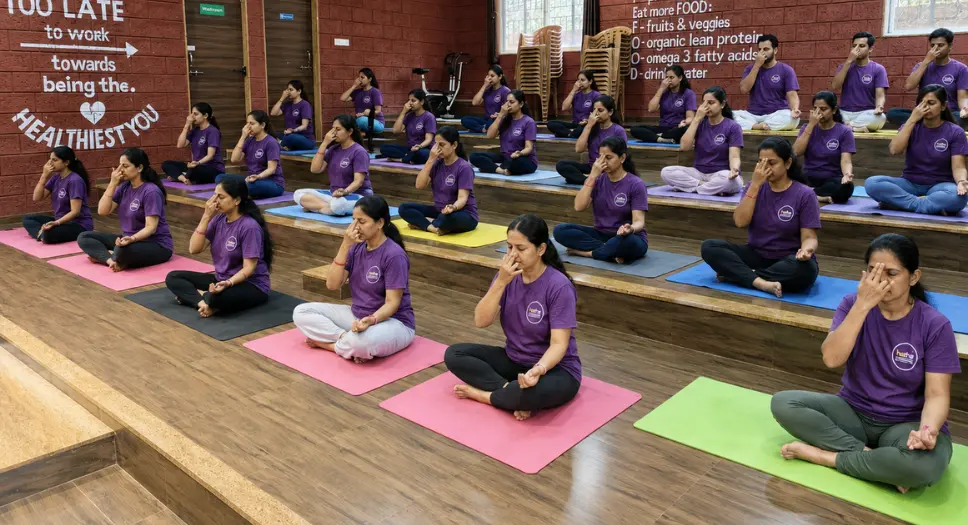
The classical texts prescribe a specific ratio for the three phases of breath: Pooraka : Antar Kumbhaka : Rechaka = 1 : 4 : 2. This means if you inhale for 4 counts, you hold for 16 counts and exhale for 8 counts. However, this advanced ratio should be approached gradually.
Beginners are advised to start with a 1:1:1 ratio, meaning equal parts inhalation, retention, and exhalation. As comfort and lung capacity grow, move to 1:2:2, and eventually to the classical 1:4:2. When Bahir Kumbhaka is added to the practice, the ratio becomes 1:4:2:2.
A crucial word of caution: pranayama carries real power to transform, but also to harm if practiced incorrectly. Advanced breath retention, in particular, should always be undertaken with the guidance of an experienced teacher or guru. This is not a disclaimer to be glossed over; the yogic tradition has always emphasised that the breath, when manipulated without proper knowledge, can disturb the nervous system and create imbalances. Approach these practices with patience and respect.
Anuloma Viloma / Nadi Shodhana: The Purifying Breath
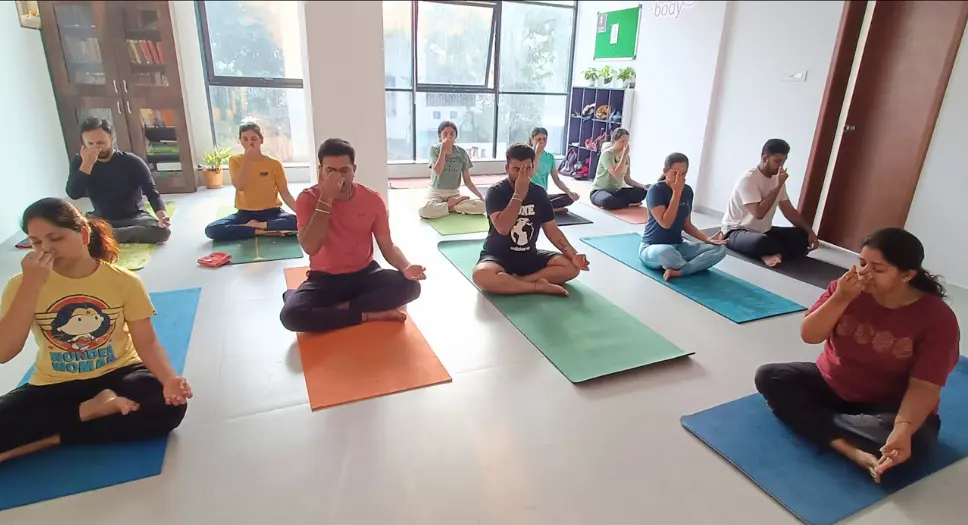
Pranayama techniques rarely come more foundational, or more beneficial, than Nadi Shodhana. The name itself tells the full story: Nadi means subtle energy channel, and Shodhan means cleansing or purification. Anulom Vilom, meaning ‘breathing with the open and closed nostril,’ is the name used when the technique includes breath retention and the proper hand mudra.
Why Nadi Shodhana Matters
According to yogic anatomy, the body contains a network of nadis, which are subtle channels through which prana, or life force, flows. Three of these are considered most significant: Ida, Pingala, and Sushumna.
When the Ida nadi is blocked or sluggish, a person may experience coldness, depression, low mental energy, sluggish digestion, and a blocked left nostril. When the Pingala nadi is obstructed, the effects are almost opposite, including heat, quick temper, irritability, dry skin and throat, excessive appetite, and a blocked right nostril. Nadi Shodhana works to clear both channels, restoring balance and allowing prana to flow freely through the central Sushumna nadi.
How to Practice
- Sit comfortably with your spine tall. Place your left hand on your left knee, palm open to the sky, or form Chin Mudra by gently touching the tips of the thumb and index finger together.
- Use your right hand in Vishnu Mudra: ring finger and little finger to control the left nostril, and the thumb to control the right.
- Close the right nostril with your thumb and breathe in slowly and fully through the left nostril.
- Close the left nostril with the ring and little fingers, release the thumb, and exhale completely through the right nostril.
- Inhale through the right nostril. Then close it, open the left, and exhale through the left. This completes one round.
- Keep the breathing gentle, natural, and unforced. Place the fingers very lightly on the nose and forehead. Never strain.
Benefits of Nadi Shodhana
- An excellent pranayama breathing technique to calm and centre the mind, especially during periods of anxiety or overwhelm.
- Helps bring a wandering mind, one prone to regret about the past or anxiety about the future, back to the present moment.
- Works therapeutically for most circulatory and respiratory problems.
- Effectively releases accumulated stress from both the body and the mind.
- Helps harmonise the left and right hemispheres of the brain, balancing the logical and emotional dimensions of the personality.
- Purifies and balances the nadis, ensuring the smooth flow of prana through the body.
- Helps maintain stable body temperature.
There are no contraindications for Nadi Shodhana. Once learned correctly from a yoga teacher, it can be practiced on an empty stomach two to three times daily.
Sheetali Pranayama: The Cooling Breath
The Sanskrit word Sheetal means cool or soothing, and Sheetali pranayama lives up to its name completely. This is one of the most unique pranayama breathing techniques because it involves inhaling through the mouth, which is something most pranayama practices avoid. The cooling effect it produces on the body and nervous system is immediate and tangible.
In the ancient text Hatha Yoga Pradipika, both Sheetali and the related Sheetkari pranayama are described as practices that cool the body, calm the mind, and with regular practice, help the yogi develop control over thirst and hunger. The comparison made in the classical literature is vivid: the breathing resembles the way pythons, hens, and young deer breathe deeply through an open mouth, drawing in vast amounts of air. Sheetali channels this natural capacity with intention and technique.
How to Practice
- Sit in a comfortable meditative posture with your spine upright.
- Bring your tongue fully out and fold both sides upward to form a tube or straw shape.
- Take a long, deep inhalation through this tube formed by the tongue, as if drawing air through a straw.
- Without retention: Close your mouth after inhaling and exhale slowly through both nostrils.
- With retention: After inhaling, lower your chin to the chest (Jalandhara Bandha) and hold the breath for about 6 to 8 seconds. When ready, release the bandha by lifting the chin, and exhale slowly through the left nostril.
Benefits
- Particularly useful for diseases of the tongue, mouth, and throat.
- Very beneficial for disorders of the spleen.
- Helpful in managing fever and indigestion.
- Effectively controls high blood pressure.
- Useful in Pitta-related imbalances such as excess heat and inflammation.
- Purifies the blood.
- Outstanding for cooling down the body temperature, especially valuable in summer or after strenuous physical activity.
- An effective remedy for insomnia, calming both body and mind before sleep.
- Calms the mind and serves as a powerful stress-buster. A calm mind is far better equipped to handle anger and anxiety.
- Effective in managing hyperacidity.
Caution
People with low blood pressure, asthma, chronic cold and cough, or other respiratory conditions should avoid this pranayama technique. If you are unable to fold your tongue into a tube shape, which is actually a genetic trait not everyone possesses, practice Sheetkari Pranayama instead. Sheetkari produces the same cooling effects but involves inhaling through slightly parted teeth rather than a rolled tongue. Both are mentioned side by side in the Hatha Yoga Pradipika as equivalent cooling practices.
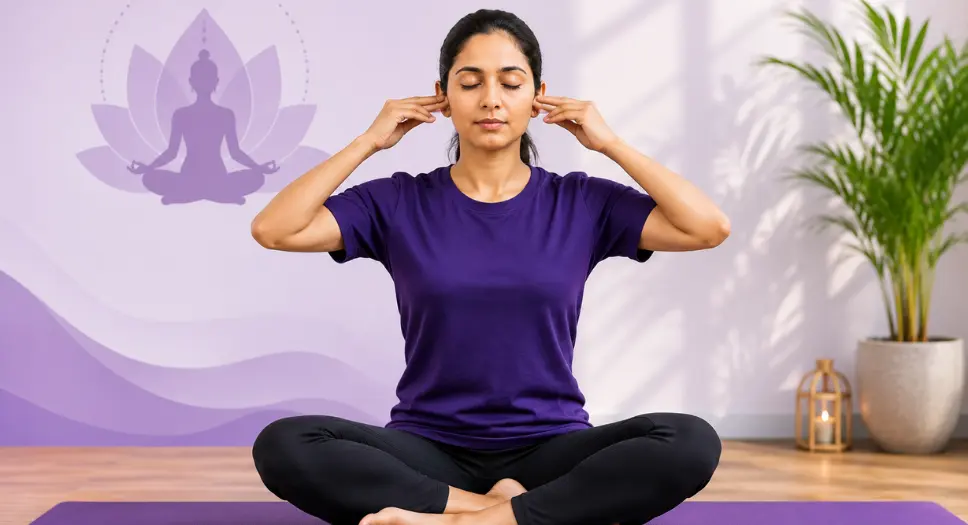
Bhramari Pranayama: The Humming Bee Breath
Of all the pranayama techniques described in classical and modern yoga, Bhramari pranayama may be the most immediately soothing. Its name comes from the black Indian bee called Bhramari, and the defining feature of this practice, which is a sustained humming sound on the exhalation, does indeed carry the resonant, steady quality of a bee’s hum.
The vibration created by this humming is not merely symbolic. It creates a neurological effect on the brain and nervous system that is measurable and profound. Many people who practise Bhramari pranayama for the first time are surprised by how quickly the tension drains from their face, forehead, and jaw.
How to Practice
- Sit comfortably in a quiet place. Close your eyes.
- Form Shanmukhi Mudra with your hands: index fingers resting lightly on the eyebrows, middle fingers gently on the eyelids, ring fingers beside the nose, little fingers on the chin, and thumbs pressing lightly on the ear cartilage (not inside the ear canal).
- Take a deep, slow breath in.
- As you exhale, gently press the ear cartilage and make a loud, steady humming sound like the sound of a bee. You can keep the cartilage lightly pressed, or gently press and release in rhythm with the hum.
- A high-pitched hum is generally recommended for better effect, though a low-pitched hum is also effective.
- Practice 7 to 8 rounds per session.
Variations: Bhramari pranayama can also be practiced lying on your back or on your right side, particularly for those who find seated practice difficult. When lying down, simply produce the humming sound without the full mudra.
Benefits of Bhramari Pranayama
- Provides instant relief from tension, anger, and anxiety. It is one of the most effective pranayama breathing techniques for people dealing with hypertension, as it quickly calms an agitated mind.
- Relieves sensations of heat and mild headaches.
- Helps mitigate migraines.
- Improves concentration and memory.
- Contributes to reducing blood pressure over time.
- Helps calm the mind in preparation for meditation, as it acts as a natural bridge between the active state and the meditative state.
- Soothes the nervous system, particularly around the brain and forehead.
Precautions
- Always place your thumbs on the ear cartilage, not inside the ear canal.
- Do not press the cartilage too firmly. The touch should be light and gentle.
- Keep your mouth closed while making the humming sound.
- Do not put unnecessary pressure on your face.
Bhramari pranayama has no formal contraindications. Once it is learned correctly from a qualified yoga teacher, it can be practiced by anyone, from children to elderly individuals. The only prerequisite is that it should be done on an empty stomach.
Ujjayi Pranayama: The Ocean Breath
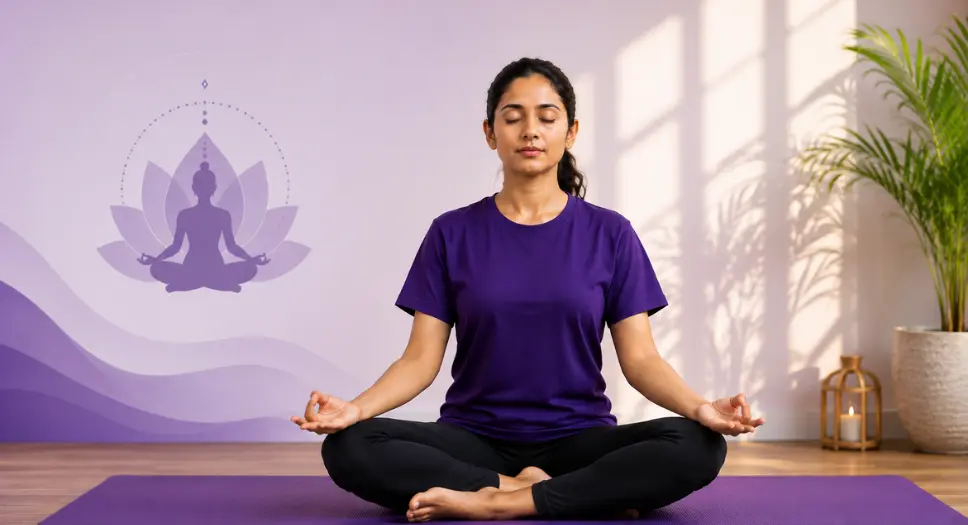
No discussion of essential pranayama techniques is complete without mentioning Ujjayi pranayama, one of the most widely practised breathing techniques in both classical yoga and contemporary yoga classes. Ujjayi means “victorious” in Sanskrit, and this breath is sometimes called the ocean breath because of the soft, wave-like sound it produces.
Ujjayi pranayama involves a gentle constriction at the back of the throat (the glottis), which slows the breath and creates an audible, whispering sound similar to the sound of the ocean in a shell. This slight constriction warms the incoming air, creates internal heat, and produces a uniquely calming effect on the nervous system.
In yoga asana classes, Ujjayi pranayama is often used to maintain a steady breathing rhythm throughout a physical practice. Outside of asana, it is equally valuable as a standalone pranayama breathing meditation, particularly for calming racing thoughts and preparing the mind for deeper concentration.
To practice: Breathe in through the nose while gently narrowing the throat, as if fogging a mirror with your mouth closed. Maintain this slight constriction on the exhalation. The result should be a soft, steady sound, not strained or forced, but smooth and continuous. Practice for 5 to 10 minutes.
Building a Daily Pranayama Practice
The real power of pranayama unfolds through consistency. A single session can calm the nervous system in the moment; a daily practice restructures the way you respond to stress over time. Here are a few guiding principles for building a sustainable routine:
- Practice on an empty stomach, ideally in the early morning, before meals, or at least 2 hours after eating.
- Start simple by beginning with Nadi Shodhana or Bhramari pranayama, as both are gentle, accessible, and deeply effective.
- Progress gradually and do not rush toward advanced breath ratios or prolonged Kumbhaka. Patience is a virtue that pranayama yoga will teach you naturally.
- Combine techniques. A complete session might include 5 minutes of Nadi Shodhana, followed by 5 minutes of Bhramari pranayama, finishing with a few rounds of Ujjayi pranayama or Sheetali depending on the season and your body’s needs.
- Seek guidance for advanced practice. The foundational pranayama techniques described here are safe for self-study when approached with care. But if you wish to explore extended Kumbhaka, advanced ratios, or intensive daily sadhana, work with an experienced teacher.
Pranayama is not a quick fix. It is an ancient, intelligent system that rewards attentiveness and gradual effort. Each breath you take with awareness is a step toward the calm, clear, vibrant state of health and mind that these practices have been cultivating in human beings for thousands of years.
Deepen Your Practice with Hatha Yoga
Pranayama does not exist in isolation. In the traditional system of Hatha yoga, breathwork and physical postures (asanas) are designed to work together, with one preparing the body for the other. When the body is open and the nadis are clear, pranayama breathing becomes deeper, steadier, and far more effective.
At the Hatha Yoga Institute, we offer structured courses that guide students through authentic pranayama techniques, asana practice, and yogic philosophy, from the very basics to advanced sadhana. Whether you are taking your first step onto the mat or looking to deepen an existing practice, our programs are designed to give you the right foundation under the guidance of experienced teachers.
Because when it comes to pranayama yoga, guidance is not optional; it is everything.
Visit us at www.hathayogainstitute.com to explore our courses and begin your journey.