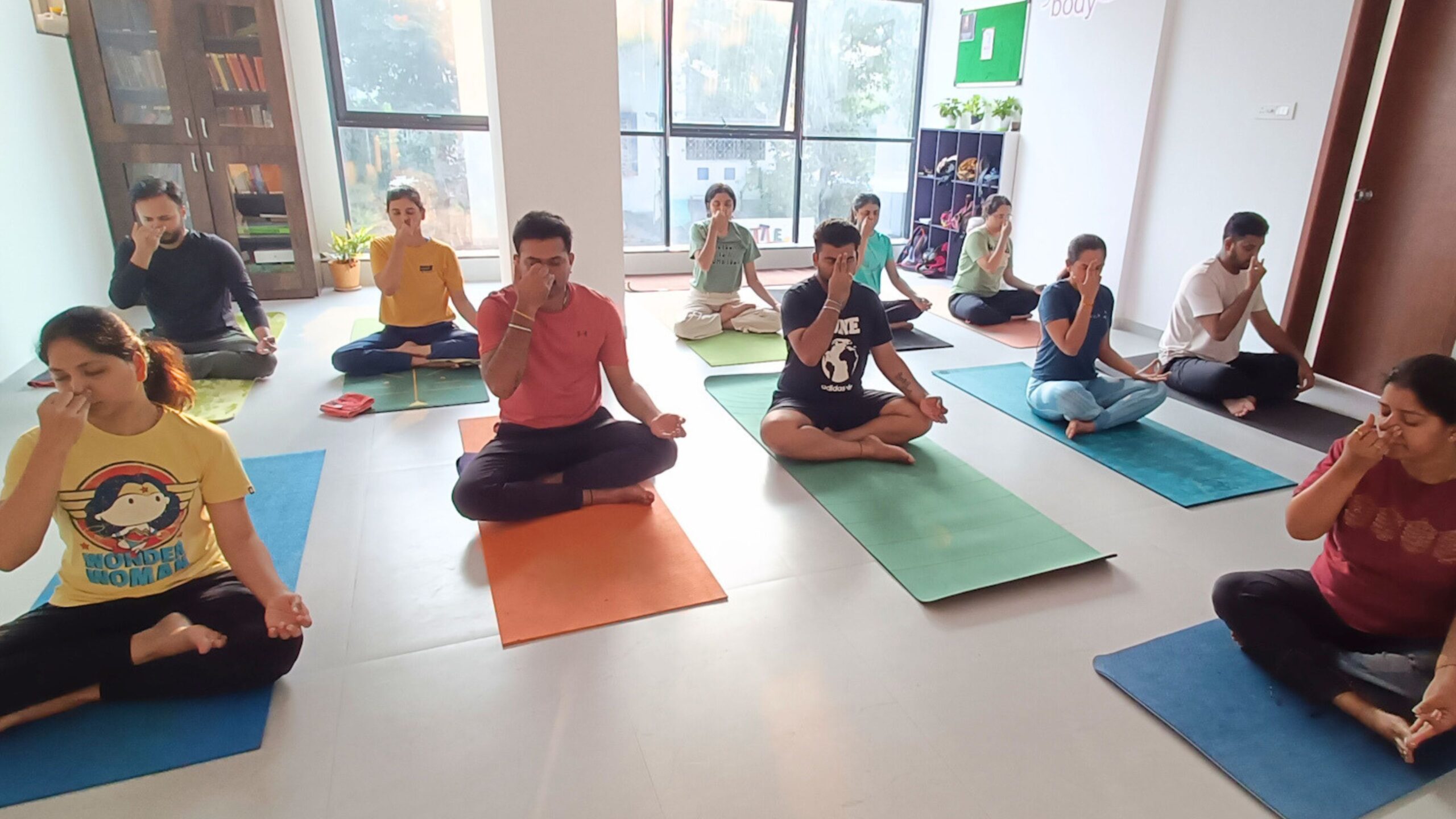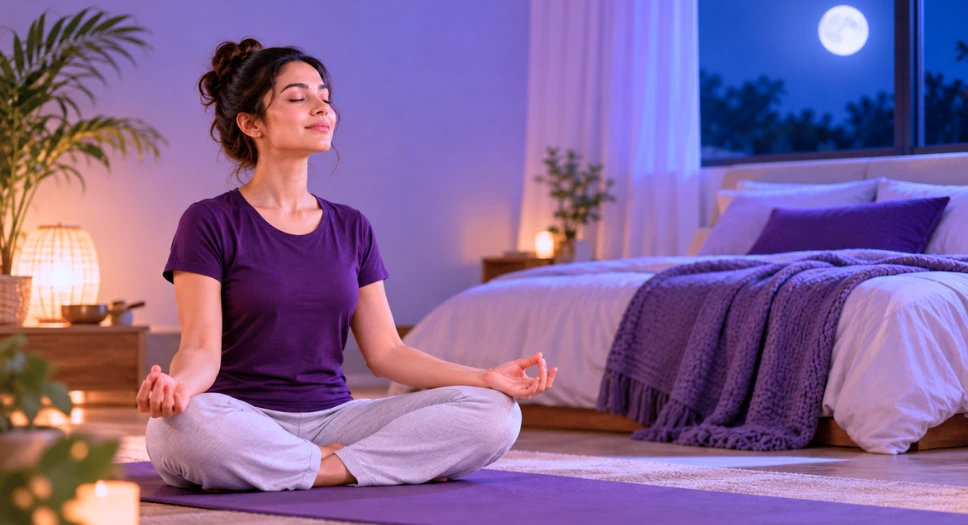
If you have spent countless nights tossing and turning, scrolling through your phone at 2 a.m., or waking up groggy despite going to bed early, you are far from alone. Millions of people struggle with restless nights, racing thoughts, and bodies that simply will not relax. While sleeping pills and supplements are often the first thing people reach for, there is a gentler, more sustainable solution that has been practiced for thousands of years: yoga for better sleep.
Yoga is not just about flexibility or fitness. It is a holistic practice that calms the nervous system, releases physical tension, and quiets the mental chatter that keeps so many of us awake. In this guide, we will explore why sleep better yoga routines work, the science behind them, and practical, easy-to-follow yoga poses for sleep that you can start using tonight.
Why Sleep Struggles Are So Common Today
Before diving into the poses, it helps to understand why so many of us struggle to sleep well in the first place. Modern life is full of stimulation: bright screens, constant notifications, demanding work schedules, and a near-permanent state of mental multitasking. All of this keeps the body’s sympathetic nervous system, the “fight or flight” response, switched on long after we climb into bed.
Common culprits behind poor sleep include:
- Excessive screen time before bed, especially blue light exposure
- Chronic stress and anxiety that keep the mind racing
- Poor posture and muscle tension built up throughout the day
- Irregular sleep schedules that confuse the body’s internal clock
- Caffeine or heavy meals consumed too close to bedtime
- A noisy or overstimulating sleep environment
The good news is that yoga for good sleep directly addresses many of these issues. By shifting the body from a stressed, alert state into a relaxed, parasympathetic state, yoga essentially flips the switch that tells your brain it is safe to rest.
The Science Behind Yoga and Sleep

Yoga’s impact on sleep is not just anecdotal. Research has consistently shown that regular yoga practice can improve sleep quality, reduce the time it takes to fall asleep, and decrease nighttime awakenings. This happens through a few key mechanisms:
- Activation of the parasympathetic nervous system. Slow, deliberate movement combined with deep breathing signals to the brain that it is time to unwind, lowering heart rate and blood pressure.
- Reduction in cortisol levels. Chronic stress keeps cortisol, the body’s primary stress hormone, elevated. Gentle yoga practiced before bed helps bring cortisol down to healthier levels.
- Release of physical tension. Sitting at a desk all day or standing on your feet for hours builds tightness in the hips, shoulders, neck, and lower back. Yoga stretches these areas, easing the physical discomfort that can disrupt sleep.
- Improved mind-body awareness. Practices like mindful breathing and body scanning help quiet an overactive mind, making it easier to let go of the day’s worries.
This combination of physical and mental relaxation is exactly why yoga for a better sleep routine tends to be far more effective than simply lying in bed and hoping sleep will come.
Getting Started: Creating the Right Environment
Before you roll out your mat, it helps to set the stage for a restful practice. A few small adjustments to your space and mindset can make a noticeable difference:
- Dim the lights or use a soft lamp instead of overhead lighting
- Keep your phone out of reach or switch it to do-not-disturb mode
- Wear loose, comfortable clothing that does not restrict movement
- Choose a quiet corner of your bedroom or living room
- Consider playing soft instrumental music or nature sounds
- Keep a cushion, bolster, or folded blanket nearby for extra support
None of these steps need to be elaborate. The goal is simply to create a calm, distraction-free space where your body and mind can begin to unwind.
Best Yoga Poses for Sleep `
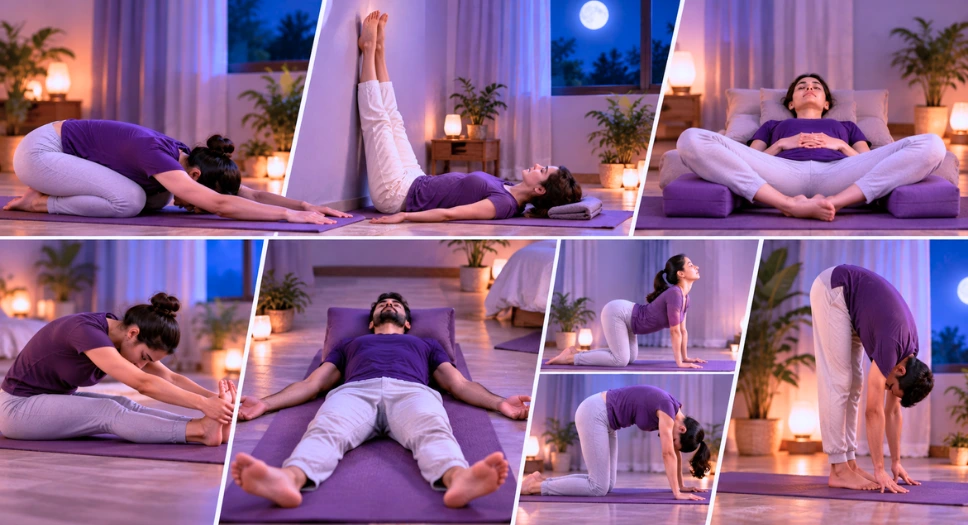
Now let’s get into the practical part. The following yoga poses for sleep are gentle, restorative, and require no prior experience. Hold each pose for anywhere from thirty seconds to a few minutes, breathing slowly and deeply throughout.
1. Child’s Pose (Balasana)
This gentle forward fold is one of the most calming poses in yoga. Kneel on the mat, bring your big toes together, and sit back onto your heels while stretching your arms forward and lowering your forehead to the ground. Child’s Pose gently stretches the lower back and hips while encouraging slow, deep breathing.
- Kneel with knees hip-width apart
- Sit back onto your heels
- Stretch arms forward or rest them alongside your body
- Breathe deeply for one to three minutes
2. Legs-Up-The-Wall Pose (Viparita Karani)
Widely considered one of the most effective poses for sleep better yoga routines, this pose helps drain tension from tired legs and encourages relaxation throughout the entire body. Lie on your back near a wall, extend your legs straight up against it, and let your arms rest at your sides.
- Sit sideways next to a wall, then swing your legs up as you lie back
- Keep your hips close to the wall
- Rest your arms comfortably by your sides, palms facing up
- Stay here for five to ten minutes, breathing slowly
3. Reclining Bound Angle Pose (Supta Baddha Konasana)
This gentle hip opener is deeply relaxing and often used at the end of a yoga session. Lie on your back, bring the soles of your feet together, and let your knees fall open to the sides.
- Lie flat on your back
- Bring soles of feet together, knees falling outward
- Place a cushion under each knee for support if needed
- Rest hands on your belly and breathe deeply
4. Seated Forward Bend (Paschimottanasana)
A gentle forward fold like this one calms the nervous system and stretches the spine and hamstrings, both of which tend to hold tension after a long day.
- Sit with legs extended in front of you
- Inhale to lengthen the spine, then exhale as you fold forward
- Rest hands on shins, ankles, or feet, wherever feels comfortable
- Avoid forcing the stretch; let gravity do the work
5. Corpse Pose (Savasana)
No yoga for better sleep sequence is complete without ending in Savasana. This final resting pose allows the body to fully absorb the benefits of the practice.
- Lie flat on your back with arms and legs relaxed
- Close your eyes and let your breath return to its natural rhythm
- Stay here for five to ten minutes, gently releasing every muscle
- Allow thoughts to drift by without engaging with them
6. Cat-Cow Stretch (Marjaryasana-Bitilasana)
While slightly more active than the other poses, a slow round of cat-cow helps release tension along the spine and can be a nice way to begin your nighttime routine before moving into more restful poses.
- Start on hands and knees in a tabletop position
- Inhale, arch your back and lift your gaze (Cow)
- Exhale, round your spine and tuck your chin (Cat)
- Repeat slowly for eight to ten breaths
7. Standing Forward Bend (Uttanasana)
This pose gently stretches the back of the legs and spine while encouraging blood flow to the brain, which can have a calming, almost meditative effect.
- Stand with feet hip-width apart
- Hinge at the hips and fold forward
- Let your head and neck relax completely
- Bend knees slightly if hamstrings feel tight
Building a Simple Nightly Routine
Consistency matters more than intensity when it comes to yoga for good sleep. You do not need an hour-long session every night. Even ten to fifteen minutes of mindful movement can make a real difference over time. Here is a simple sequence you can follow:
- Begin with a few rounds of Cat-Cow to release spinal tension
- Move into Child’s Pose for two to three minutes
- Transition into Seated Forward Bend
- Shift to Reclining Bound Angle Pose
- Spend five to ten minutes in Legs-Up-The-Wall Pose
- Finish with Savasana for at least five minutes
Pair this sequence with slow, diaphragmatic breathing, inhaling for a count of four and exhaling for a count of six. This extended exhale further activates the body’s relaxation response.
Breathing Techniques That Support Sleep
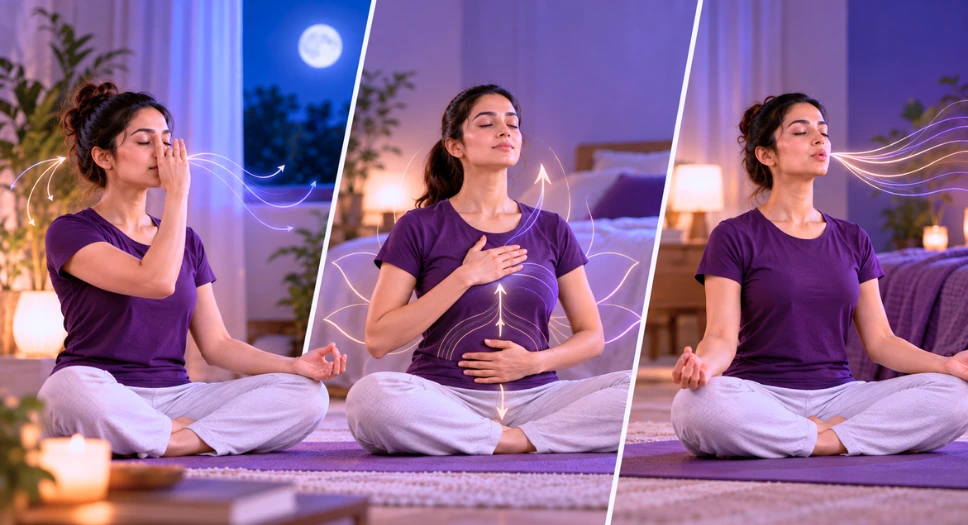
Breathwork, or pranayama, is just as important as the physical poses when it comes to yoga for a better sleep experience. A few simple techniques you can incorporate include:
- 4-7-8 Breathing: Inhale for four counts, hold for seven, exhale for eight. This technique is widely used to calm anxiety and prepare the body for rest.
- Alternate Nostril Breathing (Nadi Shodhana): This balancing technique helps quiet mental chatter and is especially useful if your mind tends to race at night.
- Belly Breathing: Simply placing a hand on your stomach and focusing on slow, deep belly breaths can lower heart rate and ease tension.
Practicing any of these techniques for even five minutes before bed can significantly improve how quickly you fall asleep and how deeply you rest.
Common Mistakes to Avoid
Even with the best intentions, a few habits can undermine your sleep better yoga practice:
- Practicing vigorous or heating styles of yoga, like power yoga, right before bed
- Rushing through poses instead of holding them mindfully
- Checking your phone in between poses
- Practicing in a bright, overstimulating environment
- Expecting instant results instead of allowing consistency to build over time
Yoga for sleep works best when it becomes a gentle ritual rather than another task to rush through on your to-do list.
Additional Lifestyle Tips to Complement Your Practice
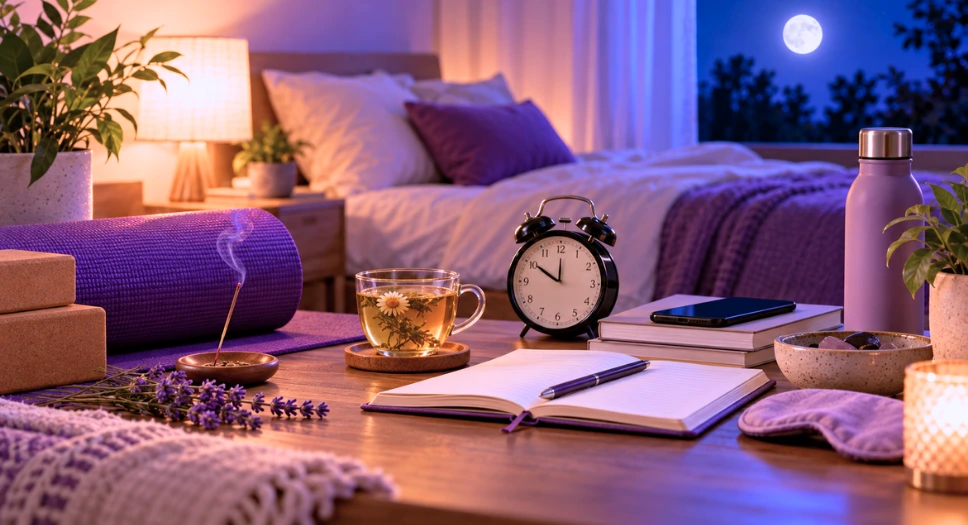
While yoga poses for sleep are powerful on their own, combining them with healthy sleep habits amplifies the results. Consider the following:
- Keep a consistent sleep and wake time, even on weekends
- Avoid caffeine in the afternoon and evening
- Limit screen exposure at least thirty minutes before bed
- Keep your bedroom cool, dark, and quiet
- Journaling for a few minutes before your yoga practice can help offload racing thoughts
Small, consistent changes like these, paired with a nightly yoga ritual, often lead to noticeably deeper and more restorative sleep within just a couple of weeks.
Deepen Your Practice with the Hatha Yoga Institute
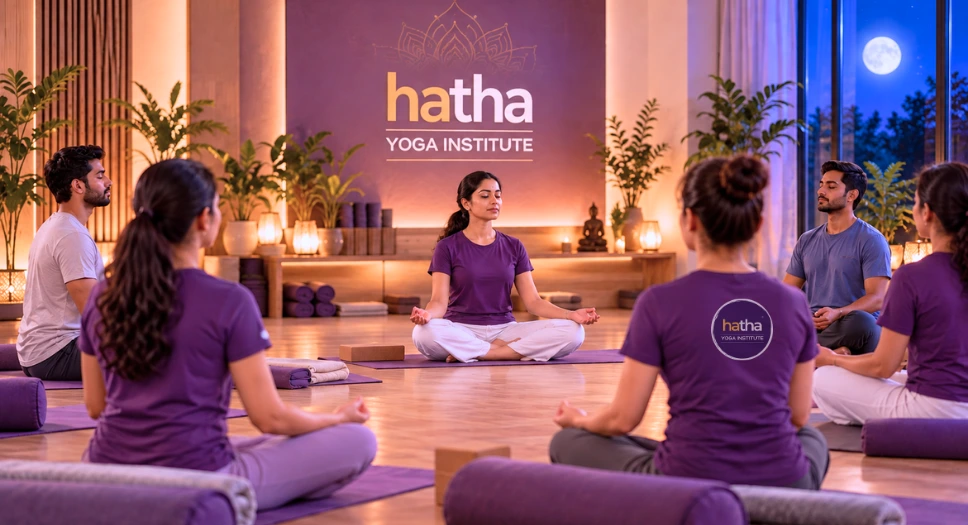
If this guide has inspired you to explore yoga more seriously, the Hatha Yoga Institute offers structured classes designed specifically around relaxation, restorative movement, and better sleep. Their experienced instructors guide students through gentle Hatha yoga sequences that combine mindful movement, breathwork, and meditation, exactly the kind of practice that supports long-term improvements in sleep quality.
Whether you are completely new to yoga or looking to deepen an existing practice, the Hatha Yoga Institute provides a supportive environment to learn proper alignment, breathing techniques, and relaxation methods tailored to your needs. Many students who begin with sleep-focused sessions find that the benefits extend far beyond the bedroom, including reduced stress, improved posture, and a greater overall sense of calm.
If better sleep is your goal, consider reaching out to the Hatha Yoga Institute to learn more about their beginner-friendly classes and restorative yoga programs.
Who Can Benefit from Sleep-Focused Yoga
One of the most appealing things about yoga for good sleep is that it is accessible to nearly everyone, regardless of age, fitness level, or prior experience. Unlike more vigorous forms of exercise, restorative and gentle yoga poses do not require strength, flexibility, or stamina. They simply ask you to slow down and pay attention to your breath and body.
- Busy professionals who carry stress and tension from long workdays often find that a short evening practice helps them mentally transition out of “work mode.”
- New parents dealing with disrupted sleep schedules can use short, restorative sequences to make the most of limited rest time.
- Older adults who may experience joint stiffness or reduced mobility can benefit from gentle stretching that eases physical discomfort without strain.
- Students managing exam stress or irregular sleep patterns often find that breathing exercises paired with light stretching help quiet an overactive mind.
- Anyone dealing with occasional insomnia or racing thoughts at bedtime can use these techniques as a natural, drug-free way to encourage relaxation.
Because the poses involved in a yoga for a better sleep routine are low-impact and adaptable, they can be modified to suit almost any body. Props like pillows, bolsters, and folded blankets make it easy to find a comfortable variation of each pose, so there is no need to feel intimidated if you are trying yoga for the first time.
How Long Before You Notice Results
A common question people have when starting a sleep better yoga practice is how quickly they can expect to see results. While everyone’s body responds differently, many people report feeling calmer and more relaxed after just a single session. This immediate sense of ease comes from the activation of the parasympathetic nervous system during slow, mindful movement and deep breathing.
That said, the more meaningful, long-term improvements in sleep quality, such as falling asleep faster, waking up less during the night, and feeling more rested in the morning, tend to develop over two to four weeks of consistent practice. Just as with any wellness habit, the benefits compound over time. Practicing for ten minutes every night is generally far more effective than practicing for an hour once a week.
To track your progress, consider keeping a simple sleep journal. Jot down how long it took you to fall asleep, how many times you woke up during the night, and how rested you felt in the morning. Over a few weeks, patterns will likely emerge that show a clear connection between your evening yoga practice and the quality of your sleep.
Frequently Asked Questions
1. Is it better to do yoga in the morning or right before bed for sleep benefits?
For sleep-specific benefits, practicing in the evening, ideally thirty minutes to an hour before bed, tends to be most effective. This timing allows the calming effects of the practice to carry directly into your bedtime routine.
2. Do I need to be flexible to try yoga poses for sleep?
Not at all. Most sleep-focused poses are restorative in nature and use props like pillows or folded blankets for support. Flexibility naturally improves with consistent practice, but it is not a prerequisite.
3. Can yoga replace medication for sleep issues?
Yoga can be a powerful, natural complement to healthy sleep habits, but it is not a substitute for medical advice. If you are dealing with chronic insomnia or a diagnosed sleep disorder, it is best to consult a healthcare professional alongside incorporating yoga into your routine.
4. How often should I practice yoga for better sleep results?
Practicing most nights of the week, even for just ten to fifteen minutes, tends to produce more noticeable and lasting results than occasional, longer sessions.
Final Thoughts
Sleep is not something you can force, but you can create the conditions that invite it. Yoga for better sleep offers a natural, sustainable way to calm both body and mind, releasing the physical tension and mental noise that so often stand between you and a good night’s rest. Whether you choose a full nightly sequence or just a few minutes of gentle stretching and breathing, the key is consistency.
Start small tonight. Roll out your mat, dim the lights, and give your body permission to slow down. Over time, these simple, mindful movements can become one of the most powerful tools in your sleep routine, helping you wake up feeling more rested, restored, and ready for the day ahead.