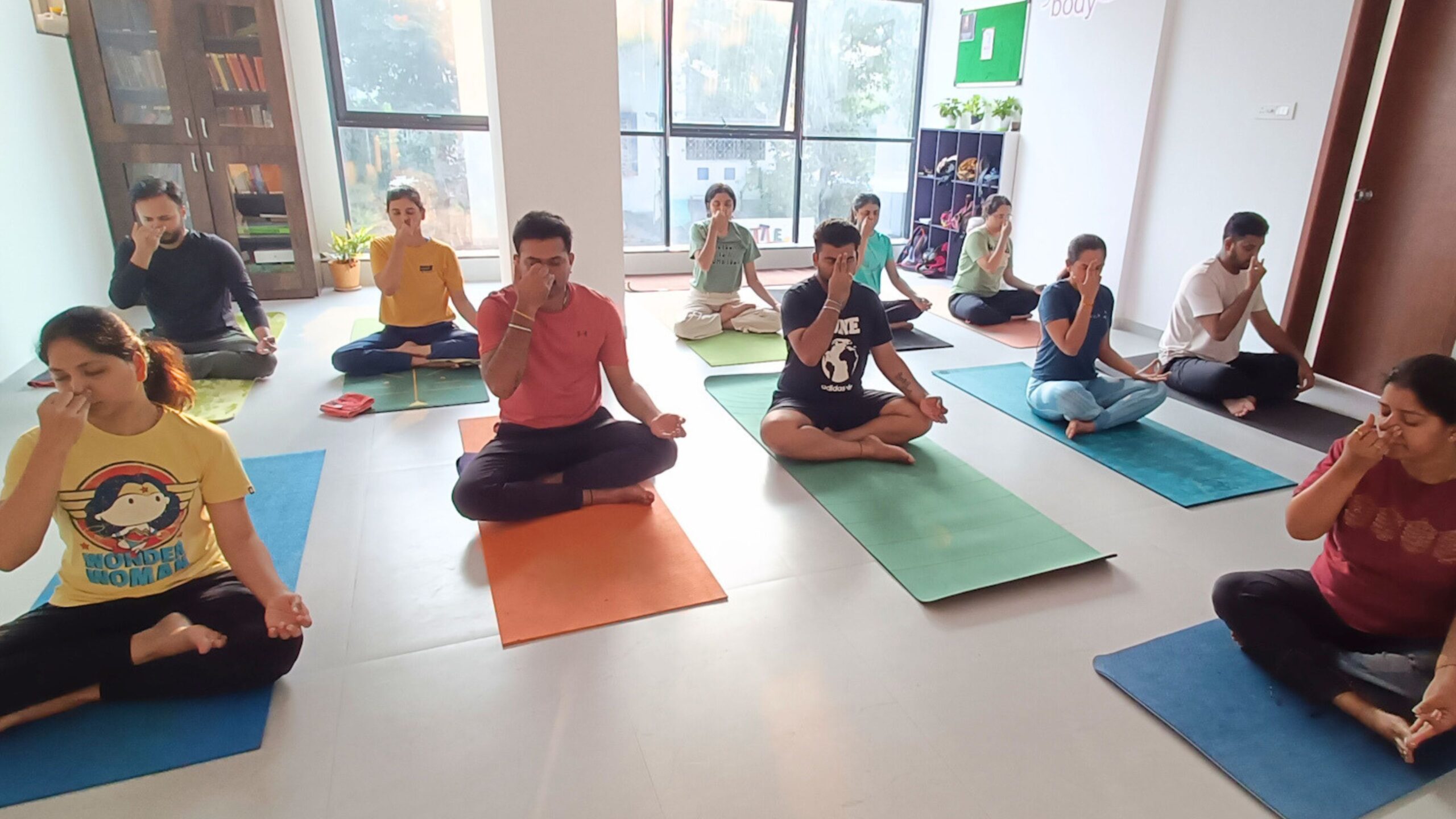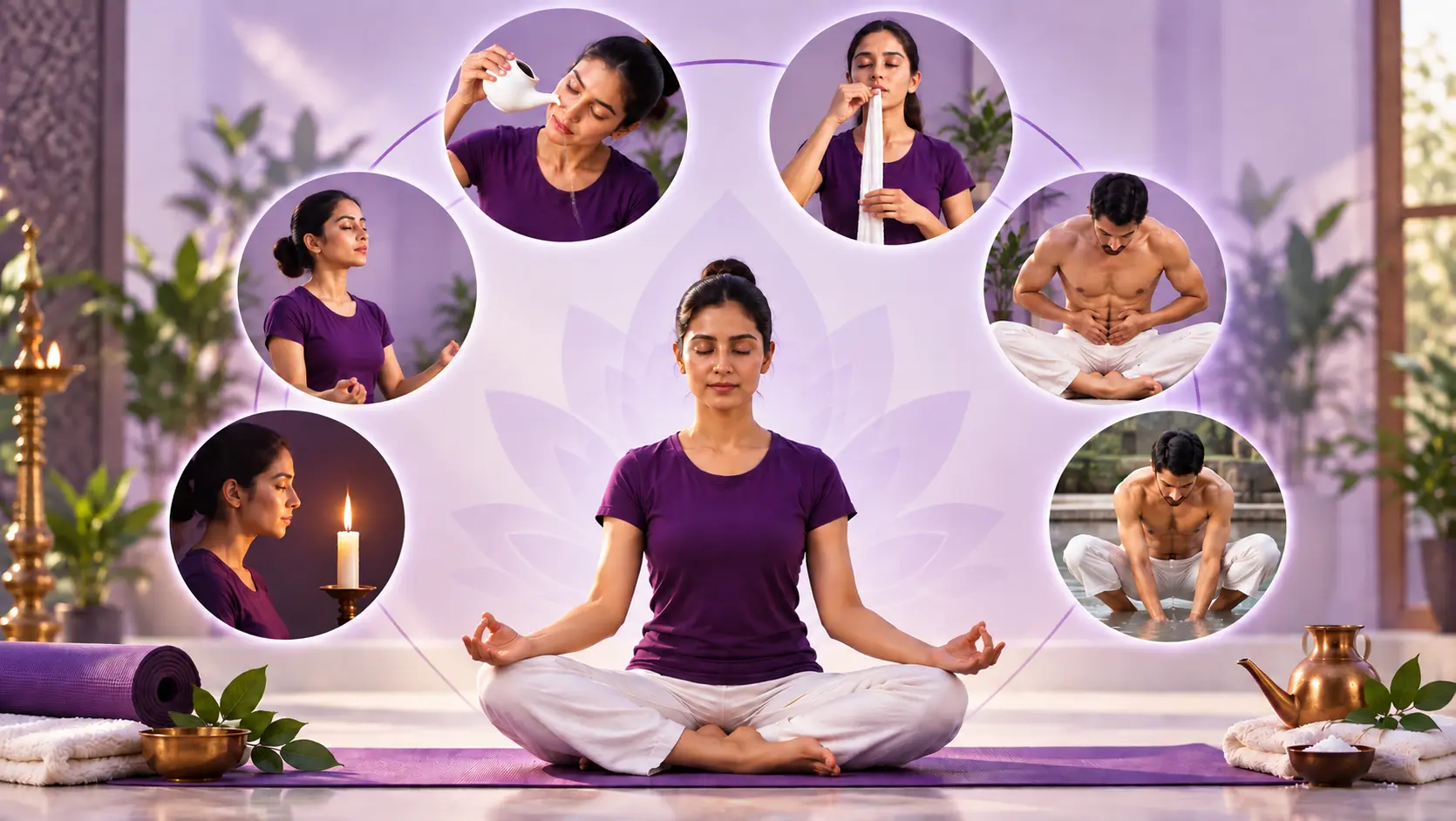
Long before yoga became synonymous with flexible postures and Instagram-worthy stretches, ancient yogis understood something far more foundational: the body must be cleansed before the mind can be stilled. This is the essence of shatkarma, a system of purification practices that forms one of the oldest and most powerful branches of Hatha Yoga. While modern yoga culture often focuses heavily on asanas (postures), the traditional texts make it clear that true transformation begins with cleansing the internal channels of the body.
Shatkarma in yoga is not simply a set of hygiene rituals. It is a deliberate, systematic approach to removing physical and energetic blockages so that prana (life force) can move freely, meditation can deepen, and the practitioner can move steadily toward spiritual awakening. In this article, we will explore what shatkarma is, why it matters, the six classical techniques known as shat kriyas, and how one particular practice, kapalbhati, has become a gateway for millions of modern practitioners into this ancient science.
What Is Shatkarma?
The word “shatkarma” comes from two Sanskrit roots: shat, meaning six, and karma, meaning action or practice. Together, they refer to the six purification techniques described in classical Hatha Yoga texts such as the Hatha Yoga Pradipika and the Gheranda Samhita. These texts were written centuries ago by sages who understood that the human body accumulates toxins, mucus, and stagnant energy over time, and that these accumulations obstruct both physical health and spiritual progress.
Shatkarma is often described as the preparatory stage of yoga, the foundation upon which pranayama (breath control), meditation, and higher states of consciousness are built. Without this preparation, the ancient texts suggest, the subtler practices of yoga cannot fully take root. Think of it as clearing the pipes before water can flow smoothly, or cleaning a window before sunlight can pass through it without distortion.
Unlike modern fitness routines that focus purely on external appearance or muscular strength, shatkarma works from the inside out. It targets the digestive system, respiratory passages, sinuses, eyes, and the deeper energetic pathways known as nadis. The goal is not aesthetic but functional and spiritual: a body free of obstruction is a body ready for deeper practice.
Why Purification Comes First in Yoga
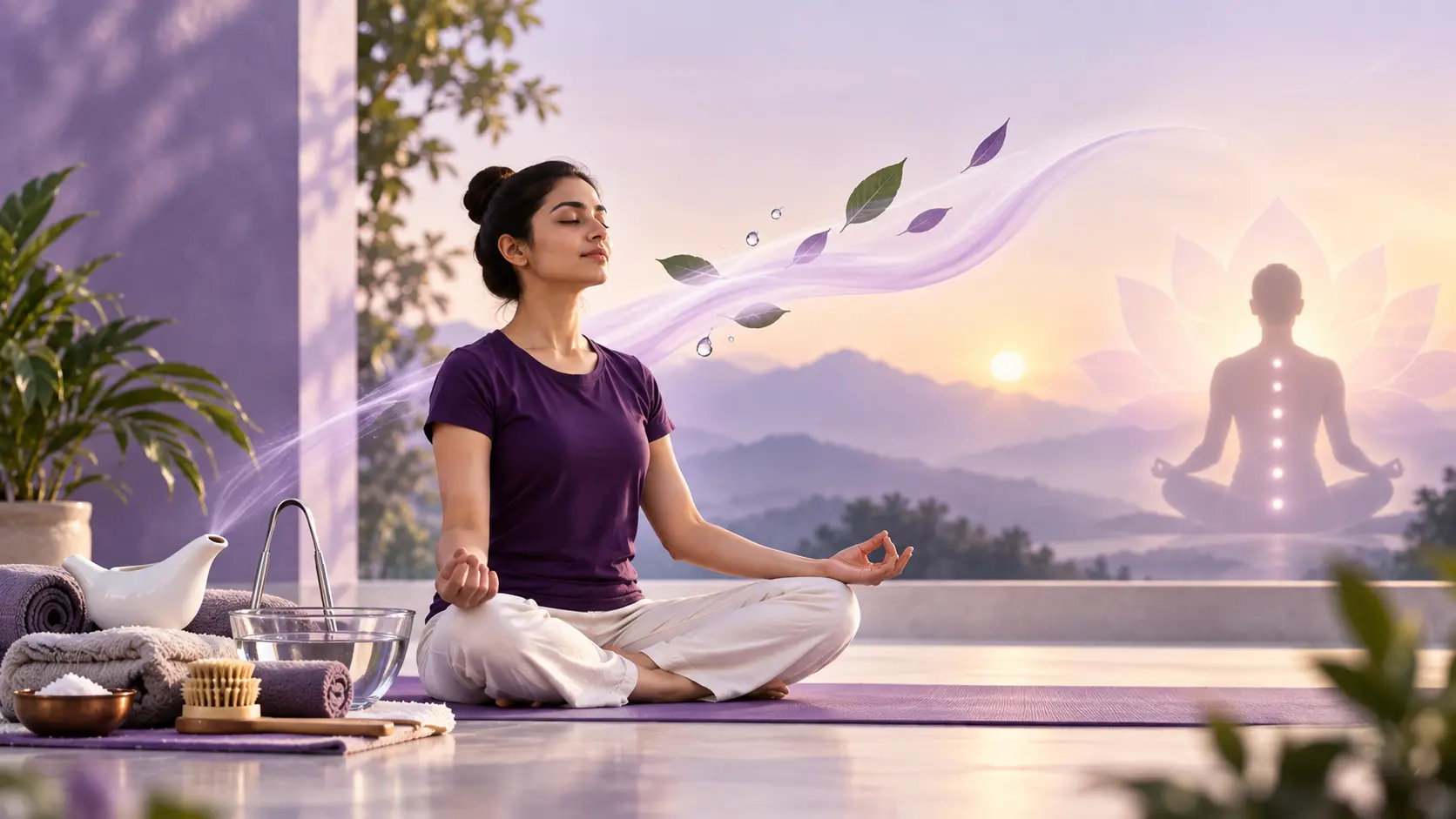
There is a reason yoga masters placed such emphasis on internal cleansing before advancing to breathwork and meditation. A body burdened with excess mucus, toxins, or digestive stagnation cannot sit comfortably for long periods, cannot breathe deeply and evenly, and cannot maintain the mental clarity needed for meditative absorption.
Consider these key reasons why purification is considered essential:
- Physical discomfort, congestion, or digestive heaviness distracts the mind during meditation
- Blocked nasal passages interfere with pranayama, which relies on smooth, controlled breathing
- Accumulated toxins are believed to disturb the balance of the three doshas in Ayurvedic thought
- Energy blockages in the nadis prevent prana from flowing freely through the body
- A purified system supports better concentration, emotional stability, and vitality
This is why shatkarma in yoga is traditionally taught before advanced pranayama or meditative techniques. It clears the ground, quite literally, for everything that follows.
The Six Shat Kriyas Explained
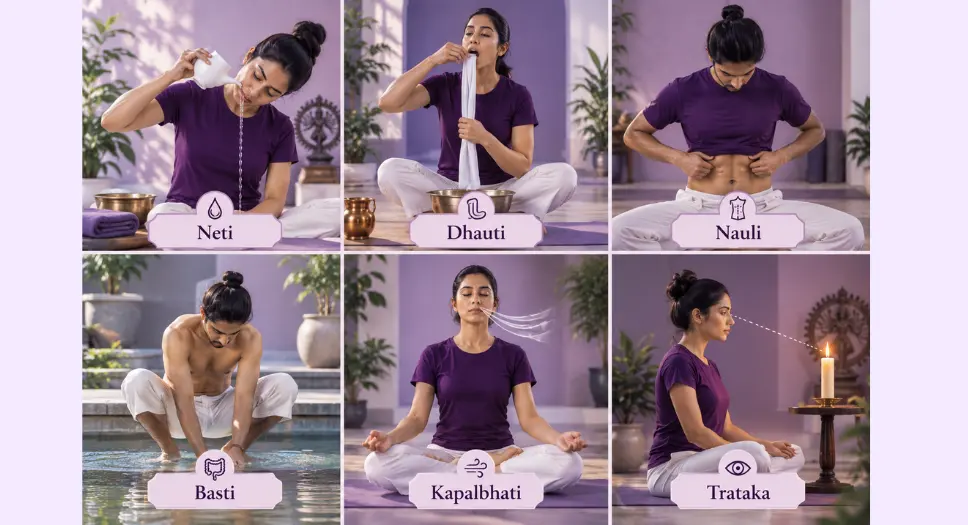
The six classical purification techniques, collectively known as the shat kriyas, each target a specific part of the body. While they may sound intense or unfamiliar to beginners, each has been refined over centuries and, when practiced correctly under proper guidance, offers profound benefits.
1. Neti (Nasal Cleansing)
Neti focuses on cleansing the nasal passages and sinuses. The most well-known variation is Jala Neti, which uses a neti pot to pass warm saline water through the nostrils. Another variation, Sutra Neti, uses a soft thread to clear the nasal cavity more deeply.
Benefits of Neti include:
- Relief from sinus congestion, allergies, and chronic colds
- Improved breathing capacity for pranayama practice
- Reduced headaches and sinus pressure
- Clearer sense of smell and sharper mental focus
2. Dhauti (Internal Cleansing)
Dhauti refers to a group of cleansing techniques aimed at the digestive tract, particularly the stomach and esophagus. Variations include Vastra Dhauti (using a cloth), Vamana Dhauti (voluntary regurgitation using warm water), and several other sub-practices.
Benefits of Dhauti include:
- Removal of excess mucus and bile from the stomach
- Relief from acidity, bloating, and sluggish digestion
- Support for respiratory conditions such as asthma when practiced correctly
- A lighter, clearer feeling in the body before meditation
3. Nauli (Abdominal Massage)
Nauli is one of the more advanced shat kriyas, involving isolation and rolling movements of the abdominal muscles. It requires significant control of the rectus abdominis and is typically taught only after a practitioner has developed strong core awareness through simpler practices.
Benefits of Nauli include:
- Deep massage of the abdominal organs, including the intestines, liver, and kidneys
- Improved digestive fire (agni) and metabolism
- Strengthening of the core muscles
- Stimulation of the manipura chakra, associated with personal power and vitality
4. Basti (Colon Cleansing)
Basti is a technique for cleansing the lower intestines and colon, traditionally performed in water while drawing the abdominal muscles to create a vacuum-like suction. It is considered an advanced practice and is far less commonly taught in modern classes compared to the others.
Benefits of Basti include:
- Cleansing of the colon and lower digestive tract
- Relief from constipation and irregular bowel movements
- Balancing effect on the nervous system
- Traditional association with rejuvenation and longevity
5. Kapalbhati (Skull Shining Breath)
Kapalbhati is by far the most widely practiced of the six kriyas today, and for good reason. The name translates roughly to “skull shining breath,” referring to the clarity and radiance it is said to bring to the mind. Unlike the other kriyas, which often require special tools or advanced training, kapalbhati can be practiced by most healthy beginners with proper instruction.
The technique involves short, forceful exhalations through the nose, powered by rapid contractions of the lower abdomen, followed by passive inhalations. It sits at the intersection of shatkarma and pranayama, which is one reason it has become so popular in mainstream yoga and wellness circles.
Benefits of kapalbhati include:
- Expelling stale air and carbon dioxide from the lungs more efficiently
- Strengthening the diaphragm and abdominal muscles
- Increasing oxygen supply to the brain, supporting mental clarity and alertness
- Stimulating digestion and internal organ function
- Generating internal heat, which is believed to burn toxins (ama) in Ayurvedic terms
- Energizing the body, making it a popular practice for mornings
Because of its accessibility and visible energizing effects, kapalbhati has become something of an entry point for many practitioners into the broader world of shat kriya in yoga. It is often one of the first purification techniques taught in beginner-friendly Hatha Yoga classes, precisely because it delivers noticeable benefits relatively quickly.
6. Trataka (Concentrated Gazing)
Trataka is unique among the shat kriyas in that it focuses on cleansing not the digestive or respiratory system, but the eyes and the mind. It involves fixed, unblinking gazing at a single point, traditionally a candle flame, until tears form and the eyes are cleansed.
Benefits of Trataka include:
- Strengthening the eye muscles and improving visual focus
- Calming and stabilizing a restless mind
- Building concentration skills useful for meditation
- Believed to stimulate the ajna chakra, or third eye center
How Shatkarma Bridges the Physical and the Spiritual
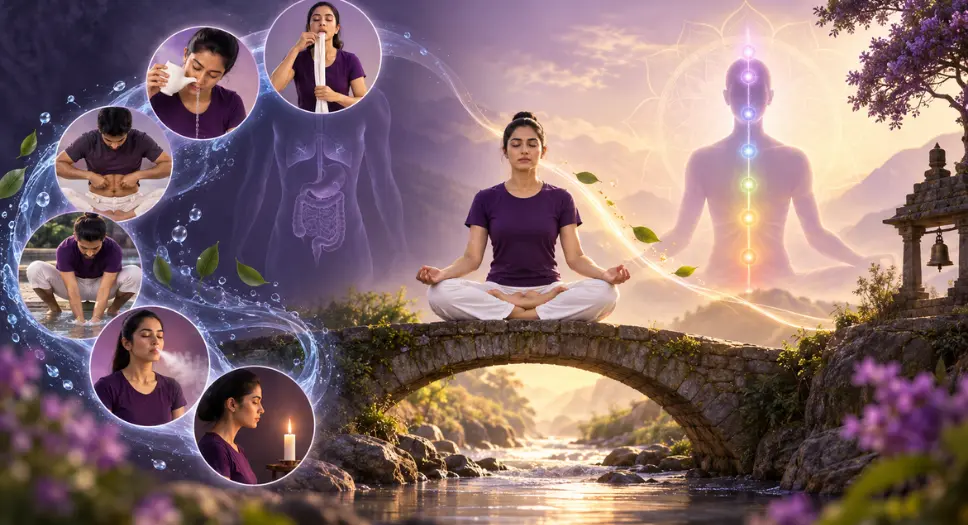
What makes shatkarma so distinct from ordinary hygiene or fitness routines is its underlying philosophy. In the yogic tradition, the body is not separate from the mind or spirit; it is the vehicle through which spiritual growth becomes possible. A congested, toxic, or imbalanced body creates disturbances that ripple outward into mental and emotional states.
By systematically cleansing the physical body, the shat kriyas are believed to:
- Remove obstructions in the nadis, allowing prana to flow more freely
- Prepare the nervous system for the deeper stillness required in meditation
- Balance the doshas according to Ayurvedic principles, supporting overall harmony
- Create the physical steadiness needed to sit for extended periods of pranayama and dhyana
- Gradually purify not just the body but the subtle layers of consciousness
This is why traditional Hatha Yoga texts place shatkarma before pranayama and meditation in the sequence of practice. The physical cleansing is not the end goal; it is the doorway. Once the body is purified, the mind naturally becomes quieter, more receptive, and better equipped for the inward journey that yoga ultimately points toward.
Practicing Shatkarma Safely
While the benefits of shatkarma are well documented in traditional and contemporary practice alike, these techniques are not meant to be approached casually. Several of the shat kriyas involve manipulating sensitive areas of the body, including the digestive tract, nasal passages, and internal organs. Practiced incorrectly, they can cause discomfort or even harm.
Here are some important guidelines to keep in mind:
- Always learn shatkarma techniques from a qualified and experienced teacher, ideally in person
- Begin with simpler practices such as Jala Neti and kapalbhati before attempting advanced kriyas like Nauli or Basti
- Practice on an empty stomach, typically early in the morning
- Avoid these practices during pregnancy, menstruation, or if you have certain medical conditions such as hernia, ulcers, or high blood pressure, unless specifically guided by a professional
- Progress gradually; forcing the body into advanced techniques too quickly can cause strain
- Pay attention to how your body responds and stop immediately if you feel dizzy, nauseous, or unwell
Because shatkarma involves direct physical intervention rather than passive stretching, the margin for error is higher than in typical asana practice. This is precisely why structured, teacher-led learning matters so much when approaching these techniques.
Bringing Shatkarma Into Modern Life

It might seem, at first glance, that these ancient purification techniques belong to a world very different from our own, one of ashrams, sages, and decades of dedicated practice. But in reality, simplified versions of shatkarma have found a comfortable place in modern wellness routines.
Kapalbhati, for instance, is now taught in gyms, wellness retreats, and online yoga classes around the world as a quick, energizing breathing practice. Neti pots have become common household items for managing seasonal allergies and sinus issues. Even Trataka has found a following among people looking for simple, screen-free ways to improve focus and reduce mental fatigue in an overstimulated digital age.
What matters most, whether you are approaching shat kriyas as part of a deep spiritual path or simply looking for practical tools to feel lighter and clearer in daily life, is respecting the tradition these practices come from. They were not designed as quick fixes but as part of a holistic system meant to prepare the practitioner, step by step, for a more expansive experience of consciousness.
Learn Shatkarma the Traditional Way
If reading about these practices has sparked your curiosity, the most meaningful next step is learning them properly, under the guidance of experienced teachers who understand both the technique and the philosophy behind it. This is exactly the kind of grounded, traditional training offered at the Hatha Yoga Institute.
At the Hatha Yoga Institute, students are introduced to shatkarma not as an isolated wellness trend but as part of a complete Hatha Yoga curriculum rooted in classical texts and time-tested teaching methods. Whether you are a curious beginner wanting to safely learn kapalbhati or a dedicated practitioner ready to explore the full range of shat kriya in yoga, the institute’s structured courses offer hands-on instruction, personalized guidance, and a supportive community for your journey. For anyone serious about understanding yoga beyond the surface level of postures, training with a recognized institute is invaluable for both safety and depth of learning.
The Historical Roots of Shatkarma

To fully appreciate shatkarma, it helps to understand where these practices come from. The techniques are rooted in the Hatha Yoga tradition, a branch of yoga that emerged prominently in medieval India as a systematic method for preparing the body for spiritual liberation. Texts such as the Hatha Yoga Pradipika, written by Swami Svatmarama, and the Gheranda Samhita, attributed to the sage Gheranda, laid out detailed instructions for these purification techniques centuries before modern science had the tools to study their effects.
In these texts, the shat kriyas were not presented as optional extras but as essential groundwork. The sages who compiled this knowledge understood the human body through both a physical and energetic lens, recognizing channels called nadis through which prana was believed to travel. Blockages in these channels, whether caused by poor diet, disease, or simply the natural buildup of impurities over time, were seen as obstacles to higher states of awareness.
What is remarkable is how much of this ancient framework aligns with what we now understand about the interconnectedness of physical health, breath, and mental clarity. Long before modern medicine mapped the gut-brain connection or studied the effects of controlled breathing on the nervous system, yogic sages had already built an entire practical system around these relationships.
The Role of Shatkarma in the Eight Limbs of Yoga
Many people are familiar with the eight limbs of yoga as outlined by Patanjali, which include yamas, niyamas, asana, pranayama, pratyahara, dharana, dhyana, and samadhi. Shatkarma is not explicitly listed among these eight limbs, but it plays a crucial supporting role, particularly in relation to asana and pranayama.
Consider the relationship this way:
- Asana prepares the body to sit comfortably and steadily
- Shatkarma clears internal obstructions so that this steadiness is not disturbed by discomfort or congestion
- Pranayama then becomes far more effective once the breathing passages and digestive system are functioning smoothly
- With a purified body and controlled breath, the mind is better positioned for pratyahara, dharana, and dhyana
In this sense, shatkarma in yoga acts almost like a bridge between the more outwardly physical limbs and the increasingly subtle, internal limbs of the practice. It is rarely discussed with the same reverence as meditation or breathwork, yet without it, the ancient yogis believed that deeper practices would remain far less effective.
Common Questions About Shatkarma

Many newcomers to these practices have similar questions before beginning. Addressing a few of the most common ones can help clarify what to expect.
1. Is shatkarma safe for beginners?
Some techniques, such as Jala Neti and kapalbhati, are generally considered accessible for healthy beginners when taught correctly. Others, such as Nauli and Basti, require more preparation and should only be attempted under experienced guidance.
2. How often should shat kriyas be practiced?
This varies by technique and by individual constitution. Some practices, like Neti, can be done daily, while others are traditionally reserved for specific times or seasons. A qualified teacher can help design an appropriate schedule based on your health and goals.
3. Can shatkarma replace medical treatment?
No. While many practitioners report noticeable benefits for digestion, respiratory health, and mental clarity, these practices are not a substitute for medical care. Anyone with existing health conditions should consult a doctor before beginning shatkarma.
4. Do I need special equipment?
Some kriyas, like Jala Neti, require simple tools such as a neti pot and saline solution. Others, including kapalbhati and Trataka, require no equipment at all, just proper technique and guidance.
Final Thoughts
Shatkarma represents one of the most practical yet profound gifts handed down by the ancient yogis. It reminds us that spiritual growth is not separate from physical wellbeing, but deeply intertwined with it. The six shat kriyas, from the gentle nasal cleansing of Neti to the energizing rhythm of kapalbhati, offer a complete system for preparing the body and mind for the deeper dimensions of yoga practice.
Whether your goal is better digestion, clearer breathing, sharper focus, or a genuine step toward spiritual awakening, shatkarma in yoga offers a time-tested path. As with all deep traditions, the key lies in approaching these practices with patience, respect, and proper guidance, allowing the ancient wisdom to unfold naturally in your own life.