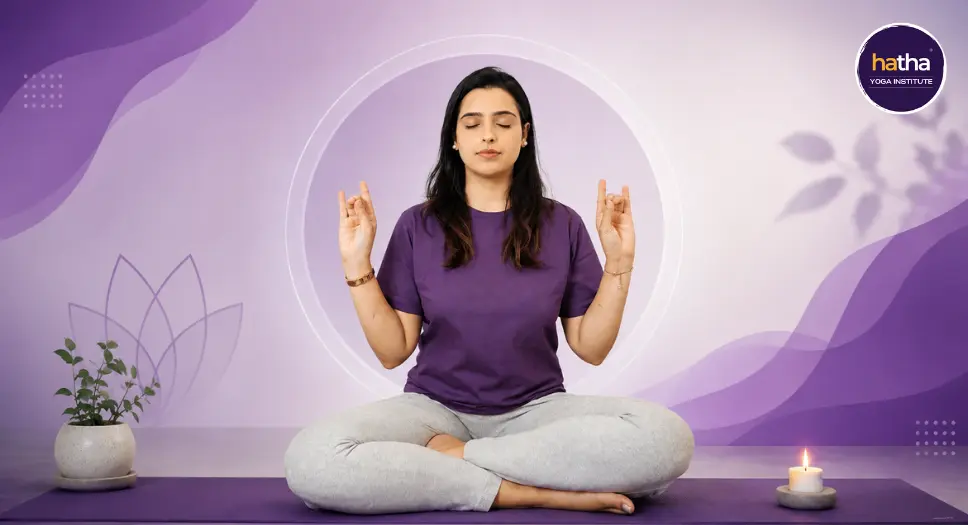
Meditation is often thought of as simply sitting still and quieting the mind, but there is a subtle, ancient tool that can deepen this practice in remarkable ways: the mudra. In mudra yoga, the hands become more than just a resting place; they become a bridge between the body’s energy and the mind’s stillness. If you have ever wondered why yogis and meditators hold their fingers in particular positions while sitting cross-legged with closed eyes, this blog will help you understand the purpose, practice, and power behind these gestures.
We will explore what a mudra truly is, how mudras for meditation can sharpen focus, how mudras for healing support the body, and we will look closely at two of the most widely practiced hand gestures, the prana mudra and the dhyana mudra. By the end, you will have a clear understanding of how to bring these powerful mudras into your own daily practice.
What Is a Mudra?
The word mudra comes from Sanskrit and is generally translated as “seal,” “gesture,” or “mark.” In the yogic tradition, a mudra is a symbolic hand position that is believed to direct the flow of prana, or life force energy, within the body. Each finger is thought to correspond to one of the five elements, earth, water, fire, air, and space, and by touching specific fingers together, practitioners believe they can balance these elements and influence both physical and mental states.
While mudras are most commonly associated with the hands, the term can also apply to positions of the eyes, body, and even breath in certain tantric and hatha yoga traditions. However, hand mudras remain the most accessible and widely practiced form, especially for those focusing on meditation and inner stillness.
Mudra yoga is not a separate physical exercise like asana practice; rather, it is a subtle discipline that can be layered on top of your existing meditation, pranayama, or even seated relaxation practice. This makes it one of the easiest and most versatile tools to incorporate into daily life, whether you are a complete beginner or an experienced practitioner.
Why Use Mudras During Meditation?
Meditation is fundamentally about turning attention inward, and this is precisely where mudras play their most important role. When the hands are held in a specific, intentional position, the mind receives a subtle cue that a shift is taking place. This is somewhat similar to how lighting a candle or sitting on a particular cushion can signal to the brain that it is time to meditate.
Beyond this psychological anchoring, many practitioners believe that mudras for meditation help circulate energy in a closed loop within the body rather than letting it dissipate outward through the fingertips. This is thought to create a calmer, more contained state of awareness, making it easier to sustain focus for longer periods.
There is also a physiological angle worth mentioning. Holding the fingers in a steady, gentle position naturally slows down restless hand movements, which in turn can help settle a wandering mind. Anyone who has tried to meditate with fidgety hands knows how distracting even small movements can be. A mudra offers the hands a purposeful “task” that supports stillness rather than fighting against it.
Dhyana Mudra: The Gesture of Meditation `
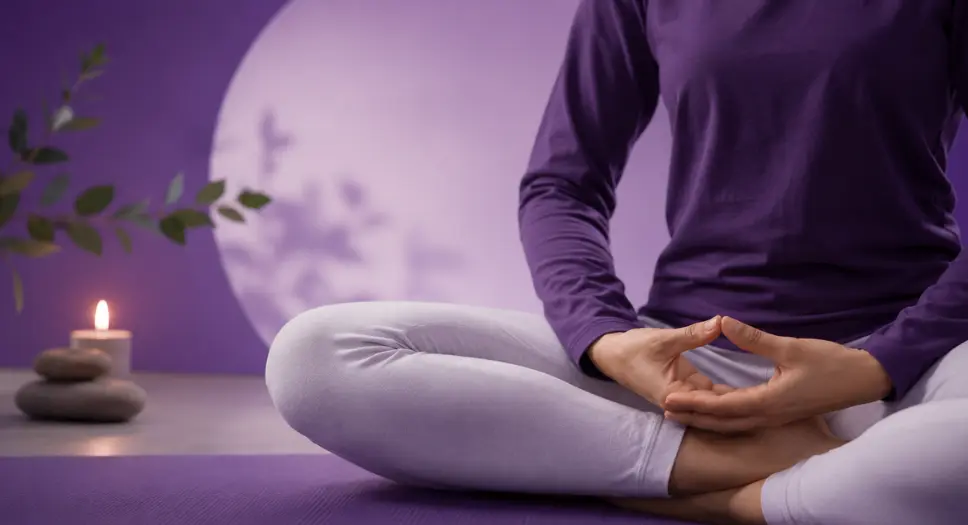
Among all hand positions used in contemplative practice, the dhyana mudra is perhaps the most iconic. It is the gesture most commonly depicted in images and statues of meditating figures across yogic and Buddhist traditions.
How to Practice Dhyana Mudra
- Sit comfortably in a cross-legged position with your spine tall and relaxed.
- Rest your right hand on top of your left hand, palms facing upward, in your lap.
- Let the tips of your thumbs gently touch each other, forming a soft, rounded shape.
- Allow your hands to rest naturally just below your navel.
- Close your eyes, relax your shoulders, and settle into slow, even breathing.
The right hand resting over the left is often said to represent the balance between the higher, awakened state of consciousness and the ordinary, everyday mind. The gentle touch of the thumbs forms a closed circuit, symbolically containing and stabilizing energy rather than letting it scatter.
Benefits of Dhyana Mudra
- Encourages a deep sense of calm and inward focus, making it especially useful at the start of a meditation session.
- Helps quiet mental chatter by giving the hands a stable, grounding position.
- Supports longer, more comfortable meditation sessions since the arms and shoulders remain relaxed rather than tense.
- Traditionally associated with cultivating wisdom and inner clarity, making it a favorite among long-term meditators.
Because of its simplicity and deep symbolic meaning, the dhyana mudra is often the very first mudra taught to beginners, and it remains a lifelong companion even for advanced practitioners.
Prana Mudra: The Gesture of Life Force
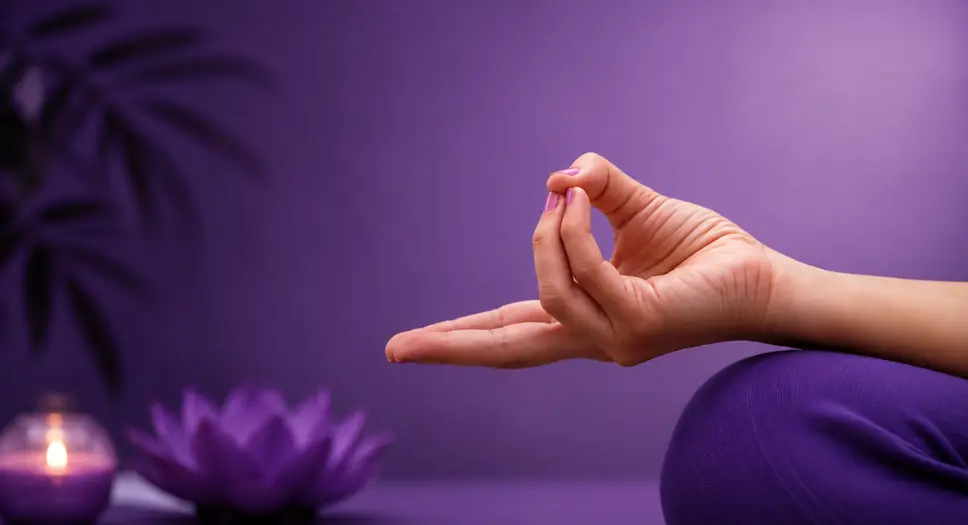
While dhyana mudra calms the mind, the prana mudra is often used to energize the body and awaken vitality. Prana refers to the vital life force that flows through every living being, and this mudra is specifically designed to activate and balance that energy.
How to Practice Prana Mudra
- Sit in a comfortable meditative posture with your spine straight.
- Bring the tips of your ring finger and little finger to touch the tip of your thumb.
- Keep your index and middle fingers extended, relaxed but not rigid.
- Rest your hands gently on your knees, palms facing upward.
- Breathe slowly and evenly, holding the position for several minutes.
Benefits of Prana Mudra
- Believed to boost overall energy levels and reduce feelings of fatigue.
- Supports better focus and alertness, making it a useful mudra before study, work, or any task requiring sustained attention.
- Thought to strengthen the immune system by balancing the body’s internal energy.
- Often recommended for improving eyesight and overall vitality when practiced consistently over time.
Many practitioners choose to combine prana mudra with their morning routine, using it to awaken the body’s energy before the day begins, while reserving the dhyana mudra for evening meditation when the goal is to wind down and turn inward.
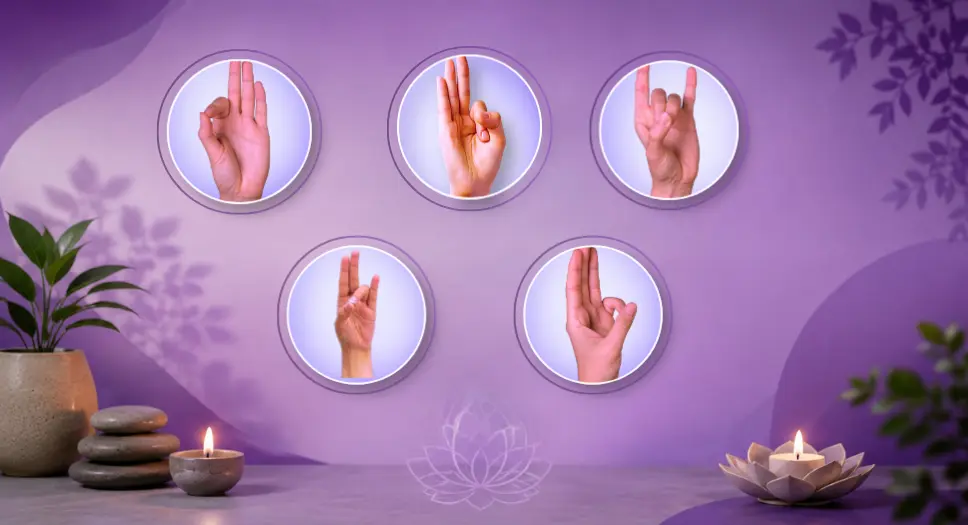
Other Powerful Mudras for Healing and Focus
Beyond these two well-known gestures, there is a wide range of powerful mudras, each associated with a specific benefit. Here are a few commonly practiced ones worth exploring.
1. Gyan Mudra (Gesture of Knowledge) Formed by touching the tip of the index finger to the tip of the thumb while keeping the other three fingers extended, this is one of the most widely practiced mudras for enhancing concentration, memory, and mental clarity.
2. Vayu Mudra (Gesture of Air) Created by folding the index finger down to touch the base of the thumb, with the thumb gently pressing over it, this mudra is traditionally used to balance excess air element in the body and is often associated with relieving bloating and joint discomfort.
3. Apana Mudra (Gesture of Digestion) Formed by touching the tips of the middle and ring fingers to the thumb, this mudra is believed to support detoxification and healthy digestion, making it a popular choice among mudras for healing.
4. Surya Mudra (Gesture of the Sun) Practiced by folding the ring finger down to the base of the thumb and pressing gently with the thumb, this mudra is associated with boosting metabolism and generating warmth within the body.
5. Varun Mudra (Gesture of Water) Made by touching the tip of the little finger to the tip of the thumb, this gesture is traditionally used to maintain the body’s fluid balance and is often recommended for improving skin health.
Each of these mudras demonstrates how something as simple as finger placement is believed to influence specific aspects of physical and mental well-being, which is why they remain popular even in modern wellness practices.
How to Bring Mudras Into Your Daily Meditation Practice
If you are new to this practice, here is a simple approach to help you get started with mudras for meditation in a way that feels natural rather than overwhelming.
- Begin with just one mudra at a time. Trying to learn several gestures at once can create confusion rather than focus.
- Choose your mudra based on your intention for the session. Use prana mudra when you need energy and alertness, and dhyana mudra when you want to settle into stillness.
- Hold the mudra gently. There is no need to press the fingers together forcefully; a light, relaxed touch is enough.
- Pair the mudra with slow, conscious breathing to enhance its calming or energizing effect.
- Practice consistently. Like any yogic tool, the benefits of mudras become more noticeable with regular, patient practice rather than occasional use.
- Sit in a comfortable, upright position, ideally in a quiet space free from distractions, to allow the mudra and meditation to work together effectively.
A Few Words of Caution
While mudras are generally safe for most people, it is helpful to remember that they work best as a complement to meditation and mindful breathing, not as a replacement for medical treatment. If you are dealing with a specific health condition, it is always wise to consult a doctor alongside practicing any mudra intended for healing purposes. Additionally, mudras should be held gently; forcing the fingers into position or holding them for excessively long periods without rest can create unnecessary tension in the hands and wrists.
Bringing It All Together
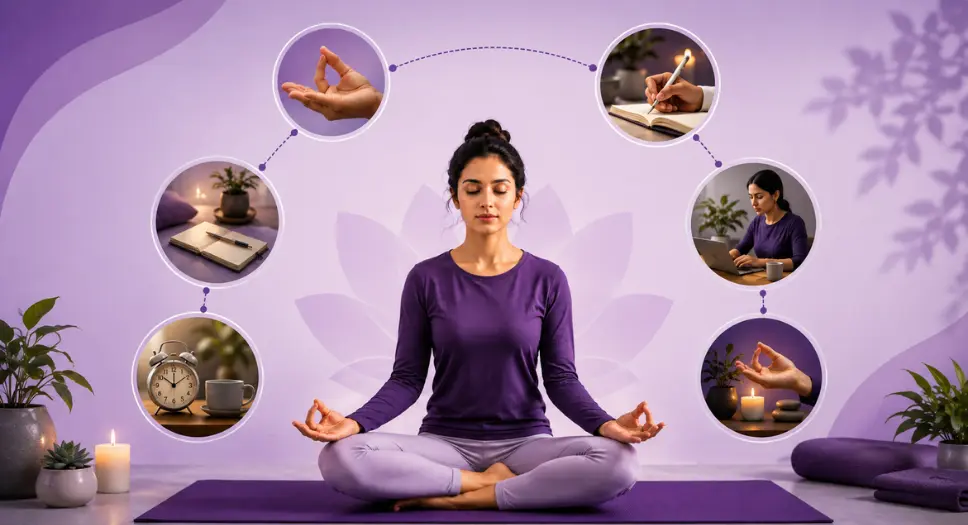
The practice of mudra yoga offers a beautifully simple yet profound way to deepen meditation and sharpen focus. From the grounding stillness of the dhyana mudra to the energizing effect of the prana mudra, these small hand gestures carry centuries of yogic wisdom within them. Whether your goal is calming an overactive mind, boosting vitality, or supporting the body’s natural healing processes, there is likely a mudra suited to your intention.
As with any yogic practice, patience and consistency matter far more than perfection. Start simple, stay curious, and allow these gestures to become a quiet, steady companion in your meditation journey.
Deepen Your Practice with Hatha Yoga Institute
If you would like to explore mudras, meditation, and the deeper philosophy behind these ancient practices in a structured and guided way, Hatha Yoga Institute offers courses designed to help practitioners of all levels build a safe and meaningful yoga practice. With experienced teachers who blend traditional wisdom with practical guidance, Hatha Yoga Institute is a wonderful place to learn how tools like mudras, breathwork, and meditation come together to support genuine inner transformation.