Why We're Writing This Guide
We get this question a lot. And honestly, it deserves a proper answer, not a vague paragraph buried at the bottom of a brochure.
As a Yoga Alliance Registered Yoga School (RYS), Hatha Yoga Institute has walked hundreds of students through the journey from first yoga class to fully credentialed teacher. We’ve seen where people get confused, where they get stuck, and what makes the process go smoothly. This guide is built on that experience.
So whether you’re exploring yoga teacher training for the first time, or you’ve just completed your 200 hours and aren’t sure what comes next, read on. We’ll walk you through the entire Yoga Alliance registration process, step by step, in plain language.
What Is Yoga Alliance and Why Does It Matter to You?
Before we get into the application process, let’s establish what you’re actually registering with and why it’s worth your time.
Yoga Alliance is the world’s largest nonprofit association for the yoga community. It functions as the global standard-setting body for yoga teacher training programs and individual teacher credentials. When a teacher carries a Yoga Alliance certification (such as RYT 200 or RYT 500) it tells students, studios, and wellness employers that their training met a recognized international benchmark.
In practical terms, here’s what that means for you as a teacher:
- Most yoga studios and gyms require RYT credentials when hiring instructors.
- Corporate wellness programs, schools, and hospitals look for Yoga Alliance recognition.
- The credential is respected and understood in over 100 countries
- It provides a professional identity that is portable, wherever your teaching takes you.
What Yoga Alliance does not do is run its own training programs. It accredits schools like Hatha Yoga Institute, schools that design and deliver the actual teacher training. Once you graduate from a Registered Yoga School, you become eligible to register directly with Yoga Alliance and receive your credential.
That’s the relationship: Hatha Yoga Institute prepares you. Yoga Alliance certifies you.
The Different Yoga Alliance Credentials: Which One Are You Working Toward?
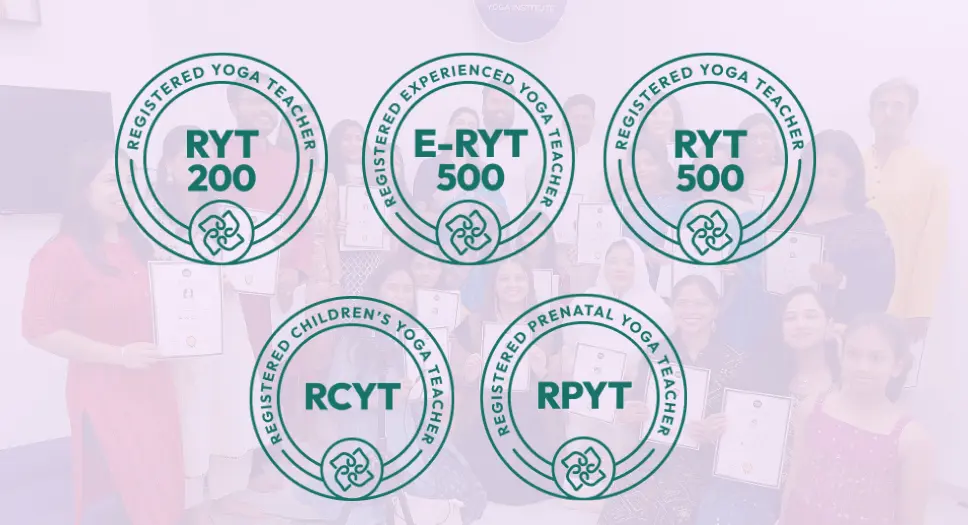
Yoga Alliance offers several credential tiers for individual teachers. Understanding which one applies to your situation will help you plan your training and registration correctly.
1. RYT 200: Registered Yoga Teacher (200 Hours)
This is where most teaching careers begin. The RYT 200 is the foundational Yoga Alliance certification awarded to teachers who complete a 200-hour training at a Registered Yoga School. It is the baseline credential recognized by studios, gyms, and wellness programs worldwide.
At Hatha Yoga Institute, our 200-hour program is specifically designed to fulfill every educational category required for this credential, so when our students graduate, they are immediately eligible to apply.
2. RYT 500: Registered Yoga Teacher (500 Hours)
This advanced credential is for teachers ready to go deeper. It can be earned in two ways:
- Completing a full 500-hour program at a single RYS 500 school
- Completing your RYT 200 first, then returning for a separate 300-hour advanced training
The RYT 500 is recognized as a mark of mastery and is often a requirement for senior teaching roles, teacher trainer positions, and specialized or therapeutic programs.
3. E-RYT 200 and E-RYT 500: Experienced Registered Yoga Teacher
The “E” stands for Experienced. These credentials acknowledge not just your training hours, but your real-world hours spent actually teaching. To qualify, you need to have logged a specified number of teaching hours after completing your initial training. This is Yoga Alliance’s way of recognizing teachers who have moved from learning to genuinely leading.
4. RCYT: Registered Children’s Yoga Teacher
A specialized credential for teachers who work with children aged 2 to 15. It requires training in child development, age-appropriate sequencing, creative movement, and safeguarding principles.
5. RPYT: Registered Prenatal Yoga Teacher
Designed for teachers who want to work with expecting and postpartum parents. Training covers prenatal anatomy, safe movement during pregnancy, breathwork, and postnatal recovery.
For most of our students at Hatha Yoga Institute, the natural starting point is the RYT 200, and that is where we will focus the rest of this guide.

Step-by-Step: How to Apply for Yoga Alliance Registration
Step 1: Train at a Registered Yoga School
This is the foundational requirement. Yoga Alliance does not accept applications from teachers who trained at non-registered schools, regardless of how rigorous or reputable that training may have been. Your school must hold an active Registered Yoga School (RYS) credential from Yoga Alliance.
This is where your choice of training program matters enormously.
Hatha Yoga Institute holds an active RYS credential, which means every student who successfully completes our programs is fully eligible to apply for Yoga Alliance registration. It is not something you need to worry about or double-check after the fact; it is built into the foundation of every course we offer.
If you’re evaluating schools and haven’t enrolled yet, here’s what to verify before committing:
- Confirm the school has a current, active RYS credential on the Yoga Alliance school directory
- Check that their program covers all five required educational categories (explained below)
- Ensure their lead trainers meet Yoga Alliance’s qualification requirements.
Step 2: Complete the Required Training Hours and Curriculum
The Yoga Alliance teacher training curriculum is not arbitrary; each category exists to shape well-rounded, safe, and effective teachers. For the RYT 200, your program must cover the following areas:
- Techniques, Training & Practice: Asana, pranayama, kriyas, chanting, meditation, and other yogic disciplines practiced both personally and in a teaching context
- Teaching Methodology: How to sequence a class, give effective cues, offer modifications, manage a room, and adapt your teaching for different students and settings
- Anatomy & Physiology: Understanding the physical body as it relates to yoga, including joints, muscles, breath, the nervous system, and injury prevention
- Yoga Philosophy, Lifestyle & Ethics: The history and classical texts of yoga, the eight limbs, ethical principles for teachers, and the lifestyle values that underpin authentic practice
- Practicum: Actual teaching hours, observation sessions, and assisting, giving you real classroom experience before you step out on your own
At Hatha Yoga Institute, our curriculum is structured around these exact pillars, not as checkboxes, but as the genuine foundation of the Hatha tradition we teach from.
Step 3: Receive and Safeguard Your Training Certificate
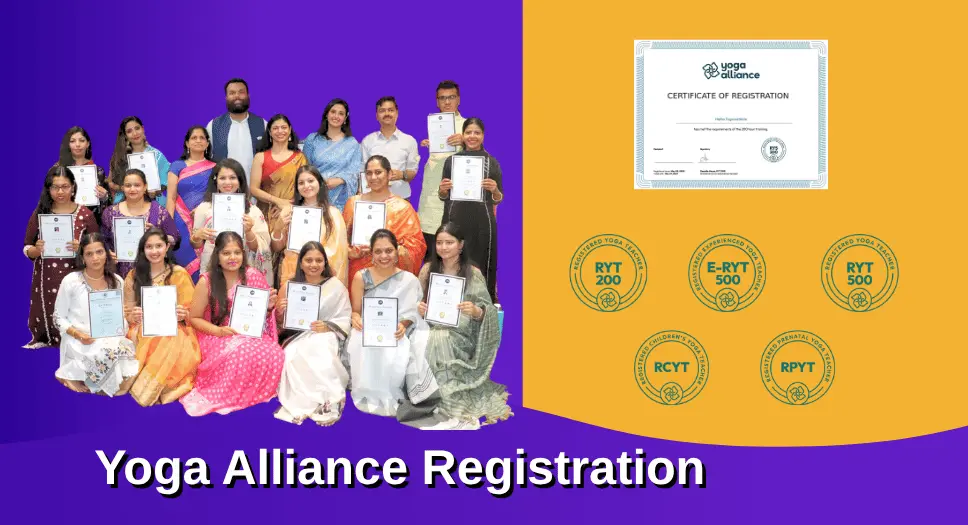
When you successfully complete your training, your school issues a training certificate. This document is essential; it is the primary proof of your eligibility when you apply to Yoga Alliance.
Keep it somewhere safe. We recommend both a digital copy and a physical copy. Students who lose their certificates may face delays in registration while their school issues a replacement, so treat it with the same care you’d give any important professional document.
At Hatha Yoga Institute, we also maintain records of all graduates, so if something ever happens to your certificate, we can assist in verifying your training directly with Yoga Alliance.
Step 4: Create Your Yoga Alliance Account and Submit Your Application
With your certificate in hand, head to yogaalliance.org and click Join Yoga Alliance. This takes you to the online application portal.
During the application, you will be asked to:
- Enter your personal information: full name, email address, and country of residence
- Select your credential type (for first-time applicants, this is typically RYT 200)
- Provide details of your training program: name of your Registered Yoga School and dates of your training
- Upload your training certificate
- Add a profile photo, which will appear on your public teacher listing in the Yoga Alliance directory
Take your time filling this in accurately. Discrepancies between your application and what your school has on record can slow down the process unnecessarily.
Step 5: Read and Sign the Ethical Commitment
Every Yoga Alliance member, teachers and schools alike, is required to agree to Yoga Alliance’s Ethical Commitment. This is a meaningful agreement, not a click-through formality.
It covers:
- Maintaining clear professional boundaries with students
- Representing your qualifications honestly
- Creating safe, inclusive, and respectful teaching environments
- Committing to ongoing learning and growth as a teacher
We prepare our students for this commitment throughout their training at Hatha Yoga Institute, because these values are not paperwork. They are the backbone of responsible yoga teaching.
Step 6: Pay the Application and Membership Fees
Yoga Alliance charges two separate fees for individual teachers:
- One-time Application Fee: $50, paid at the time of your first credential application
- Annual Membership Fee: $65, paid each year to maintain your active registration
These are relatively modest investments for what is effectively your professional license to teach yoga internationally. Combined, they are well below the cost of a single yoga workshop, and what they unlock in terms of professional credibility and opportunities is significant.
Step 7: Receive Your Credential and Get Listed
Once Yoga Alliance reviews and approves your application, you will receive:
- Official confirmation of your RYT credential
- Your designation (RYT 200, or whichever level you applied for)
- A public listing in the Yoga Alliance Find a Teacher directory, a searchable database used by students, studios, and employers globally
From this point forward, you can and should use your RYT designation in all professional contexts: your website, email signature, social media bios, studio profiles, and any marketing material. It’s not just a title. It’s a trust signal that tells the world you’ve met a recognized standard.
How to Keep Your Yoga Alliance Certification Active
Registration isn’t a one-time event. Maintaining your credential requires ongoing commitment in three key areas:
- Annual Renewal: Pay your $65 annual membership fee to keep your status active. If it lapses, your listing is removed and you can no longer use the RYT designation until you renew.
- Ethical Conduct: The Ethical Commitment isn’t signed once and forgotten. It’s a living standard you uphold throughout your teaching career. Yoga Alliance takes violations seriously and has processes in place for students or peers to file concerns.
At Hatha Yoga Institute, we actively support our graduates well beyond the completion of their training, pointing them toward excellent continuing education opportunities, keeping them informed of Yoga Alliance updates, and remaining a resource as their teaching career develops.
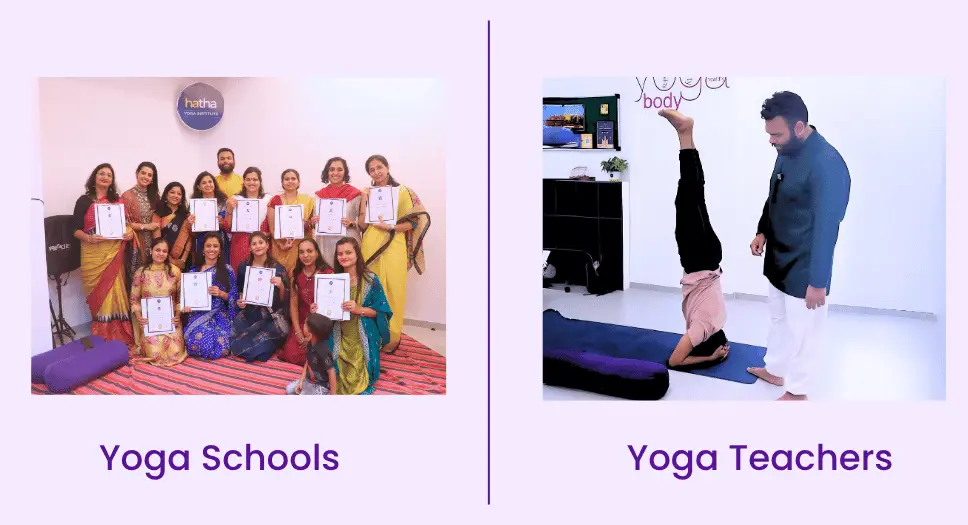
What to Look for in a Yoga Alliance Teacher Training Program
Not all RYS programs are equal. The Yoga Alliance accreditation sets a floor, a minimum standard, but the quality of your actual learning experience depends entirely on the school you choose. Here’s what we believe genuinely matters when evaluating a Yoga Alliance teacher training program:
- The lineage and style of teaching. Yoga is not a monolithic system. Hatha, Vinyasa, Ashtanga, Yin, and Kundalini each have different roots, emphases, and pedagogies. Choose a school whose style resonates with how you already practice, because you’ll be a far more authentic teacher of what you genuinely understand and love.
- The quality and experience of the lead trainers. Yoga Alliance requires lead trainers to meet specific credential thresholds, but credentials alone don’t make a great teacher-trainer. Look for faculty who have years of real teaching experience, clear communication, and a genuine commitment to their students’ development.
- Batch size and individual attention. A training program with 80 students in a room cannot give you the same quality of feedback on your teaching as one with 15 to 20. Smaller cohorts mean more practicum time, more personal adjustments, and deeper conversations.
- What happens after you graduate. Does the school help you with your Yoga Alliance registration? Do they provide ongoing support, mentorship, or community beyond graduation day? The relationship between a student and their training school should not end when the certificate is handed over.
- Transparency about costs and outcomes. A trustworthy school is upfront about fees, what’s included, what’s expected of students, and what the realistic career path looks like after training. Be cautious of programs that over-promise.
At Hatha Yoga Institute, these aren’t just criteria we endorse on paper; they are the principles our programs are built around.
Common Questions We Hear from Students
- “What if I haven’t trained yet? Where do I start?” Start with your school choice. Find an RYS whose style, values, and format align with how you practice and who you want to become as a teacher. For those drawn to the classical roots of yoga, Hatha Yoga Institute’s 200-hour program is a strong foundation built on authentic lineage.
- “Can I do the training online and still qualify?” Yes. Yoga Alliance recognizes both in-person and online training from accredited schools. What matters is that the curriculum meets their standards, not the delivery format.
- “I trained abroad. Does my certification still qualify?” As long as your school holds an active RYS credential, yes. Yoga Alliance accepts applications from teachers trained anywhere in the world.
- “How long does the approval process take?” Most standard applications are processed within a few business days to two weeks. More complex applications (such as upgrades from RYT 200 to RYT 500) may take slightly longer.
- “Can I upgrade my credential later?” Absolutely. Many teachers begin with RYT 200 and return for advanced training when they’re ready to deepen their expertise. Hatha Yoga Institute offers advanced programs for graduates who want to move toward RYT 500 or E-RYT credentials.
A Note from Hatha Yoga Institute
We wrote this guide because we believe that well-informed students make better teachers.
Choosing a training program is one of the most significant decisions in a yoga teacher’s journey, and understanding what comes after that training, including how the Yoga Alliance registration process works, is part of making that decision wisely. We’d rather you come to us knowing exactly what you’re stepping into than discover any of this after the fact.
As a Yoga Alliance Registered Yoga School, Hatha Yoga Institute structures every program specifically to qualify our graduates for direct Yoga Alliance registration. The curriculum, the faculty, the practicum hours, the philosophy; all of it is built to both honor the Hatha tradition and meet the standards that will give you a credential recognized worldwide.
If you’re ready to start that journey, or if you have questions about how our programs align with your Yoga Alliance goals, we are here. Reach out to our team, explore our upcoming teacher training batches, and take the step that thousands of teachers before you have taken with us.