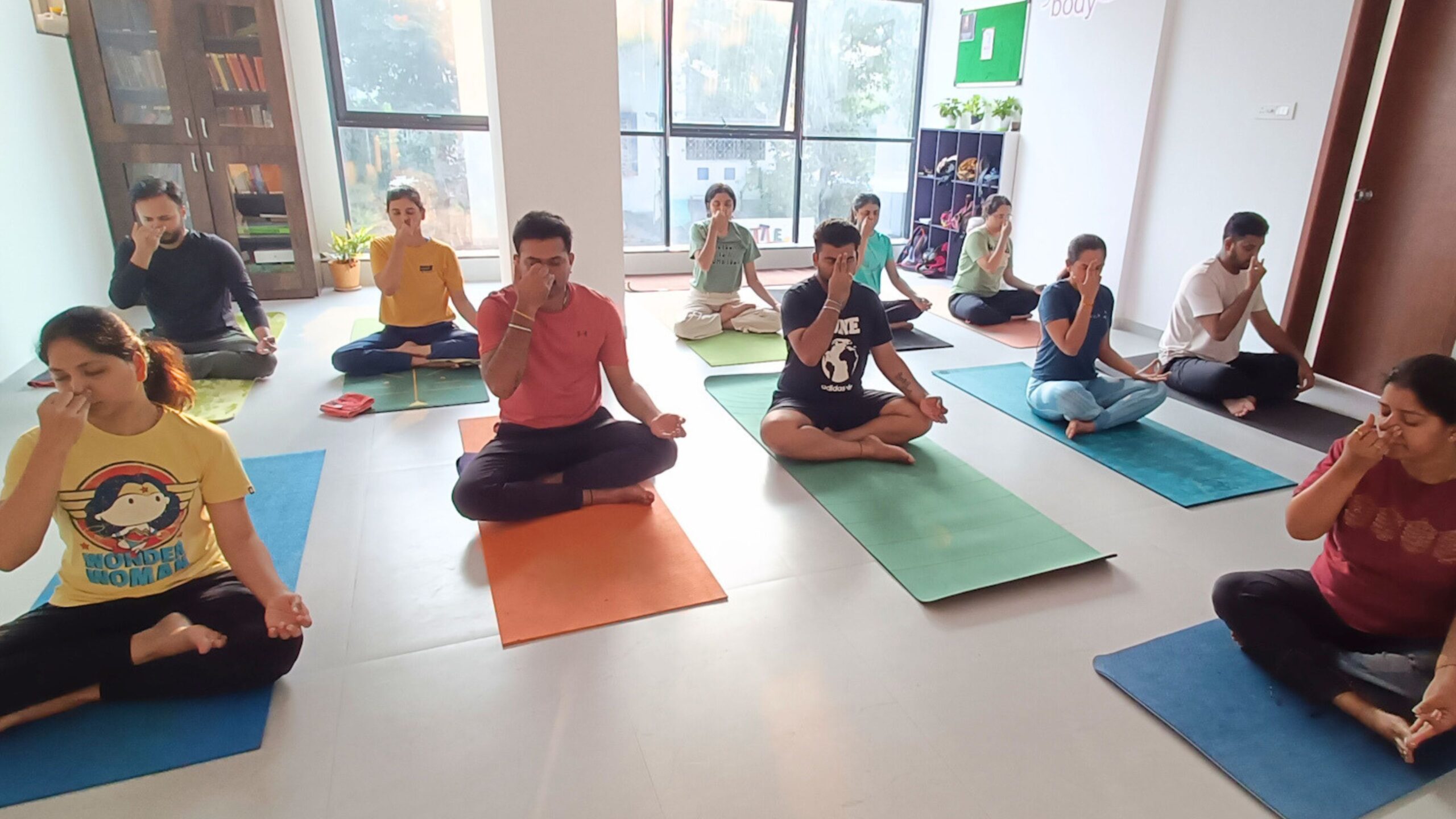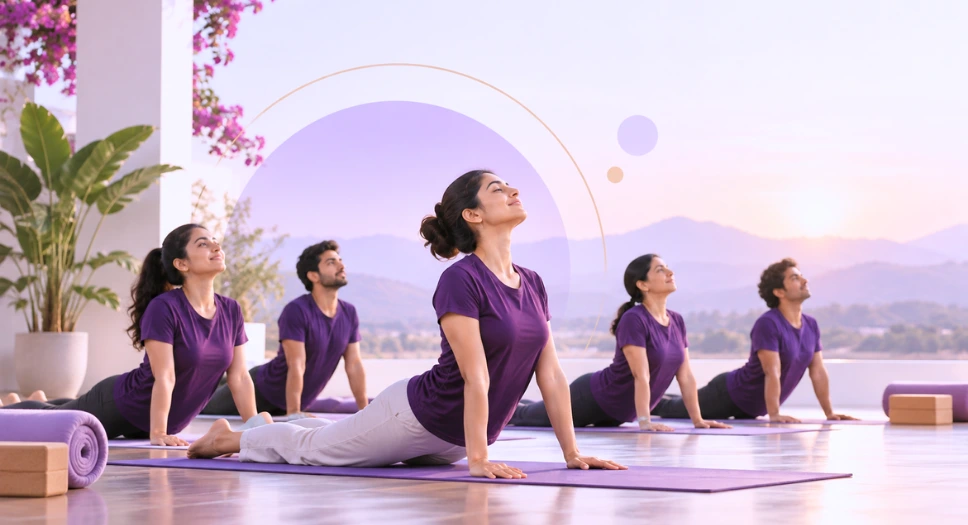
Starting a new fitness routine can feel overwhelming, especially when the world of wellness is filled with complicated poses, unfamiliar Sanskrit terms, and intimidating flexibility goals. If you have ever scrolled through social media and seen someone effortlessly folding into a pretzel-like shape and thought “I could never do that,” you are not alone. The truth is, yoga for beginners does not require any of that. It simply requires a willingness to show up on the mat, breathe, and move your body with intention.
This guide is designed to walk you through everything you need to know to begin your journey. We will cover why yoga is beneficial, how to prepare for your first sessions, and a detailed breakdown of the most important basic yoga asanas every new practitioner should learn. Whether you are looking into yoga for starters as a way to reduce stress, improve flexibility, or simply try something new, this article will give you a solid foundation to build upon.
Why Yoga Is a Great Choice for Beginners
Yoga is one of the few forms of exercise that benefits both the body and the mind simultaneously. Unlike high intensity workouts that demand speed and power, yoga invites you to slow down, observe your breath, and move mindfully. This makes it accessible to almost anyone, regardless of age, body type, or fitness level.
Some of the core benefits include:
- Improved flexibility and joint mobility
- Better posture and spinal alignment
- Reduced stress and anxiety through breath control
- Increased muscular strength and endurance
- Enhanced focus, patience, and mental clarity
- Better sleep quality over time
For someone new to movement practices, these benefits accumulate gradually. You do not need to master a pose perfectly on your first attempt. Consistency matters far more than perfection, and this is one of the most freeing lessons yoga teaches.
Preparing Yourself Before You Begin
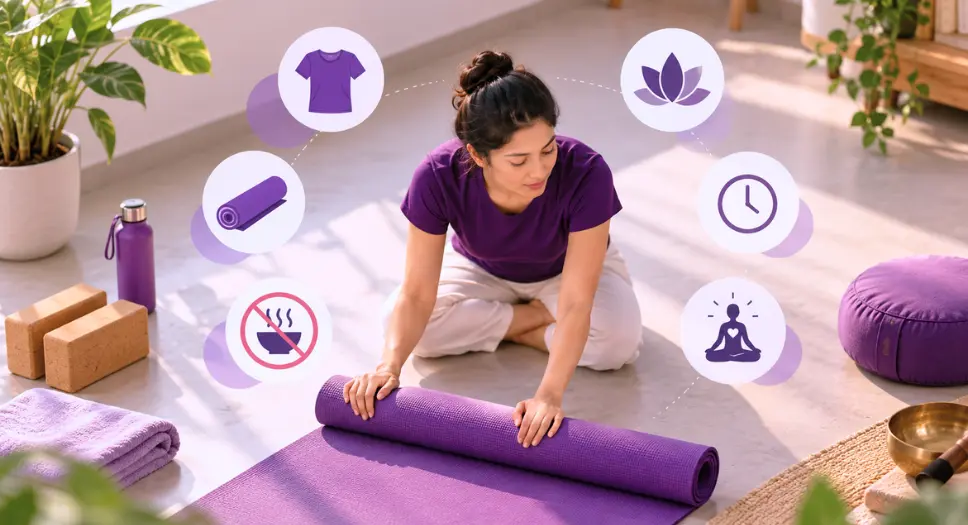
Before diving into the basic postures of yoga, it helps to set yourself up for a comfortable and safe experience. Here are a few practical tips to keep in mind as you start:
- Choose comfortable clothing: Wear stretchy, breathable clothes that allow free movement of your arms and legs.
- Get a good quality mat: A non-slip yoga mat provides cushioning and grip, which is especially important for standing poses.
- Practice on an empty stomach: Try to leave at least two to three hours between eating and practicing.
- Find a quiet space: A calm environment free from distractions will help you focus on your breath and movements.
- Start slow: There is no need to rush into advanced sequences. Begin with short 15 to 20 minute sessions.
- Listen to your body: Never force a stretch. Mild discomfort is normal, but sharp pain is a signal to stop.
Once you feel ready with your space and mindset, it is time to explore the foundational poses that form the backbone of almost every yoga practice.
Understanding the Basics of Breath and Alignment
Before jumping into specific postures, it is worth spending a moment on breath, since this is the thread that connects every asana together. In yoga, breathing is typically done through the nose, using a technique often referred to as Ujjayi breath, where the breath makes a soft ocean-like sound at the back of the throat. This breathing style helps regulate the nervous system and keeps the mind anchored during practice.
Alignment is equally important. Many beginners rush to deepen a stretch before their foundation is stable, which can lead to strain or injury. A simple rule to remember is to build your pose from the ground up. Whether your feet, hands, or knees are grounding you, ensure that base is steady before layering additional movement on top of it.
Essential Basic Yoga Asanas for Beginners
Now let us get into the heart of this guide, a breakdown of the most important poses that make up nearly every beginner-friendly sequence. These basic yoga asanas target different muscle groups and offer a well-rounded introduction to the practice.
1. Mountain Pose (Tadasana)
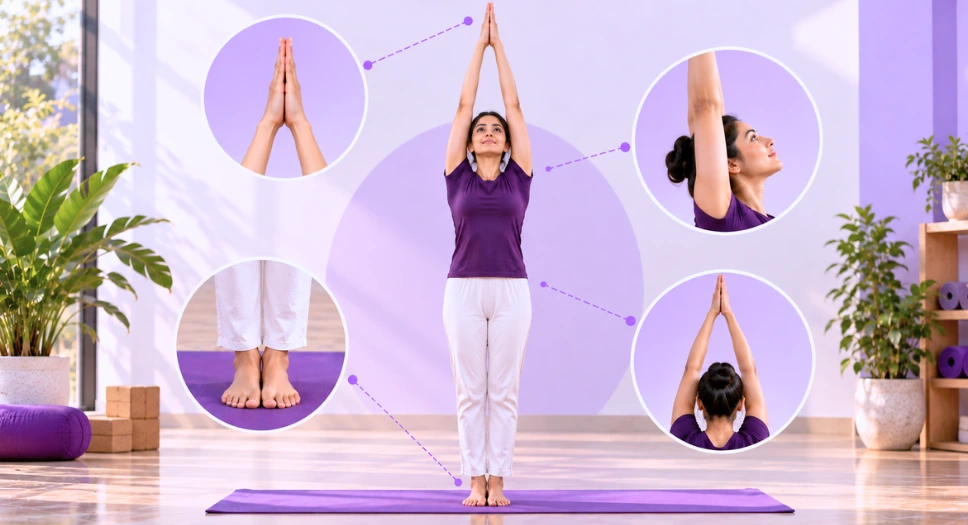
Mountain pose looks deceptively simple, but it is the foundation for nearly every standing posture in yoga. To practice it:
- Stand with your feet together or hip-width apart
- Distribute your weight evenly across both feet
- Engage your thighs and lengthen your spine
- Relax your shoulders away from your ears
- Breathe deeply while grounding through your feet
This pose teaches body awareness and proper posture, both of which are essential building blocks for the rest of your practice.
2. Downward Facing Dog (Adho Mukha Svanasana)
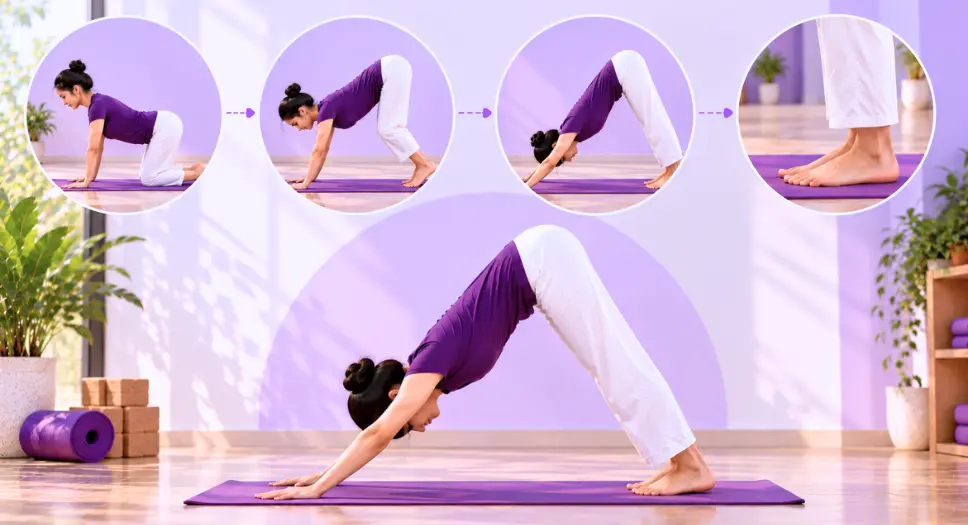
This is arguably one of the most recognizable poses in all of yoga. It stretches the hamstrings, calves, shoulders, and spine while also building upper body strength.
- Start on your hands and knees
- Tuck your toes and lift your hips upward
- Form an inverted V shape with your body
- Keep a slight bend in your knees if your hamstrings feel tight
- Press your palms firmly into the mat and relax your neck
Practicing this posture regularly helps release tension in the lower back and improves circulation throughout the body.
3. Child's Pose (Balasana)
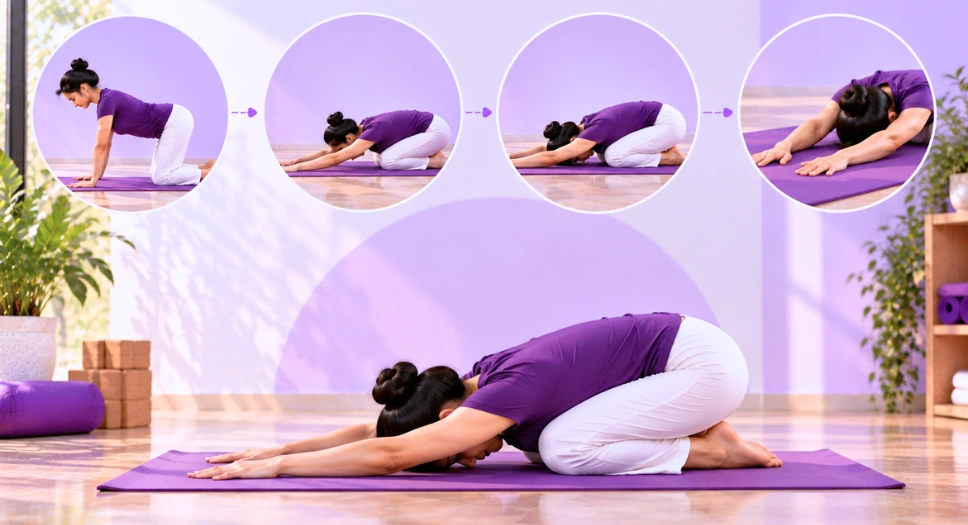
Child’s pose is a resting posture that can be used any time you need a moment to pause during your practice. It gently stretches the hips, thighs, and lower back.
- Kneel on the mat with your big toes touching
- Sit back onto your heels
- Fold forward, extending your arms in front of you
- Rest your forehead on the mat
- Breathe slowly and allow your body to relax
This pose is particularly comforting for those exploring yoga for starters, as it offers a safe space to reset between more demanding postures.
4. Cat-Cow Pose (Marjaryasana-Bitilasana)
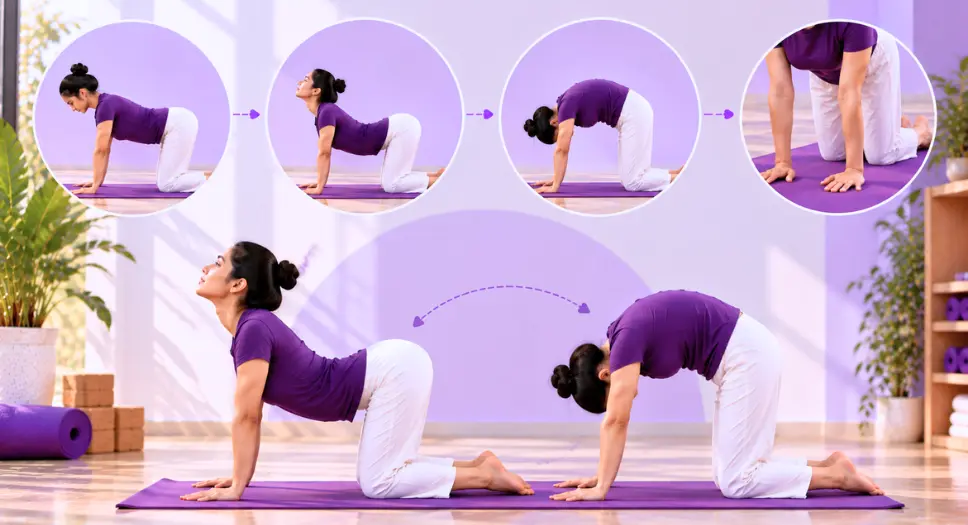
This dynamic duo of poses is excellent for warming up the spine and relieving tension in the back and neck.
- Begin on your hands and knees in a tabletop position
- Inhale, drop your belly, and lift your gaze for Cow pose
- Exhale, round your spine, and tuck your chin for Cat pose
- Move slowly between the two, syncing breath with movement
This gentle flow is often used at the start of a session to prepare the body for more intense stretching.
5. Warrior I and Warrior II (Virabhadrasana I and II)
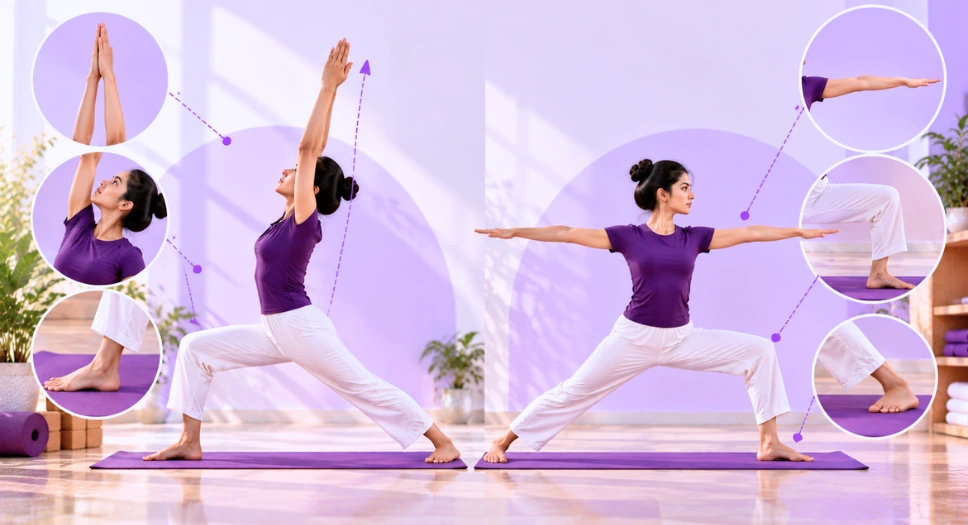
The Warrior poses build strength in the legs while improving balance and stability. They are staples among the basic postures of yoga taught in nearly every introductory class.
- Step one foot forward into a lunge position
- Bend your front knee to a right angle while keeping your back leg straight
- For Warrior I, square your hips forward and raise your arms overhead
- For Warrior II, open your hips to the side and extend your arms parallel to the floor
- Hold each pose for several breaths, feeling the strength build in your legs
These poses also cultivate confidence and focus, as they require steady concentration to maintain proper form.
6. Tree Pose (Vrksasana)
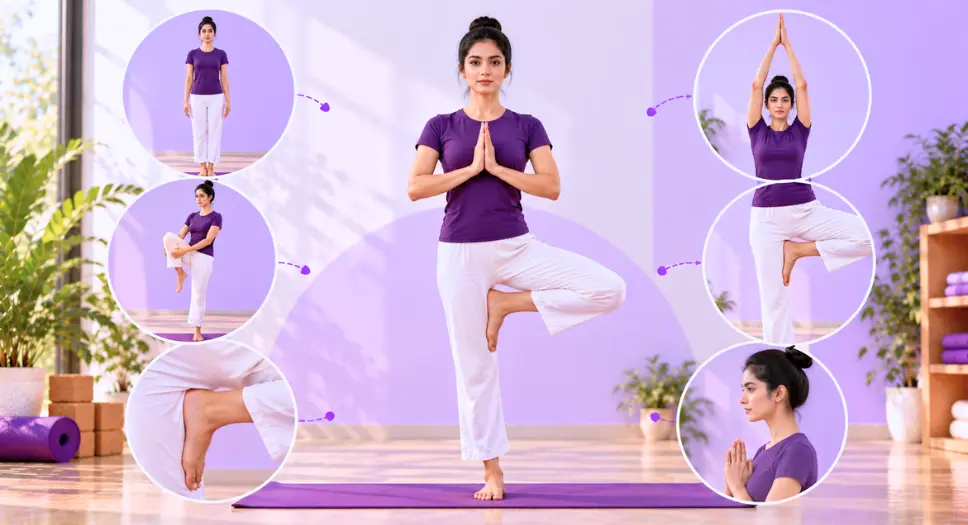
Balance poses like Tree pose train coordination and mental focus, both valuable skills for beginners to develop early on.
- Stand tall and shift your weight onto one leg
- Place the sole of your other foot against your inner calf or thigh, avoiding the knee
- Bring your palms together at your chest or extend your arms overhead
- Fix your gaze on a still point ahead of you for stability
- Switch sides after holding for a few breaths
If balance feels challenging at first, it is completely normal. Using a wall for support is a great way to build confidence.
7. Triangle Pose (Trikonasana)
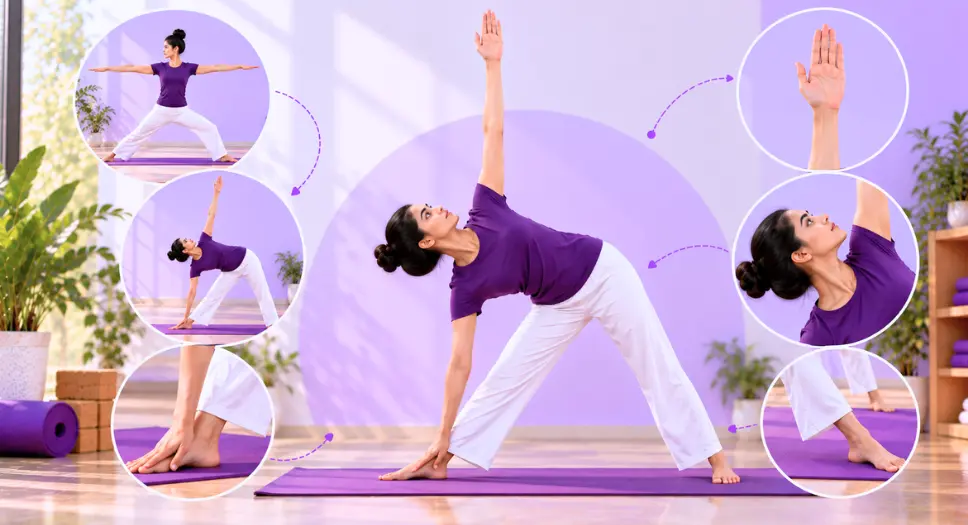
This pose stretches the hamstrings, hips, and spine while also improving lateral flexibility.
- Stand with your feet wide apart
- Turn one foot out and extend your arms parallel to the floor
- Hinge at your hip and reach your hand toward your shin, ankle, or the floor
- Extend your other arm straight up toward the ceiling
- Keep your chest open and gaze upward if comfortable
8. Bridge Pose (Setu Bandhasana)
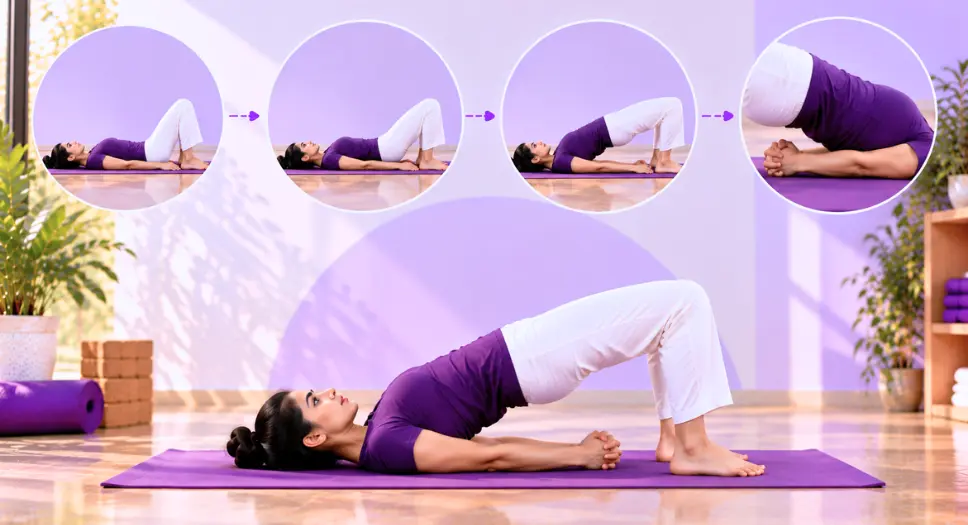
Bridge pose strengthens the glutes and lower back while gently opening the chest and shoulders.
- Lie on your back with your knees bent and feet flat on the floor
- Press into your feet and lift your hips toward the ceiling
- Clasp your hands beneath your back or keep your arms flat on the mat
- Hold for several breaths before slowly lowering back down
9. Seated Forward Bend (Paschimottanasana)
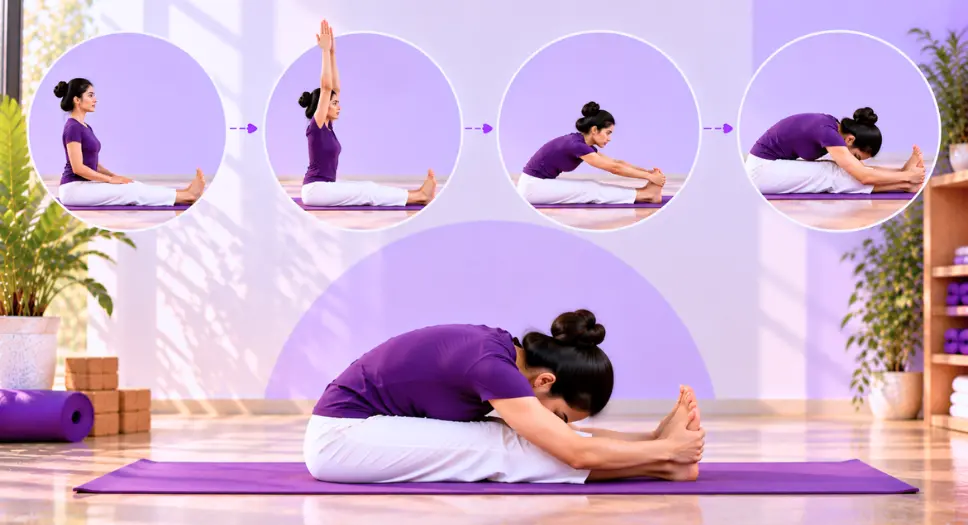
This calming posture stretches the entire back body and encourages introspection.
- Sit with your legs extended straight in front of you
- Inhale to lengthen your spine
- Exhale and fold forward from your hips, reaching toward your feet
- Keep a slight bend in your knees if needed
- Relax your neck and let gravity do the work
10. Corpse Pose (Savasana)
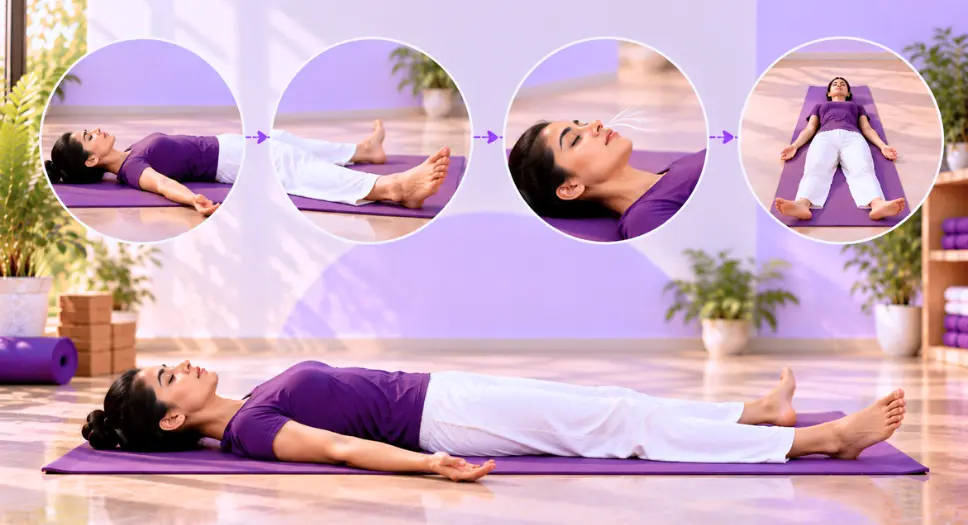
No beginner sequence is complete without ending in Savasana, a posture of total relaxation that allows the body to absorb the benefits of the practice.
- Lie flat on your back with your arms resting at your sides
- Let your feet fall open naturally
- Close your eyes and focus on slow, steady breathing
- Stay here for five to ten minutes, allowing your mind to settle
This final pose is often considered one of the most important, as it gives your nervous system time to shift into a state of rest and recovery.
Building a Simple Beginner Routine
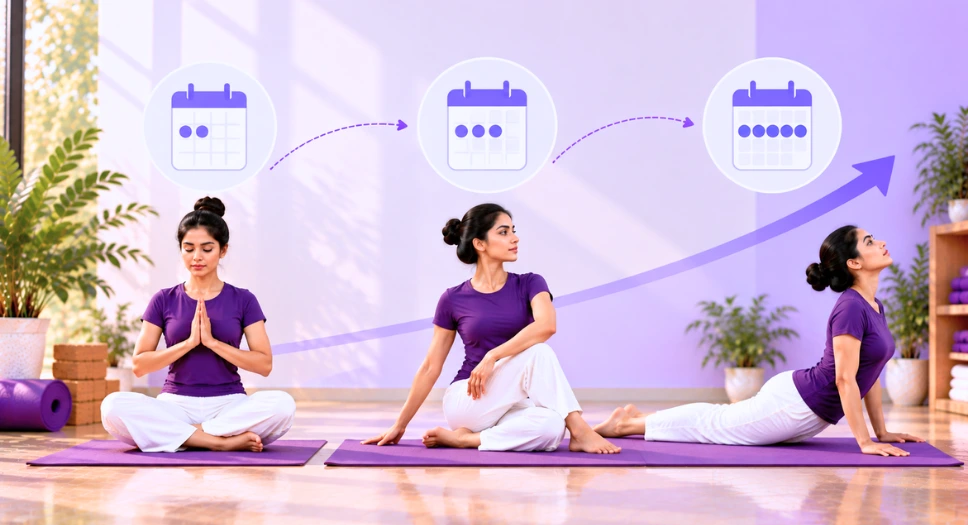
Once you are familiar with these postures, you can begin combining them into a short daily or weekly routine. A simple sequence might look like this:
- Begin in Mountain Pose to center yourself
- Move through a few rounds of Cat-Cow to warm up the spine
- Transition into Downward Facing Dog
- Practice Warrior I and II on both sides
- Add Tree Pose for balance
- Include Triangle Pose for a lateral stretch
- Move to the floor for Bridge Pose and Seated Forward Bend
- Rest in Child’s Pose whenever needed
- Close the session with Savasana
Practicing this sequence three to four times a week can help you build strength, flexibility, and familiarity with the postures over time.
Common Mistakes Beginners Should Avoid
As you continue exploring yoga for beginners, keep these common pitfalls in mind:
- Comparing yourself to others in the room or on social media
- Holding your breath during challenging poses
- Forcing your body into a deeper stretch than it is ready for
- Skipping warm-up movements before standing poses
- Practicing on a hard or slippery surface without a mat
- Ignoring pain signals from your joints or muscles
Avoiding these mistakes will make your practice safer and far more enjoyable in the long run.
How Often Should Beginners Practice?
There is no single correct answer, since it depends on your schedule, energy levels, and goals. That said, most instructors recommend starting with two to three sessions per week. This gives your muscles time to recover while still building consistency. As your comfort and stamina grow, you can gradually increase the frequency or duration of your sessions.
Learning From Guided Instruction
While self-practice using guides like this one is a wonderful starting point, working with an experienced instructor can significantly accelerate your progress. A qualified teacher can correct your alignment, suggest modifications for your body type, and help you avoid injuries that often happen when beginners practice alone without feedback.
This is where structured learning environments become valuable. If you are serious about deepening your practice beyond these basic postures of yoga, consider enrolling in a class or workshop at the Hatha Yoga Institute. Known for its focus on traditional techniques and personalized guidance, the Hatha Yoga Institute offers beginner-friendly programs designed to help new students build a strong, safe, and sustainable foundation. Their experienced instructors take the time to understand each student’s unique needs, making the transition from yoga for starters to a confident, independent practice much smoother.
Frequently Asked Questions for New Practitioners
As you begin exploring yoga for beginners, a few questions tend to come up again and again. Here are some quick answers to help clear up common confusion.
1. Do I need to be flexible to start yoga?
Not at all. Flexibility is a result of consistent practice, not a prerequisite for starting one. Many people begin yoga specifically because they are stiff or inflexible, and over weeks of gentle stretching, their range of motion gradually improves.
2. What equipment do I actually need?
At the very least, a mat is recommended for grip and cushioning. Optional props like blocks, straps, and bolsters can help modify poses, but none of these are mandatory when you are just getting started with basic yoga asanas.
3. Can I practice yoga at home without a teacher?
Yes, many beginners start at home using videos, articles, or apps. However, working with a qualified instructor, even occasionally, helps ensure your alignment is correct and reduces the risk of strain or injury.
4. How long before I see results?
Many people notice improvements in mood and relaxation within the first few sessions. Physical changes such as increased flexibility and strength typically become noticeable after four to six weeks of consistent practice.
5. Is yoga a good workout for weight loss?
While gentle styles of yoga are not primarily designed for calorie burning, they support weight management indirectly by reducing stress, improving sleep, and encouraging mindful eating habits. More dynamic styles, once you move beyond basic postures of yoga, can also contribute to a more active lifestyle.
6. What if I cannot hold a pose as long as instructed?
That is completely normal for anyone new to the practice. Hold each posture for as long as feels comfortable, and gradually increase your duration as your strength and stamina improve. There is no rush in yoga, and modifying a pose to suit your current ability is always encouraged.
Final Thoughts
Yoga is not about achieving a perfect pose or matching someone else’s flexibility. It is a personal journey of self-discovery, patience, and steady growth. By starting with these foundational postures and practicing regularly, you will begin to notice improvements not just in your physical body, but in your mental clarity and overall sense of well-being.
Remember that every experienced yogi was once a beginner standing exactly where you are now. Approach your practice with curiosity rather than judgment, celebrate small victories along the way, and allow yourself the grace to grow at your own pace. Whether you practice at home using guides like this one or join a supportive community such as the Hatha Yoga Institute, the most important step is simply beginning.
So roll out your mat, take a deep breath, and start your journey today. The postures outlined in this guide are more than enough to keep you engaged and progressing for weeks to come, and with time, patience, and consistency, you will find that yoga becomes not just an exercise, but a meaningful part of your everyday life.