A swollen belly after lunch, gas that refuses to move, and mornings that end without relief are problems many of us quietly put up with. We reach for antacids, herbal teas, or laxatives, and while these can help in the short term, they rarely address the real cause. This is where yoga for digestion can offer a gentle, supportive complement to good habits. Instead of forcing the body to respond, yoga uses movement, breath, and relaxation to encourage your digestive system to work more comfortably.
In this guide, you will learn why digestion slows down, how specific postures stimulate your gut, and which poses work best for bloating, gas, and a sluggish bowel. You will also find a ready-to-use routine, breathing techniques, lifestyle tips, and common mistakes to avoid.
Why Digestion Goes Off Track
Before we get to the poses, it helps to understand what is happening inside your body. Digestion is not just about the stomach. It is a coordinated process involving your mouth, esophagus, stomach, small intestine, large intestine, and the nervous system that controls them all. When any part of this chain is disturbed, you feel it as discomfort.
Some of the most common reasons digestion becomes sluggish include:
- Sedentary routines: Sitting for long hours reduces the natural movement of the intestines, a process known as peristalsis.
- Chronic stress: Stress shifts your body into “fight or flight” mode, which diverts blood and energy away from the digestive organs.
- Low fiber and low water intake: Stools become hard and difficult to pass when the body lacks fiber and fluids.
- Irregular meal timing: Skipping meals or eating late at night confuses the body’s digestive rhythm.
- Poor sleep: Disturbed sleep affects gut hormones and slows down bowel activity.
- Rushed eating: Swallowing food without chewing forces the gut to work harder and produces more gas.
Notice that many of these causes are connected to lifestyle and stress, not just food. That is precisely why a mind-body practice like yoga can make such a noticeable difference.
How Yoga Supports a Healthy Gut
Yoga is thought to support digestion in several ways at once. It is worth being honest that research on yoga and gut health is still preliminary, with most studies focusing on irritable bowel syndrome and using small samples. Yoga is best seen as a helpful addition to diet, hydration, and medical care, not a guaranteed cure.
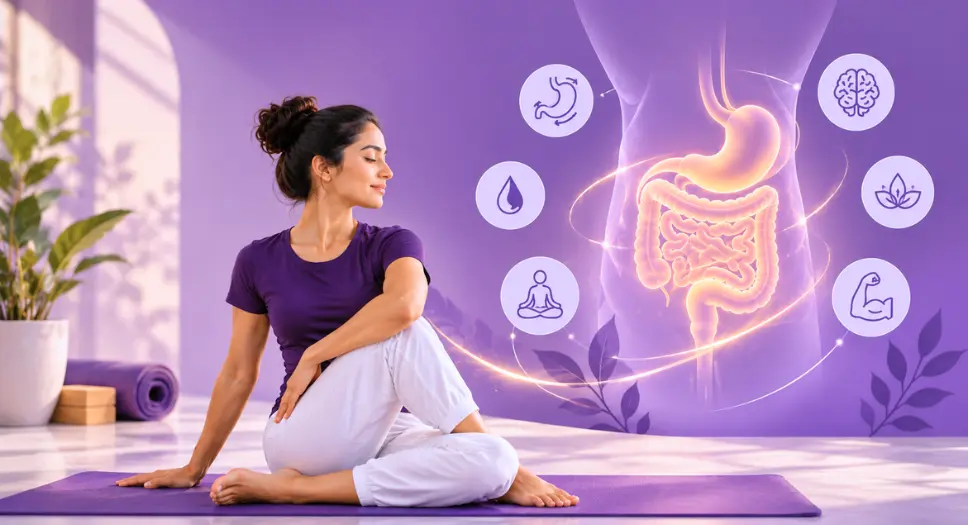
- Mechanical massage: Forward folds, twists, and compressions gently squeeze and release the abdominal organs, encouraging movement through the intestines.
- Improved circulation: Stretching and inversions increase blood flow to the digestive tract, supporting nutrient absorption and waste removal.
- Nervous system balance: Slow breathing activates the parasympathetic “rest and digest” response, which is the state your gut needs to function well.
- Stress reduction: Lower stress levels may mean fewer cramps, less bloating, and a calmer gut.
- Core and pelvic floor strength: Toned muscles in this area make elimination easier and more complete.
The relationship between constipation and yoga is especially interesting. Constipation is often tied to tension, both physical and emotional. When the pelvic floor is tight or the mind is anxious, the bowel struggles to release. Yoga softens both layers, which is why some people report more regular bowel habits with steady practice, although results differ from person to person. Every digestion yoga asana in this article has been chosen because it either compresses, twists, or relaxes the abdominal region in a safe and effective manner.
Golden Rules Before You Start
A few simple guidelines will keep your practice safe and effective:
- Practice on an empty stomach. Wait at least 3 to 4 hours after a heavy meal, and about 2 hours after a light snack.
- Early morning is ideal. Many people find that practicing after waking and drinking warm water may encourage a natural bowel movement.
- Breathe steadily. Never hold your breath during a pose. Smooth breathing is what triggers the relaxation response.
- Go slowly. Avoid jerky movements, especially in twists and folds.
- Listen to your body. A gentle stretch is fine, but sharp pain is a signal to ease off.
- Stay consistent. Ten minutes daily works better than one long session per week.
Poses to Relieve Bloating and Gas `
Trapped gas is one of the most uncomfortable digestive complaints, and the good news is that it responds quickly to the right movements. The following yoga poses for digestion focus on compressing the abdomen and helping the gas move along and exit the body.
1. Wind-Relieving Pose (Pavanamuktasana)
The name itself tells the story. This pose is traditionally used to release trapped wind.
How to do it:
- Lie flat on your back with your legs extended.
- Bend your right knee and hug it towards your chest with both hands.
- Keep your left leg straight on the mat.
- Hold for 30 to 45 seconds while breathing deeply, then switch sides.
- Finish by hugging both knees together for 30 seconds.
Why it helps: The knee pressure gently massages the ascending and descending colon, encouraging gas to move out naturally.
2. Cat-Cow Pose (Marjaryasana-Bitilasana)
This flowing movement is a wonderful warm-up for the whole abdominal region.
How to do it:
- Come onto your hands and knees, with wrists under shoulders and knees under hips.
- Inhale, drop your belly, and lift your chest and tailbone (Cow).
- Exhale, round your spine, and tuck your chin (Cat).
- Repeat slowly for 8 to 10 rounds.
Why it helps: The alternating compression and expansion stimulates the abdominal organs and eases tension in the lower back.
3. Child’s Pose (Balasana)
A restful pose that calms the nervous system while applying soft pressure to the belly.
How to do it:
- Kneel on the mat and sit back on your heels.
- Fold forward, resting your forehead on the mat with arms stretched ahead or by your sides.
- Breathe into your belly and hold for 1 to 2 minutes.
Why it helps: It relieves cramping, reduces stress, and lets the abdomen relax while the thighs gently press against it.
4. Supine Spinal Twist (Supta Matsyendrasana)
Twists are among the most valued movements for gut health.
How to do it:
- Lie on your back and hug both knees to your chest.
- Drop both knees to the right while extending your arms in a T shape.
- Turn your head to the left if it feels comfortable.
- Stay for 1 minute on each side.
Why it helps: The wringing action increases circulation in the abdominal organs and helps release trapped gas.
5. Thunderbolt Pose (Vajrasana)
This is one of the few poses traditionally practiced right after meals, which makes it convenient in daily life.
How to do it:
- Kneel and sit back on your heels with your spine upright.
- Rest your palms on your thighs.
- Stay for 5 to 10 minutes, breathing calmly.
Why it helps: Traditionally, this pose is said to support post-meal digestion. The upright spine and calm breathing are gentle and may ease that heavy feeling after eating.
Caution: Skip or modify it if you have knee or ankle pain, or place a folded blanket between your thighs and calves.
Poses to Relieve Constipation
When the bowel is slow or stools are hard, you need a different emphasis: deeper compression, pelvic floor release, and gentle stimulation of the lower abdomen. These yoga poses for constipation are simple enough for beginners and effective enough to be practiced daily.
1. Garland Pose (Malasana)
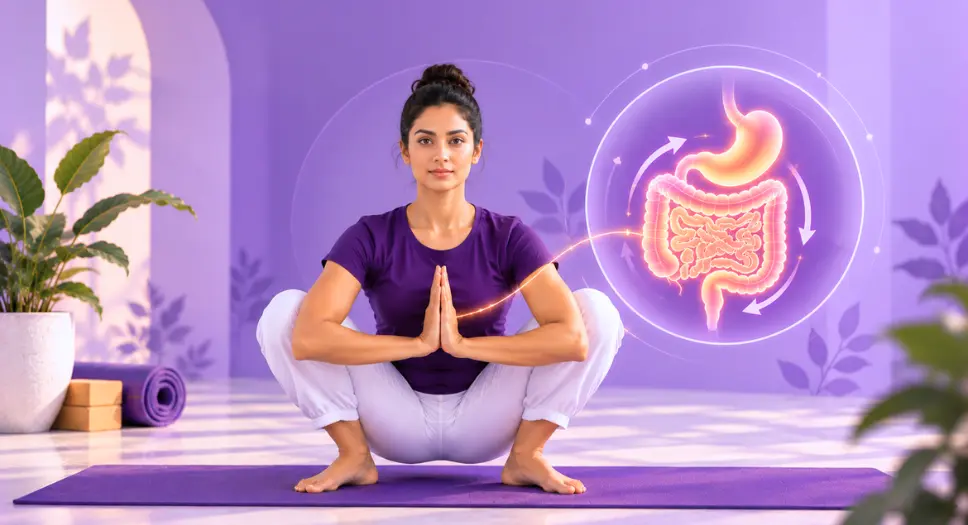
Often called the natural squat, this is arguably the most helpful posture of all.
How to do it:
- Stand with your feet slightly wider than your hips, toes turned out.
- Lower into a deep squat, bringing your palms together at your chest.
- Press your elbows gently against your inner knees.
- Hold for 30 to 60 seconds. Place a folded blanket under your heels if they lift.
Why it helps: The squat is thought to mimic the natural position for elimination. It opens the pelvis, encourages the pelvic floor to relax, and may make passing stool easier.
Caution: Avoid deep squatting if you have knee injuries, and check with your doctor in late pregnancy.
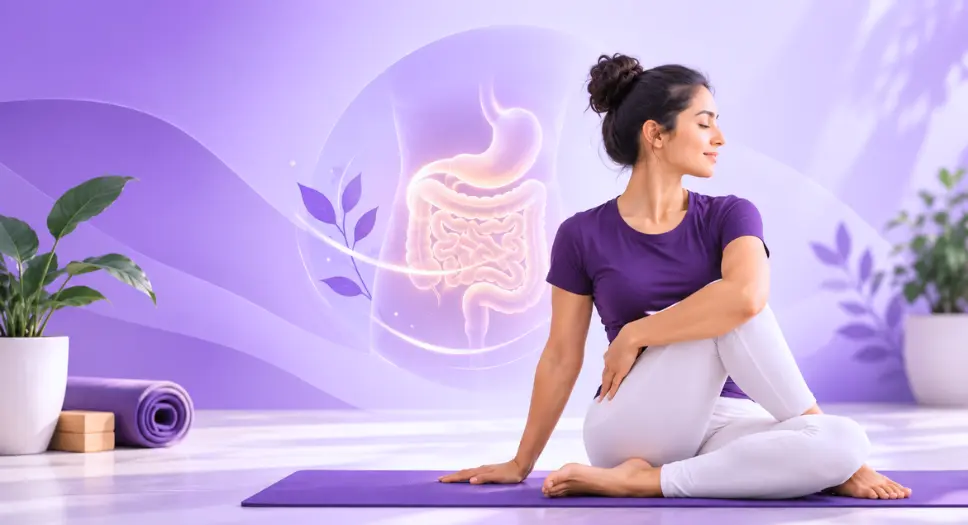
2. Half Lord of the Fishes Pose (Ardha Matsyendrasana)
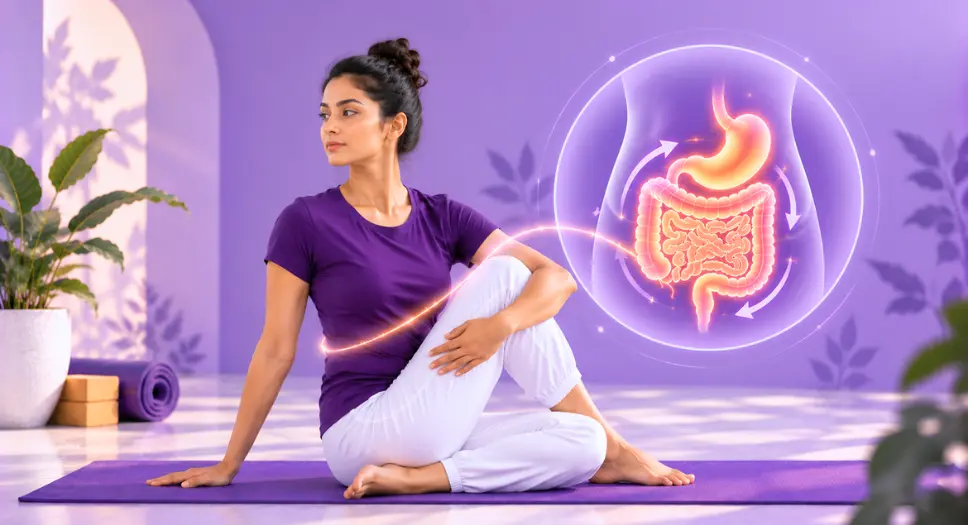
A seated twist that deeply massages the abdominal organs.
How to do it:
- Sit with your legs extended and bend your right knee, placing your foot outside your left thigh.
- Hug your right knee with your left arm and twist to the right.
- Keep your spine tall and breathe evenly.
- Hold for 30 to 45 seconds, then switch sides.
Why it helps: The twist compresses the colon on one side while stretching the other, promoting waste movement.
3. Seated Forward Bend (Paschimottanasana)
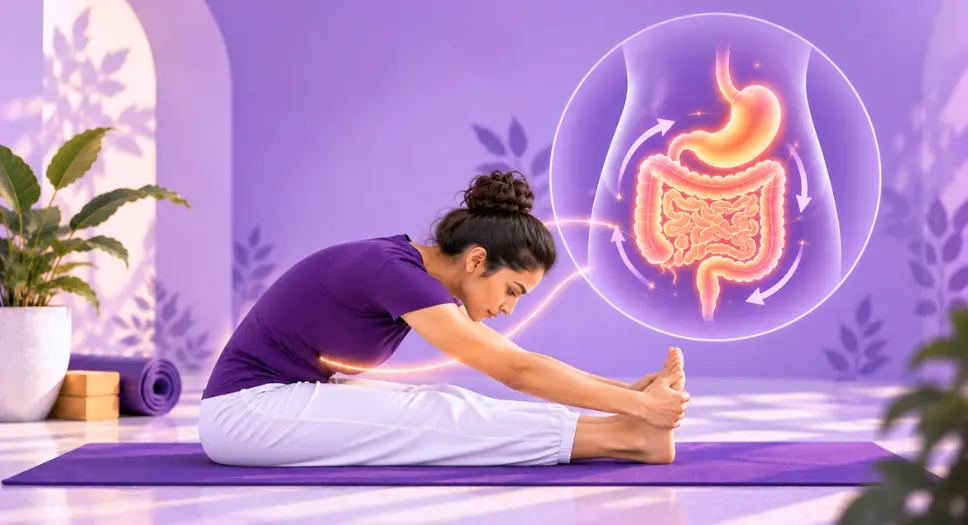
A calming fold that stimulates the entire digestive tract.
How to do it:
- Sit with your legs stretched forward.
- Inhale to lengthen your spine, then exhale and fold from the hips.
- Hold your shins, ankles, or feet, without forcing the stretch.
- Stay for 30 to 60 seconds.
Why it helps: The forward fold gently compresses the belly, may stimulate the abdominal organs, and quiets the mind. Keep the knees slightly bent if your hamstrings or lower back feel tight.
4. Cobra Pose (Bhujangasana)
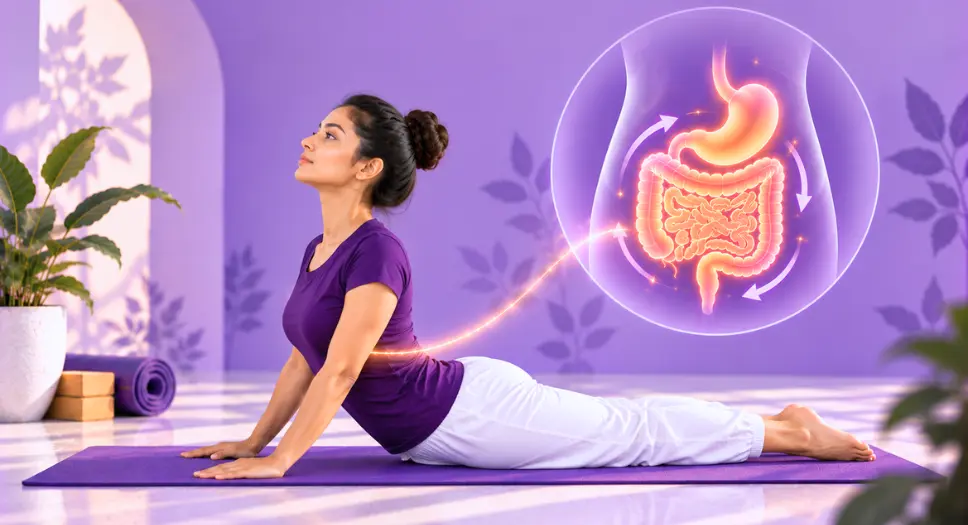
A gentle backbend that opens the front of the body.
How to do it:
- Lie on your stomach with palms beside your chest.
- Inhale and lift your chest, keeping your elbows slightly bent and your pubic bone grounded.
- Hold for 15 to 30 seconds and release.
- Repeat 3 times.
Why it helps: It stretches the abdominal wall and applies gentle pressure to the digestive organs, which may support bowel activity.
Caution: Avoid during pregnancy, or if you have a hernia, recent abdominal surgery, or back injury.
5. Bow Pose (Dhanurasana)

A more energetic pose for those with some experience.
How to do it:
- Lie on your stomach, bend your knees, and hold your ankles.
- Inhale and lift your chest and thighs, forming a bow shape.
- Rock gently if it feels comfortable, and hold for 15 to 20 seconds.
Why it helps: The belly bears your body weight, which produces a natural massage on the intestines.
Caution: Skip this pose if you are pregnant, have a hernia, high blood pressure, recent abdominal surgery, or back or neck problems. Beginners should build up with Cobra first.
6. Legs Up the Wall (Viparita Karani)
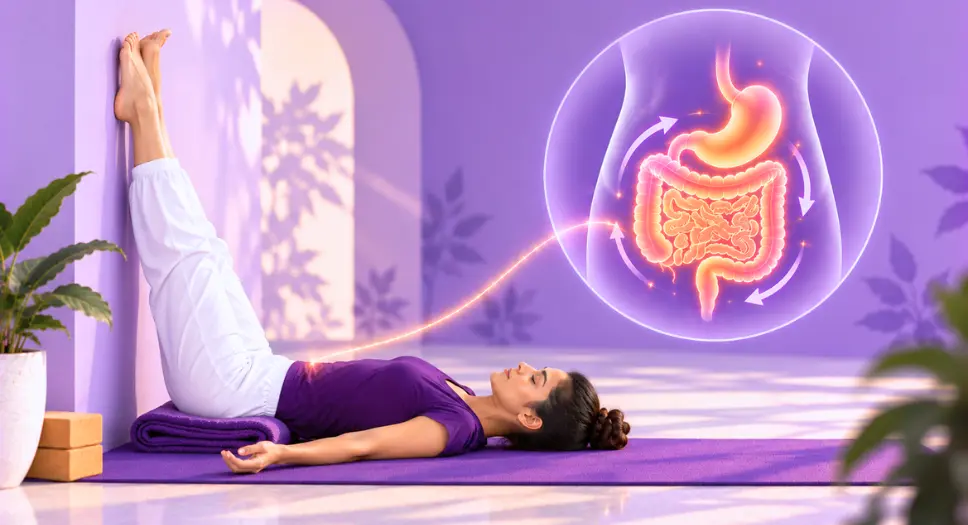
A restorative pose that eases tension and supports the gut.
How to do it:
- Sit sideways next to a wall and swing your legs up as you lie back.
- Rest your arms by your sides and stay for 3 to 5 minutes.
Why it helps: It calms the nervous system, and for many people, this deep relaxation is what allows the bowel to finally let go.
Caution: Avoid or get medical advice first if you have glaucoma, uncontrolled high blood pressure, or serious heart conditions.
Breathing Techniques That Boost Digestion
Posture is only half of the picture. Breath is the bridge between the body and the nervous system, and these techniques are valuable additions to any digestion yoga asana routine.
- Diaphragmatic (belly) breathing: Place a hand on your abdomen and inhale so that it rises, then exhale so that it falls. Practice for 5 minutes. This massages the organs from within and activates the “rest and digest” state.
- Kapalabhati (skull-shining breath): Short, forceful exhales driven by quick belly contractions. Practice 2 to 3 rounds of 20 pumps on an empty stomach. It stimulates abdominal muscles and improves gut movement. Avoid it if you are pregnant, menstruating, or have high blood pressure, heart disease, epilepsy, a hernia, or have had recent abdominal surgery.
- Nadi Shodhana (alternate nostril breathing): A calming practice that balances stress levels, which is helpful if your digestive issues are stress-driven.
- Agnisara Kriya: An advanced practice involving rapid abdominal pumping after exhalation. It should only be learned under a qualified teacher.
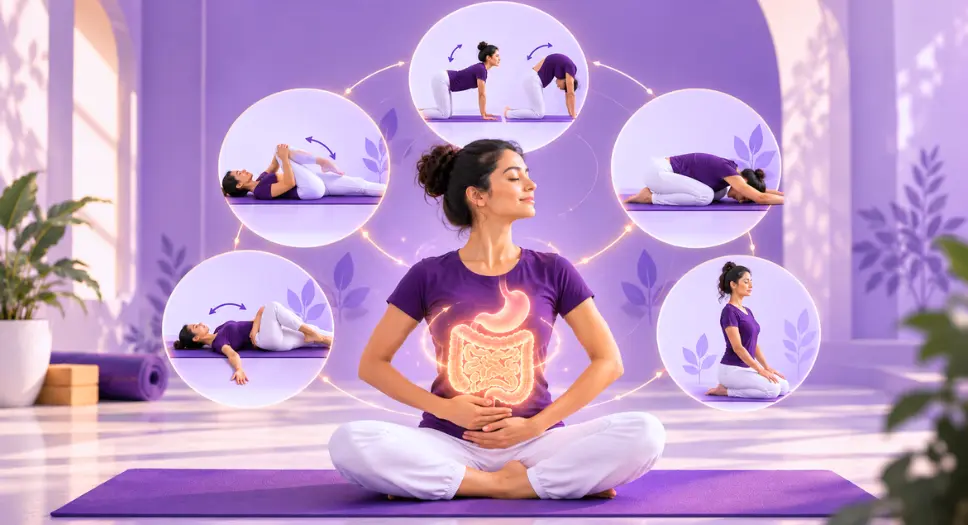
A Simple 20-Minute Routine to Follow
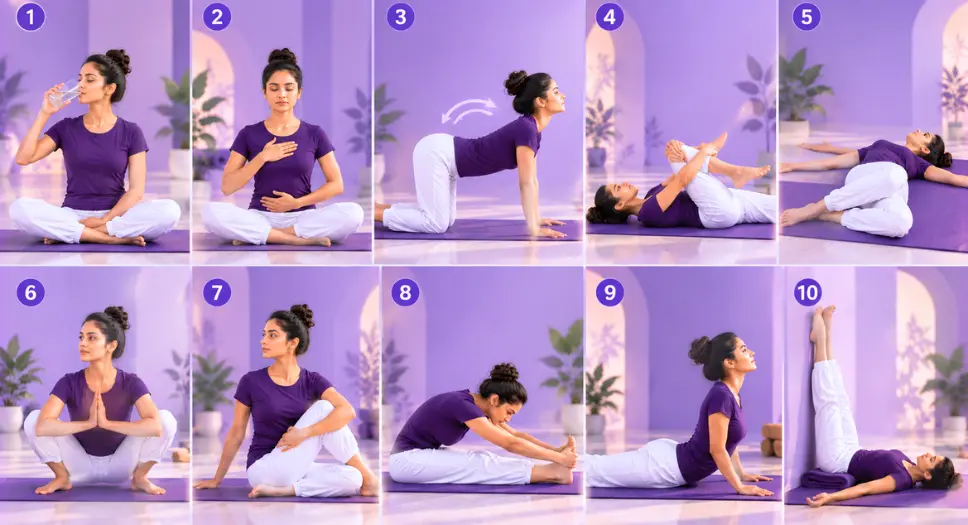
If you are wondering how to bring all this together, here is a routine you can follow each morning.
- Warm water: Drink a glass of lukewarm water on waking.
- Belly breathing: 3 minutes, seated or lying down.
- Cat-Cow: 8 to 10 rounds.
- Wind-Relieving Pose: 45 seconds on each side, then both knees for 30 seconds.
- Supine Spinal Twist: 1 minute on each side.
- Garland Pose: Hold 3 times for 30 seconds, resting in between.
- Half Lord of the Fishes Pose: 45 seconds on each side.
- Seated Forward Bend: 1 minute.
- Cobra Pose: 3 rounds of 20 seconds.
- Legs Up the Wall: 3 minutes to end the practice.
After meals, sit in Vajrasana for 5 to 10 minutes. With steady practice, some people notice lighter digestion, less bloating, and more regular elimination over a few weeks, though results vary.
Lifestyle Habits That Support Your Practice
Yoga works best when it is supported by everyday habits. Consider adding the following:
- Hydrate consistently: Many adults do well with around 2 to 3 liters of fluids daily, adjusted to climate, activity level, and any medical conditions.
- Eat more fiber: Include fruits, vegetables, whole grains, flaxseeds, and lentils.
- Chew thoroughly: Digestion begins in the mouth, so slow down at meals.
- Add healthy fats: Moderate amounts of ghee or olive oil are often used to support smoother bowel movements, though evidence is limited.
- Try triphala only with advice: This traditional Ayurvedic herbal blend is often used for gentle bowel support, but it can cause loose stools and is not suitable for everyone, including pregnant women. Check with a healthcare professional first.
- Keep regular timings: Eat and sleep at consistent hours to train your body’s rhythm.
- Move through the day: Walk for 10 minutes after meals and avoid sitting for hours without a break.
- Respect the urge: Do not delay going to the toilet when your body signals the need.
Common Mistakes to Avoid
Even a well-designed routine can fall short if these errors creep in:
- Practicing right after a heavy meal.
- Holding the breath during twists and folds.
- Forcing the body deeper into a pose to “get results faster.”
- Skipping relaxation at the end of practice.
- Expecting overnight results instead of building a consistent habit.
- Ignoring hydration and diet while relying only on asanas.
When to Seek Medical Advice
Yoga is a supportive practice, not a replacement for medical care. Please consult a doctor if you notice blood in your stool, black or tarry stools, unexplained weight loss, fever, severe or persistent abdominal pain, ongoing vomiting, a sudden change in bowel habits, or constipation that lasts several weeks despite lifestyle changes. Pregnant women, people recovering from surgery, and those with hernias, ulcers, or high blood pressure should get medical clearance and personalized guidance before attempting some of the poses above.
Learn the Right Way with Hatha Yoga Institute
While reading about postures is a good start, learning them under expert guidance makes a real difference in safety, alignment, and results. If you would like to go deeper into traditional practices, the Hatha Yoga Institute is a wonderful place to begin. Hatha yoga brings together asana, pranayama, and relaxation, which are exactly the tools used throughout this article. Whether your goal is better gut health, stress relief, or a full-fledged yoga journey, learning with the Hatha Yoga Institute helps you build a practice that is safe, personalized, and sustainable.
Frequently Asked Questions
1. How long does it take to see results?
Some people feel relief from gas soon after doing Pavanamuktasana. For chronic sluggishness, results vary, and it may take several weeks of regular practice to notice a change.
2. Can beginners try these poses?
Yes. Most of the poses here are beginner-friendly. Use props such as blankets and cushions, and move within your comfort range.
3. Is it safe to practice daily?
For most healthy adults, gentle daily practice is fine, provided you avoid overexertion and follow the safety guidelines above. If you have a medical condition, check with your doctor first.
4. Can yoga replace laxatives?
Yoga may complement other measures, but it should not replace prescribed treatment. Do not stop or change any medication without speaking to your doctor.
Final Thoughts
Your gut is deeply connected to your breath, your posture, and your state of mind. By combining mindful movement, calm breathing, and smart daily habits, you can support your body in a way no quick fix can match. Whether you choose yoga for digestion as a daily morning ritual or use targeted yoga for constipation sequences when you feel stuck, the key is patience and consistency. Start with just a few of the poses above, listen to your body, and build from there. A lighter, more comfortable belly is closer than you think.