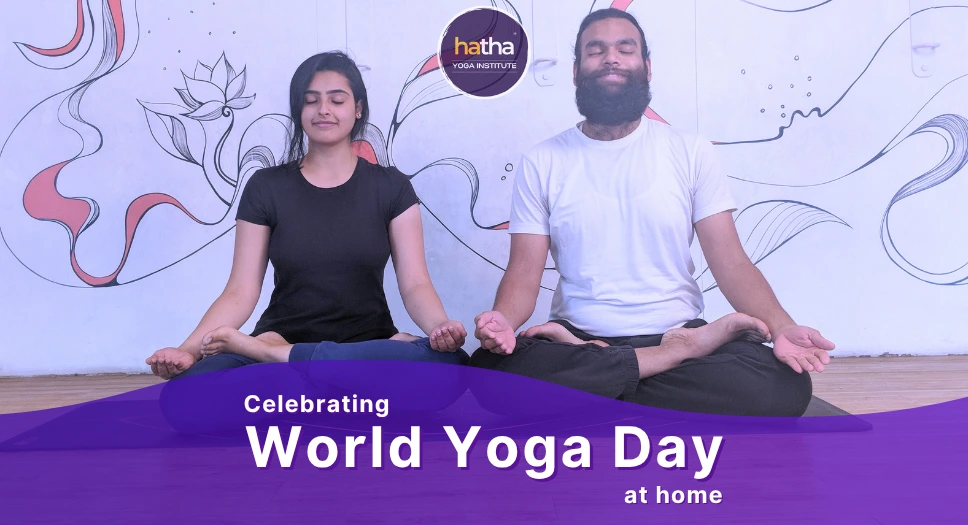
Every year on June 21, millions of people across the world roll out their mats, take a slow breath, and connect with something bigger than the daily rush. That day is yoga day and it is not just a calendar event. It is a global reminder that movement, breath, and stillness are tools available to every single person, no matter where they live or how flexible they are.
If you have been curious about yoga but never quite found the right moment to start, the upcoming yoga day June 21 is your invitation. And here is the best part: you do not need a studio membership, a fancy outfit, or a teacher standing over you. Your living room, a quiet corner of your bedroom, or even a patch of your garden is enough. This guide will walk you through exactly how to celebrate international yoga day right at home, in a way that feels genuine, peaceful, and completely accessible for beginners.
What Is World Yoga Day and Why Does It Matter?
International Yoga Day was declared by the United Nations in 2014 and first observed on June 21, 2015. The date itself is symbolic. June 21 is the summer solstice in the northern hemisphere, the longest day of the year, a moment that many ancient cultures associated with transition, energy, and spiritual significance.
Since that first celebration, the occasion has grown into one of the most widely observed wellness events on the planet. Governments, schools, community organizations, and individuals in over 190 countries participate in some way. What makes it beautiful is that there are no strict rules. Some people practice in stadiums with thousands of others. Some go on a sunrise walk. Some simply sit quietly and breathe for ten minutes.
The spirit of yoga day is not about perfection. It is about pausing. It is about acknowledging that your body deserves attention, your mind deserves calm, and your breath is a bridge between the two.
Why Celebrate at Home?
Celebrating at home has some deeply underrated advantages, especially if you are new to yoga.
- No performance pressure. You are not watching what the person on the next mat is doing. You move at your own pace without any comparison.
- Complete flexibility. You choose when you start, how long you go, and what kind of yoga feels right for you that morning.
- Lower barrier to entry. No commute, no registration fees, no unfamiliar studio etiquette to figure out.
- A more personal experience. You can light a candle, play your favorite music, and create an atmosphere that actually speaks to you.
- Easier consistency. When you build a yoga habit at home, you are more likely to continue it beyond yoga day itself.
Celebrating yoga at home for beginners is not a lesser version of the experience. For many people, it is actually a richer one.
Step 1: Prepare Your Space the Night Before
One of the nicest things you can do for yourself is prepare your practice space before yoga day arrives. You do not need a dedicated yoga room. A cleared living room floor or a clean patch in your bedroom works perfectly.
Here is what to sort out the night before:
- Clear a space at least 6 feet by 4 feet. Move any furniture that might be in the way so you have room to stretch your arms overhead and extend your legs fully.
- Lay out your mat. If you do not have a yoga mat, a thick folded blanket or a non-slip rug works fine for beginners.
- Gather your props. A rolled-up towel works as a bolster. Two hardback books can substitute for yoga blocks. A folded blanket gives you cushioning for seated poses.
- Set the lighting. If you plan to practice in the morning, soft natural light is ideal. Candles or a dim lamp work beautifully for an evening session.
- Pick your playlist. Calm instrumental music, nature sounds, or complete silence are all valid choices. Prepare it ahead so you are not fiddling with your phone in the middle of a pose.
- Keep water nearby. Hydration matters, even during a gentle session.
That little bit of evening preparation makes the morning feel like a ritual you actually look forward to rather than a rushed decision.

Step 2: Start Your Morning with Intention
On yoga day June 21, resist the urge to reach for your phone the moment you wake up. Give yourself the first five minutes of the day without a screen.
Sit on the edge of your bed or on your mat. Take three slow, deep breaths. Breathe in through your nose for a count of four, hold for a beat, and breathe out through your nose for a count of six. Do this three times. It sounds small but this breathing pattern activates your parasympathetic nervous system, the part of your body responsible for rest and calm.
Then, take a moment to set a personal intention for the day. An intention is not a goal with measurable outcomes. It is more like a gentle reminder to yourself. Something like: “Today I move with kindness.” Or: “I am here. That is enough.” Write it on a sticky note and put it somewhere you will see it during your practice.
This kind of mindful start shifts the entire quality of your morning, and it carries through the rest of the day even after your mat is rolled up.
Step 3: A Beginner-Friendly Morning Yoga Flow (45 Minutes)
You do not need to follow a complex sequence to have a meaningful practice. The following beginner flow covers all the major muscle groups, builds warmth gradually, and ends with deep rest. It is designed specifically for yoga at home for beginners and can be done without any prior experience.
Warm-Up (10 Minutes)
Start lying on your back with your knees bent and feet flat on the floor. This is called constructive rest position and it is an excellent place to check in with your body.
- Cat-Cow (5 rounds) Come to hands and knees. On an inhale, drop your belly, lift your chest, and look gently forward. On an exhale, round your spine toward the ceiling and let your head hang. Move slowly and let your breath guide the pace.
- Child’s Pose (hold for 8 breaths) Sit back on your heels, stretch your arms forward along the floor, and rest your forehead down. This is a pose you can return to any time you feel overwhelmed or need a rest.
- Seated Neck Rolls (5 each direction) Sit cross-legged and slowly roll your right ear toward your right shoulder, then roll your chin to your chest, then bring your left ear to your left shoulder. Move like you are drawing a slow arc with the crown of your head.
Main Flow (25 Minutes)
- Mountain Pose (Tadasana) — 5 breaths Stand at the top of your mat with feet hip-width apart, arms by your sides, and eyes soft. Feel all four corners of your feet pressing into the floor. This is the foundation pose for all standing work.
- Forward Fold (Uttanasana) — hold for 8 breaths From Mountain Pose, hinge at your hips and let your upper body hang forward. Bend your knees generously if needed. Let your head be heavy. This releases the entire back of the body.
- Low Lunge (Anjaneyasana) — 6 breaths each side Step your right foot forward between your hands. Lower your left knee to the floor. Lift your arms overhead and feel the stretch across your left hip flexor. This area holds a tremendous amount of daily tension, especially from sitting.
- Downward Facing Dog (Adho Mukha Svanasana) — 8 breaths From hands and knees, tuck your toes and push your hips up and back, making an inverted V shape. Pedal your heels one at a time to loosen the calves. This pose is a mild inversion and offers a full-body stretch.
- Warrior I (Virabhadrasana I) — 6 breaths each side From Downward Dog, step your right foot forward and raise your arms overhead. Your back foot is at roughly a 45-degree angle. This is a powerful standing pose that builds confidence and strength in the legs.
- Warrior II (Virabhadrasana II) — 6 breaths each side From Warrior I, open your hips and arms to the side. Your front arm reaches forward and your back arm reaches behind. Gaze over your front fingertips. Warrior II feels like standing your ground, and that is exactly the energy it builds.
- Triangle Pose (Trikonasana) — 6 breaths each side From Warrior II, straighten your front leg, reach your front arm forward as far as it will go, then hinge down and rest your hand on your shin, a block, or the floor. Raise your top arm to the sky.
- Bridge Pose (Setu Bandha Sarvangasana) — 5 breaths, twice Lie on your back with knees bent and feet flat. Press your feet into the floor and lift your hips. This is wonderful for the lower back and opens up the front of the body.
Cool-Down (10 Minutes)
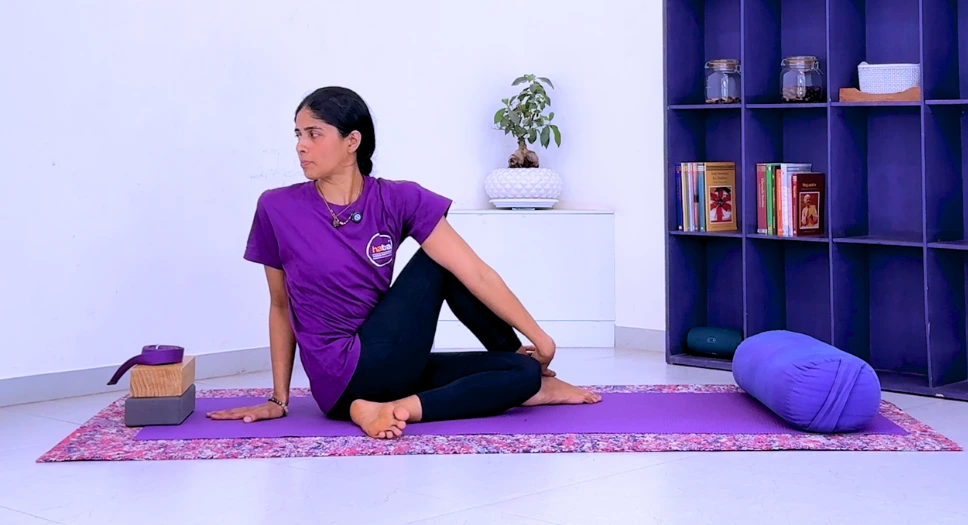
- Supine Twist (Supta Matsyendrasana) — 8 breaths each side Lie on your back, hug your right knee to your chest, and let it fall to the left while you look to the right. Twisting postures wring out tension from the spine and support digestion.
- Happy Baby (Ananda Balasana) — 10 breaths Lie on your back, bend both knees, and reach up to hold the outer edges of your feet. Rock gently side to side. There is a reason this pose is named after babies. It releases the lower back and inner groin completely.
- Legs Up the Wall (Viparita Karani) — 5 minutes Scoot your hips close to the wall and extend your legs up it. Rest your arms by your sides with palms facing up. This restorative pose helps circulation, calms the nervous system, and is deeply relaxing.
- Savasana (Corpse Pose) — 5 minutes Lie flat on your back with legs extended and arms slightly away from your body. Close your eyes. Do absolutely nothing. Savasana is often skipped by beginners who feel like they should keep moving, but it is genuinely the most important pose of any practice. This is when your body integrates everything it has just done.

Step 4: Practice Pranayama (Yogic Breathing)
After your physical practice, spend 10 to 15 minutes with breathing exercises. Pranayama is a central pillar of yoga that is often overlooked in Western fitness culture, but on a day when you are choosing to celebrate international yoga day meaningfully, it deserves its place.
Try these three techniques:
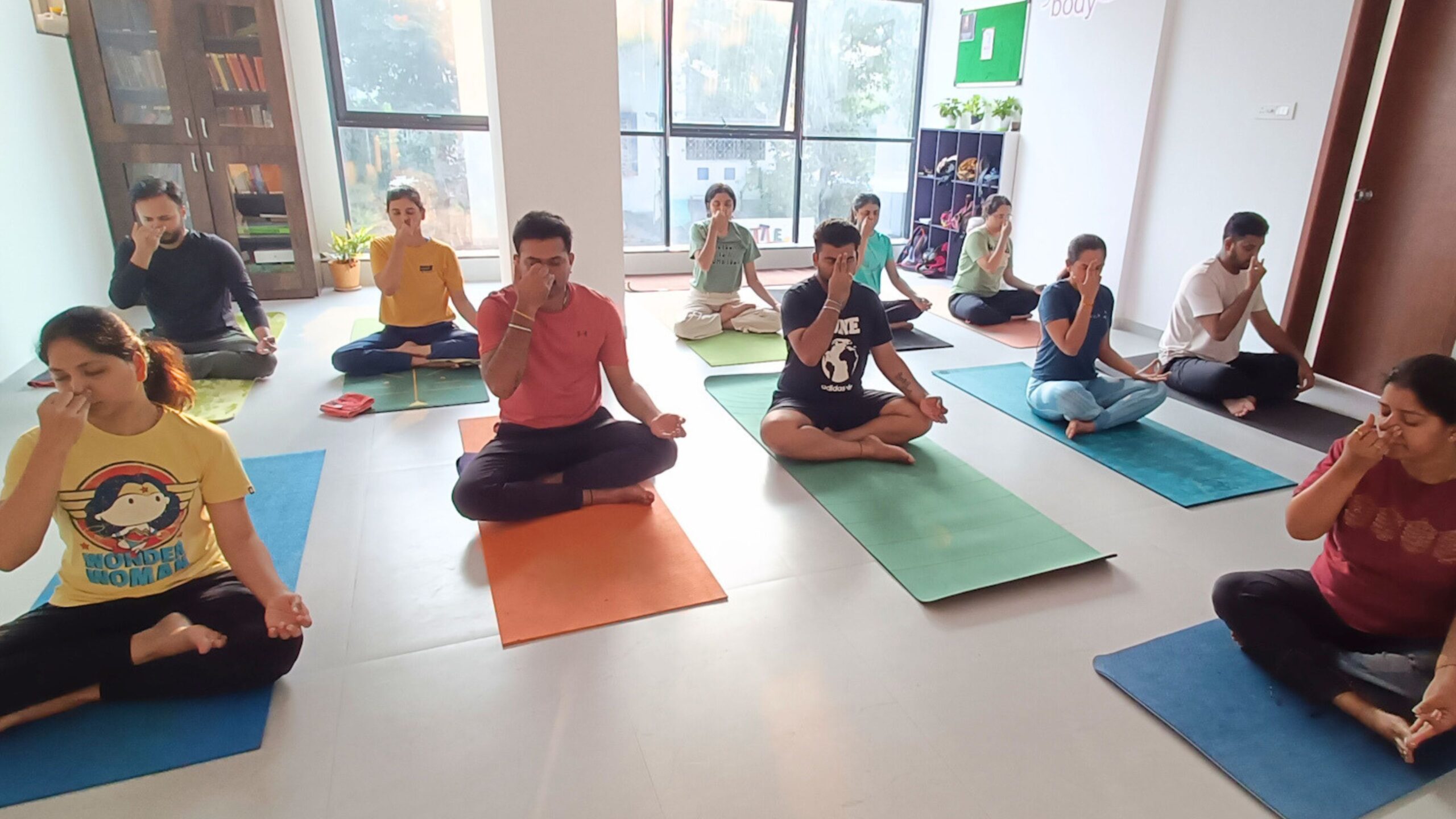
- Nadi Shodhana (Alternate Nostril Breathing) Use your right hand to close your right nostril and breathe in through your left. Then close your left nostril and breathe out through your right. Breathe in through your right. Switch. This is one of the most calming techniques in all of yoga and brings both hemispheres of the brain into balance.
- Ujjayi Breath (Ocean Breath) Breathe in and out through your nose with a slight constriction at the back of your throat, as if you were trying to fog up a mirror but with your mouth closed. The sound will resemble gentle ocean waves. This breath builds internal heat and focus.
- Bhramari (Humming Bee Breath) Breathe in fully, then as you breathe out, close your eyes and make a smooth humming sound. Feel the vibration in your chest and skull. This practice is remarkably effective at reducing anxiety and inducing calm.
Step 5: End with a Short Meditation
You do not need to meditate for an hour on yoga day. Even five minutes of genuine stillness is enough to shift your nervous system into a different register.
Sit comfortably with your spine tall. Close your eyes. Bring your attention to the sensation of your breath entering and leaving your nostrils. When a thought arises, simply notice it without judgment and return to the breath. That is the whole practice.
If you find silence uncomfortable at first, use a guided meditation app or a free video on YouTube to help you. The goal is simply to be present for a few minutes without a task, a notification, or a next step.

More Ways to Celebrate Yoga Day at Home
Your yoga day celebration does not have to end on the mat. Here are some simple ways to carry the spirit through the rest of the day:
- Cook a nourishing meal. Yoga philosophy includes guidelines around food. Preparing something wholesome and eating it slowly and mindfully is a beautiful continuation of the practice.
- Write in a journal. After your morning session, take 10 minutes to write about how your body felt, what thoughts came up, and what your intention for the day is.
- Watch a documentary or talk on yoga. There are wonderful films and lectures on yoga philosophy, history, and science that can deepen your understanding beyond the physical postures.
- Share the experience. Invite a family member or friend to practice with you, even briefly. You could also share a post about your yoga day experience online to inspire someone else.
- Read a yoga-related book. Titles like “Light on Yoga” by B.K.S. Iyengar or “The Heart of Yoga” by T.K.V. Desikachar offer perspectives that transform how you see the practice.
- Spend time in nature. Step outside after your practice, even for a short walk. Feeling sunlight and fresh air extends the mental clarity that yoga opens up.
- Attend a free online class. Many teachers and studios offer free live-streamed classes on yoga day. Look for beginner-friendly options and join from your mat at home.
Tips for Beginners Who Want to Keep Going After Yoga Day
One of the most common questions around yoga day is: “How do I keep this going?” That question is worth answering honestly.
- Start with 20 minutes a day. You do not need an hour-long class to feel the benefits. Twenty minutes of consistent practice does more than a 90-minute session once a month.
- Choose a specific time. Morning practice tends to be easier to maintain because the day has not yet piled up its demands. Pick a time and protect it.
- Use free resources. YouTube channels like Yoga With Adriene have hundreds of beginner-friendly videos that require nothing more than a floor and a bit of willingness.
- Track how you feel, not how you look. In the early weeks, the most motivating thing is noticing that your lower back aches less, your sleep is better, or your mind is a little quieter. Pay attention to those changes.
- Do not worry about flexibility. Flexibility is a result of yoga, not a prerequisite for it. You do not need to touch your toes to begin.
- Join a community. Online yoga communities, local groups, and social media accounts can provide accountability and encouragement when motivation dips.
Closing Thoughts
Yoga day June 21 is not just a date to remember. It is a doorway. It is an annual invitation to step out of autopilot and into your own body, your own breath, and your own moment.
You do not need to be experienced. You do not need to be flexible, athletic, spiritual, or serene. You just need a quiet corner, a few inches of floor space, and the willingness to show up for yourself for an hour or two.
The beautiful thing about choosing to celebrate international yoga day at home is that it strips everything back to its essence. No performance. No audience. Just you, your breath, and the quiet recognition that you are worth the time.
Whether this is your first time on a mat or your hundredth, yoga at home for beginners starts the same way every time: one breath, one movement, one moment of being present. And that is more than enough.
Roll out your mat on June 21. Something good is waiting for you there.
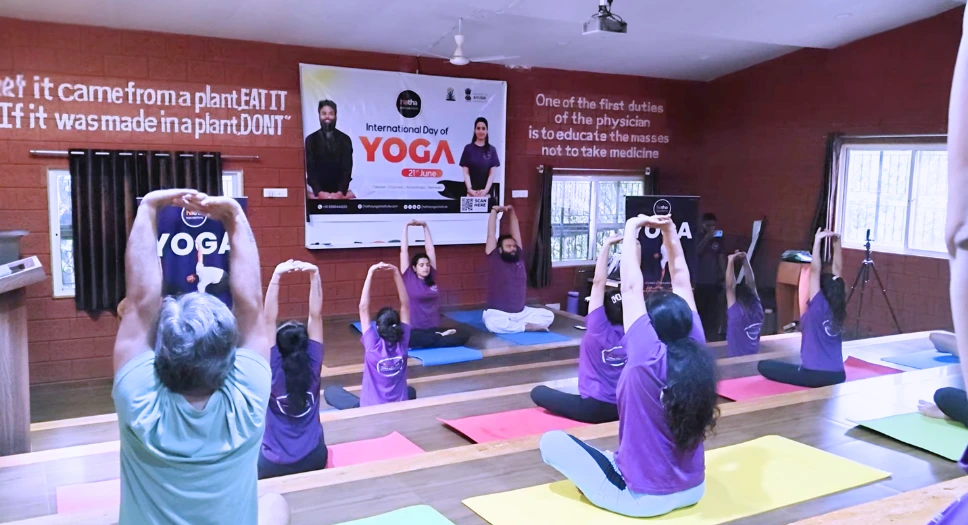
Ready to Take Your Practice Further? Discover Hatha Yoga Institute
If today’s practice has sparked something in you and you want to go deeper than a home routine can take you, Hatha Yoga Institute is a place worth knowing about.
Hatha Yoga Institute was founded on one simple belief: that authentic yoga is a lifelong journey, not a fitness trend. The institute offers structured programs rooted in classical Hatha yoga traditions, designed to guide students from their very first breath all the way through advanced practice, at their own pace.
Here is what makes it stand out:
- Beginner-friendly foundations. Every program starts from the ground up. No prior experience needed, no flexibility required. You learn the “why” behind each posture and breathing technique, not just the “how.”
- Qualified and experienced teachers. Each instructor at Hatha Yoga Institute trains extensively in traditional yogic methods, so what you receive is thoughtful, safe, and deeply informed guidance.
- Holistic curriculum. Beyond asana, the programs cover pranayama, meditation, yoga philosophy, and lifestyle principles that carry the practice off the mat and into daily life.
- Flexible learning options. Whether you prefer in-person immersions or online courses that fit around your schedule, Hatha Yoga Institute has a format that works for your life.
- A real community. Students often say that what surprised them most was the warmth of the community they found. The institute fosters genuine connection, not just enrollment numbers.
This yoga day, if you are ready to move from occasional practice to something more meaningful and consistent, Hatha Yoga Institute is an excellent place to begin that journey. Visit our website to explore upcoming batches, free introductory sessions, and special International Yoga Day offerings.
Because yoga is not just something you do on June 21. It is something you grow into, one breath at a time.
Happy International Yoga Day. May your practice be gentle, your breath be deep, and your day be filled with the kind of stillness that lasts.