Pregnancy transforms a woman from the inside out. The breath deepens, the body reshapes itself week by week, and the emotional landscape shifts in ways no one can fully predict. For yoga teachers who feel drawn to this season of life, specializing in prenatal yoga is one of the most meaningful steps you can take in your teaching career.
But it is not a step to take lightly. Teaching pregnant students without proper training isn’t just incomplete; it can be genuinely harmful. That’s why at Hatha Yoga Institute, our prenatal yoga teacher training is built around one core belief: that informed, compassionate instruction begins with deep, honest education.
This guide covers everything you need to know: what prenatal yoga instructor training involves, what our curriculum includes, who it is for, and how to turn your certification into a thriving teaching practice.
Why Prenatal Yoga Needs Its Own Training
Many yoga teachers assume that a few modifications are enough when working with pregnant students. In practice, pregnancy introduces layered physiological changes that affect everything from joint stability to blood pressure to breath capacity. Without understanding these changes at a foundational level, even well-meaning teachers can cause harm.
Here is what happens in a pregnant body that a standard yoga training simply doesn’t prepare you for:
- Relaxin surges: This hormone loosens ligaments throughout the body, not just in the pelvis, which dramatically reduces joint stability.
- Blood volume increases by up to 50%: This increase affects the heart rate, blood pressure, and overall endurance during practice.
- The center of gravity shifts: This shift alters balance, changes posture, and increases the risk of falls.
- The diaphragm rises: As the uterus expands, breathwork and pranayama must be approached very differently.
- Abdominal integrity is compromised: Diastasis recti (abdominal separation) is common and affects how core engagement is cued.
- Supine positions become restricted: After the first trimester, lying flat can compress the vena cava and reduce blood flow to the baby.
A well-trained prenatal yoga instructor doesn’t just know what to avoid; they understand why. That understanding shapes every cue, every prop setup, and every adjustment they offer.

What Is Prenatal Yoga Teacher Training?
Prenatal yoga teacher training is a specialized certification program that prepares yoga instructors to work safely, knowledgeably, and compassionately with pregnant students across all three trimesters.
At Hatha Yoga Institute, our prenatal yoga instructor training is designed as an advanced specialization, built on your existing yoga foundation and taken to a new level of depth and care.
Typical program formats include:
|
Format |
Duration |
Best For |
|
Weekend Intensive |
20–30 hours |
Introduction and supplementary learning |
|
Week-long Immersion |
50–85 hours |
Core certification |
|
Modular / Hybrid |
3–6 months |
Flexible, in-depth learning |
Programs that meet Yoga Alliance’s standard of 85 or more prenatal-specific training hours qualify teachers for the RPYT (Registered Prenatal Yoga Teacher) designation, which is one of the most respected credentials in this specialty.
What Our Prenatal Yoga Instructor Course Covers
At Hatha Yoga Institute, our curriculum is carefully structured to move from deep understanding to confident application. Here is what you will study:
1. Anatomy and Physiology of Pregnancy
This is the intellectual core of the entire training. You will go trimester by trimester, learning the physiological realities of each stage:
- Hormonal changes and their effect on the musculoskeletal system
- Pelvic floor anatomy, function, and common dysfunction during pregnancy
- Diastasis recti: what it is, how to screen for it, and how to cue safely around it
- Sciatic nerve pain, round ligament pain, and symphysis pubis dysfunction
- Cardiovascular adaptations and safe heart rate guidelines
- When to refer a student to a healthcare provider
You won’t be practicing medicine, but you will understand the body well enough to teach it intelligently.
2. Safe Poses, Contraindications, and Modifications
This is often the section teachers are most eager for, and it is far more nuanced than a simple “avoid list.” You will learn:
- Which poses are contraindicated and exactly why
- How to offer layered modifications so students at 12 weeks and 36 weeks can both practice safely in the same class
- Prop setups for bolsters, blocks, straps, and walls
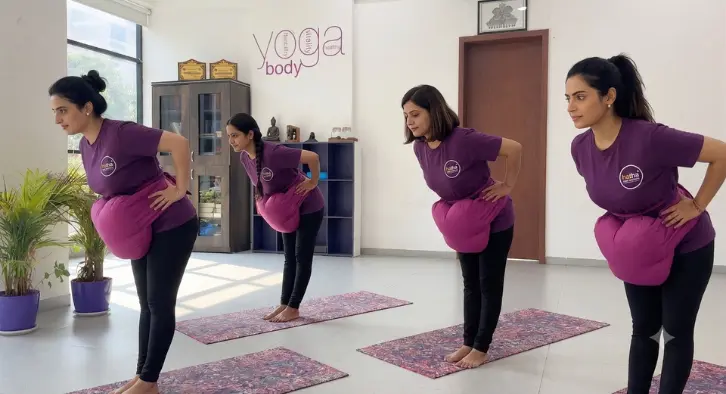
- How to give verbal cues that keep students safe without making them feel fragile
- First, second, and third trimester-specific sequencing
Commonly reviewed categories include:
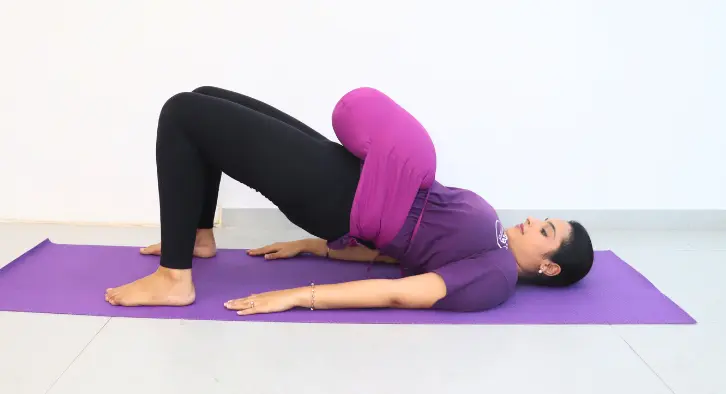
- Supine poses after the first trimester
- Deep spinal twists that compress the abdomen
- Strong inversions and their associated risk factors
- Intense backbends and unstable balance poses
- High-pressure core work (and what to offer instead)
3. Pranayama and Breathwork
Breath is the most powerful tool in a prenatal yoga class for calming anxiety, building labor endurance, and supporting postpartum recovery. In this module, you will learn:
- Safe pranayama practices: Diaphragmatic breathing, gentle ujjayi, extended exhale techniques, and humming breath.
- Practices to avoid: Breath retention (kumbhaka), aggressive kapalabhati, and forceful bandha engagement.
- How breathwork directly supports the stages of labor.
- How to teach breathing as a skill that students can use in the delivery room.
4. Emotional and Psychological Support
Pregnancy is never just physical. The women in your class may be managing fear, grief, anxiety, body image challenges, relationship stress, or the weight of high-risk diagnoses. As a prenatal yoga instructor, you will be trained to:
- Create trauma-informed, inclusive class environments.
- Understand perinatal mood disorders, as prenatal depression and anxiety are more common than most people realize.
- Recognize signs of emotional distress without crossing professional boundaries.
- Hold space for students who have experienced pregnancy loss.
- Use language that is affirming, neutral, and never presumptuous about birth outcomes.
This is the part of the training that often moves students the most because it asks you to show up as a whole human being, not just a technique provider.
5. Birth Education and Labor Preparation
While prenatal yoga teachers are not doulas or midwives, understanding the arc of labor makes your teaching infinitely more purposeful. You will explore:
- The physiology of the three stages of labor.
- Yoga movements that support labor progression, such as cat-cow, hip circles, deep squats, and lateral lying positions.
- How to frame your classes as labor preparation without causing fear.
- Breathing and vocalization techniques with direct birth applications.
- Common medical interventions and how they may affect postpartum recovery.
6. Class Design and Sequencing
Building a safe, beautiful prenatal yoga class is its own art. This module covers:
- How to structure a 60-minute and 90-minute prenatal class.
- Pacing: Prenatal classes move slower, include more rest, and offer more choices at every moment.
- Opening rituals and closing practices that build community and trust.
- Adapting your sequence across all three trimesters.
- Teaching mixed-trimester classes, which is very common in real studio settings.
- Managing students with varying levels of yoga experience.
- Effective verbal cueing when physical demonstration is not always possible.
7. Career and Community Building
The Hatha Yoga Institute believes your certification should open doors rather than just sit on your wall. Our prenatal yoga instructor course includes practical guidance on:
- Setting up a prenatal yoga class series or private practice.
- Building referral relationships with midwives, OBGYNs, doulas, and birth centers.
- Teaching in hospitals, wellness clinics, and studio settings.
- Structuring online prenatal yoga regarding safety, sequencing, and community building.
- Pricing, insurance, liability waivers, and professional boundaries.
- Marketing to expectant families authentically and ethically.

Who Should Enroll?
Our program is designed for a range of learners. You are a great fit if you are:
- A certified yoga teacher (200-hour RYT or above) looking to specialize in women’s wellness.
- A yoga practitioner with significant personal practice experience wanting to teach in a prenatal context.
- A birth professional (such as a doula, midwife, postpartum nurse, or lactation consultant) who wants to integrate movement and breathwork into your care.
- A studio owner looking to add credentialed prenatal programming to your offerings.
- A perinatal mental health professional seeking somatic tools to complement your therapeutic work.
You do not need to have been pregnant yourself. Many of our most impactful graduates have never experienced pregnancy. What matters is the quality of your attention, your commitment to learning, and your willingness to listen.
Prerequisites for Enrollment
To enroll in our full prenatal yoga instructor training at Hatha Yoga Institute, we recommend:
- A current 200-hour yoga teaching certificate (RYT 200 or equivalent).
- At least one year of consistent personal yoga practice.
- Genuine familiarity with standard asanas and their anatomical foundations.
- An openness to exploring the emotional and relational dimensions of teaching.
If you hold a 500-hour certification or are a senior teacher looking to deepen your specialization, our advanced prenatal module offers additional depth in pelvic anatomy, trauma-informed sequencing, and perinatal mental health literacy.
After Certification: Building Your Prenatal Yoga Practice
Completing your prenatal yoga teacher training is the beginning of your real education, which happens on the mat with real students through real pregnancies. Here is how Hatha Yoga Institute graduates build lasting, meaningful careers:
- Start by observing: Before launching your own classes, spend time watching experienced prenatal teachers. Notice how they read the room, handle unexpected situations, and adapt in real time.
- Build your referral network: Connect with midwives, doulas, OBGYNs, pelvic floor physiotherapists, and birth centers in your area. These are your natural partners; introduce yourself and offer a complimentary class.
- Choose your setting thoughtfully: Prenatal yoga classes thrive in boutique yoga studios with dedicated prenatal programming, hospital wellness departments, birth centers, community centers, women’s health clinics, private practices (in-person or online), and corporate wellness programs for expecting employees.
- Keep learning: The field of perinatal health is evolving rapidly. Stay current with pelvic floor research, pain science, perinatal mental health developments, and evidence-based birth practices.
- Care for yourself: Teaching prenatal yoga is emotionally rich and, at times, emotionally demanding. Building a sustainable practice means having clear professional boundaries and your own support network.
Frequently Asked Questions
Q: Do I need to have experienced pregnancy myself?
No. What matters is the depth of your training and the quality of your attention. Many exceptional prenatal yoga teachers have never been pregnant.
Q: How long does training take?
Our core immersion runs 85 hours to meet Yoga Alliance RPYT standards. Modular options are available for teachers who need more flexibility.
Q: Can I teach prenatal yoga with just my 200-hour certification?
Technically yes, but it is not advisable. Teaching pregnant students without prenatal-specific training creates real risks for your students and professional liability for you. Most yoga insurance providers also require documented specialization credentials.
Q: Is prenatal yoga the same as postpartum yoga?
No. These are distinct specializations. Prenatal yoga addresses active pregnancy (from conception to birth). Postpartum yoga focuses on the recovery period after birth, which includes healing from delivery, managing postpartum body changes, and supporting the emotional transition into new parenthood. Hatha Yoga Institute offers both tracks.
Q: Will I receive a Yoga Alliance credential?
Upon completing our 85-hour program, you will receive a Certificate of Completion from Hatha Yoga Institute. If you are a registered RYT, you can apply these hours directly toward your RPYT designation through Yoga Alliance.
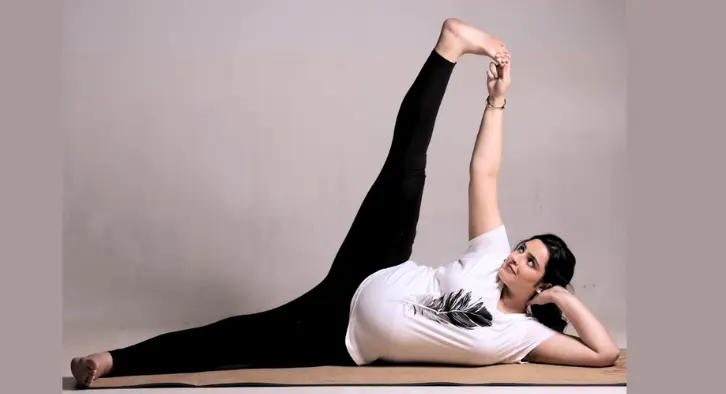
The Benefits of Prenatal Yoga: What Your Students Will Gain
As a certified prenatal yoga instructor, you won’t just be teaching poses. You will be offering your students a comprehensive toolkit for navigating one of the most physically and emotionally demanding experiences of their lives. Research and clinical experience consistently show that regular prenatal yoga practice offers significant benefits.
Physical Benefits
- Reduced lower back pain and pelvic girdle discomfort, which are among the most common complaints of pregnancy.
- Improved posture and spinal alignment as the body changes shape week by week.
- Better sleep quality through relaxation practices and nervous system regulation.
- Reduced swelling in the hands, feet, and ankles through mindful movement and elevation.
- Increased strength and flexibility in the hips and pelvis to support labor.
- Improved endurance and breathwork capacity to draw on during childbirth.
Mental and Emotional Benefits
- Reduced symptoms of prenatal anxiety and depression through consistent mindfulness practice.
- A genuine sense of community. Many pregnant women feel deeply isolated, especially during a first pregnancy.
- Greater body confidence and a positive relationship with physical change.
- Tools for emotional regulation that carry through into early parenthood.
- Reduced fear around labor and birth through education and embodied preparation.
Labor and Birth Benefits
- Familiarity with positions that support labor progression.
- Practical breath tools for managing contractions and staying calm under pressure.
- A more positive birth experience. Studies suggest prenatal yoga practitioners report higher satisfaction with their births.
- A reduced need for pain medication in some cases, though this is never a goal to impose on students.
When you teach prenatal yoga with the depth that Hatha Yoga Institute’s training provides, you are genuinely contributing to better birth outcomes, stronger mental health, and more empowered mothers. That is the difference a qualified prenatal yoga instructor makes.
Your Next Step
The pregnant women who walk into your class aren’t just looking for gentle stretching. They are looking for someone who truly understands their body, honors their experience, and knows how to hold space for one of life’s most extraordinary transitions.
Prenatal yoga teacher training at Hatha Yoga Institute gives you exactly that: the knowledge, the skills, and the confidence to show up fully for every student, in every trimester, through every emotion.