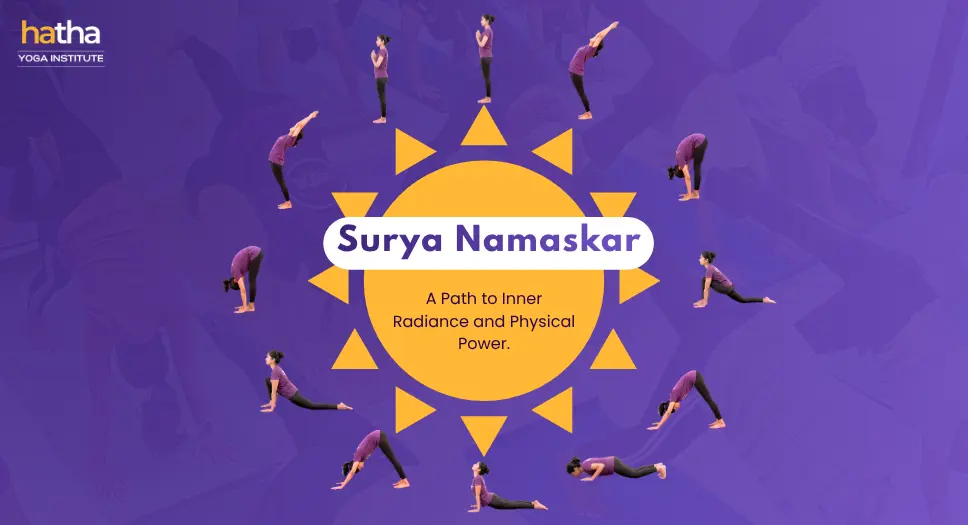
Surya Namaskar translates to ‘Sun Salutation’ in English. It is a sequence of 12 postures and specific breathing patterns that is given to us by enlightened sages. It is dedicated to the Hindu god, Surya.
Sun represents the supreme consciousness that nurtures and sustains the universe due to its immense life-giving power. In Yoga we divide human personality into two parts – sun (Pingla – pranic aspect, solar energy) and moon (Ida – mansik aspect, lunar energy). It is called surya namaskar because it regulates the sun aspect of our personality and increases our prana (life force energy) and also our digestive fire, Agni. Hence, we feel immensely charged up after practicing surya namaskar.
12 steps of surya namaskar
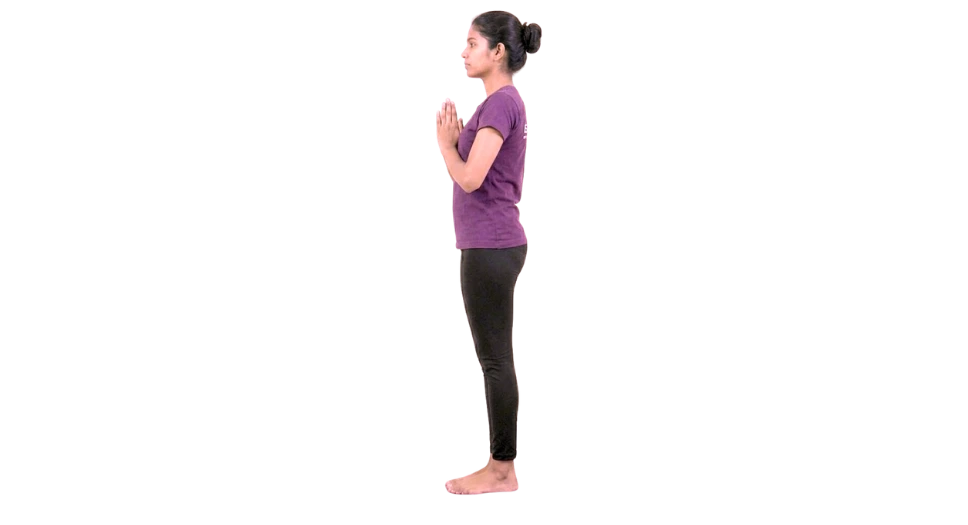
1. Pranamasana
Stand at the edge of your mat facing the sun with folded hands in prayer position. Keep the legs together and stand straight. Breath normally.
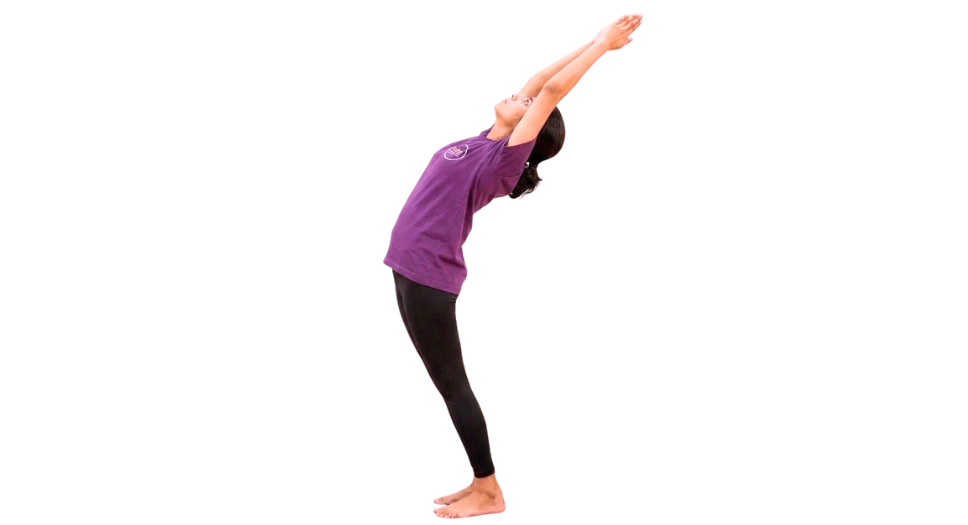
2. Hastottanasana
Slowly inhale and raise the arms above the head. Stretch the arms backwards as much as you can. The inhaling and raising of your arms should be in synchronisation. As you progress, tilt your pelvic slightly forward.
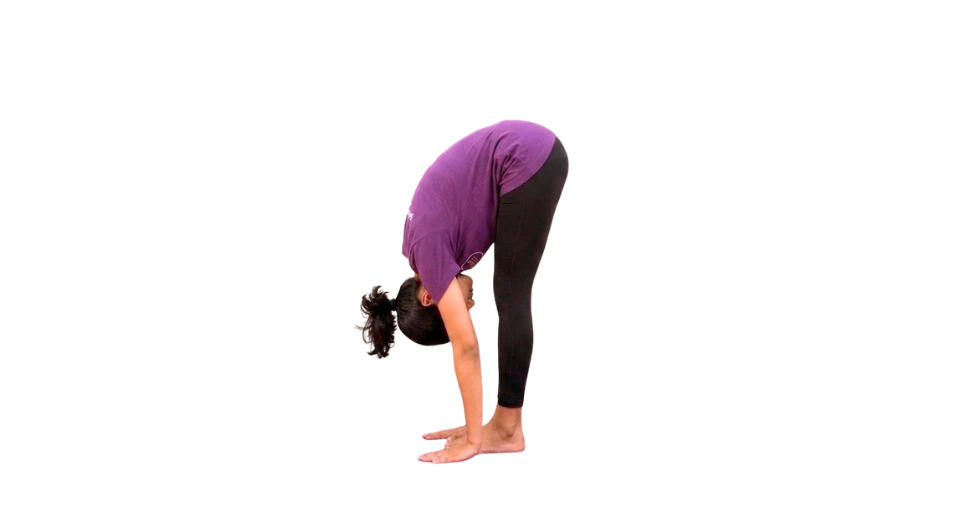
3. Padahastasana
Slowly exhale and bend forward with your pelvis and if possible, keep your palms down on the knees beside your feet. Keeping the fingertips is also okay. Initially you can keep the knees slightly bent, making gentle effort to straighten the knees.
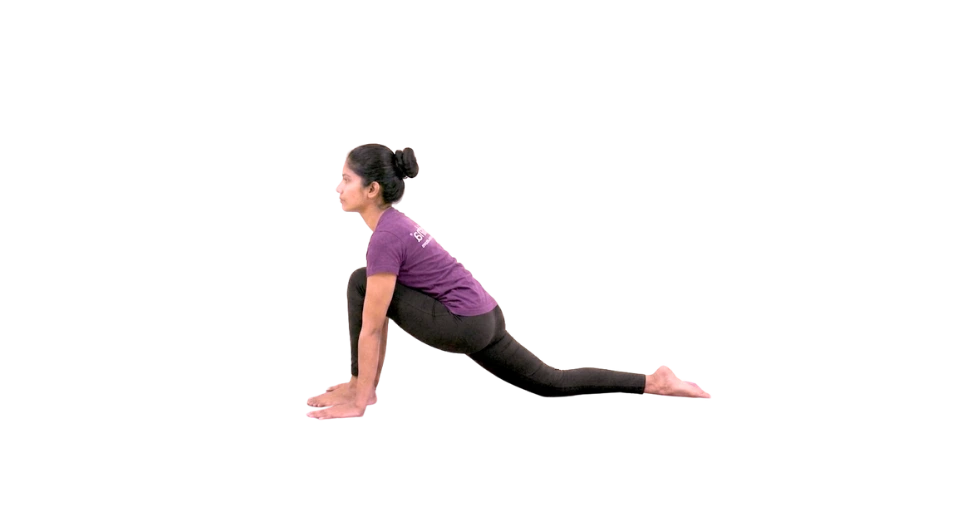
4. Ashwa Sanchalana asana
Inhaling put your right leg back in a long backward step and gently place your right knee on the mat. Keeping the arms and left foot unmoved. Raise your head and chest looking upward. Left knee should bein between your arms in the final position.
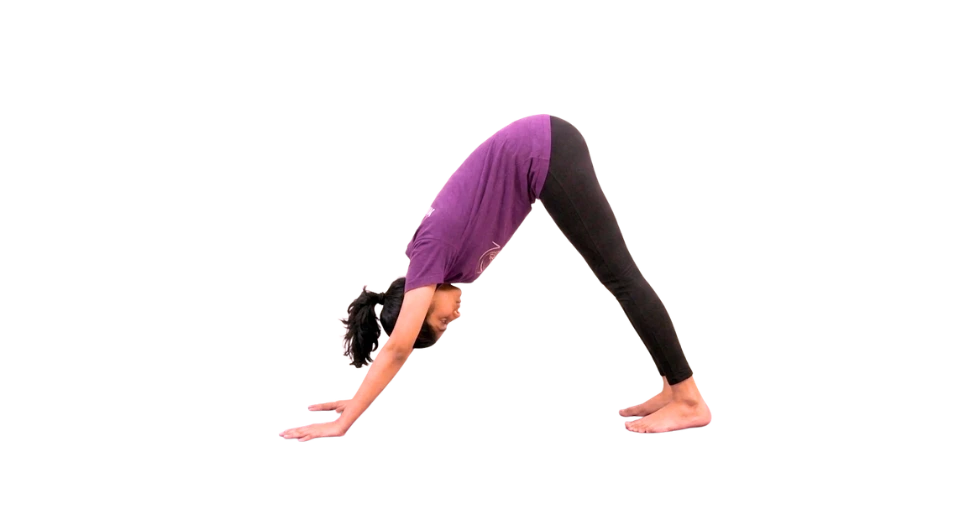
5. Adho Mukha Swan asana
Exhale lift the hips up and take the left leg back with the right leg raising the tail bone up and chest moving towards the feet pressing the arms firmly on the mat in an inverted ‘V’ position. Try to make a contact between the heels as much as possible. Look towards your knees.
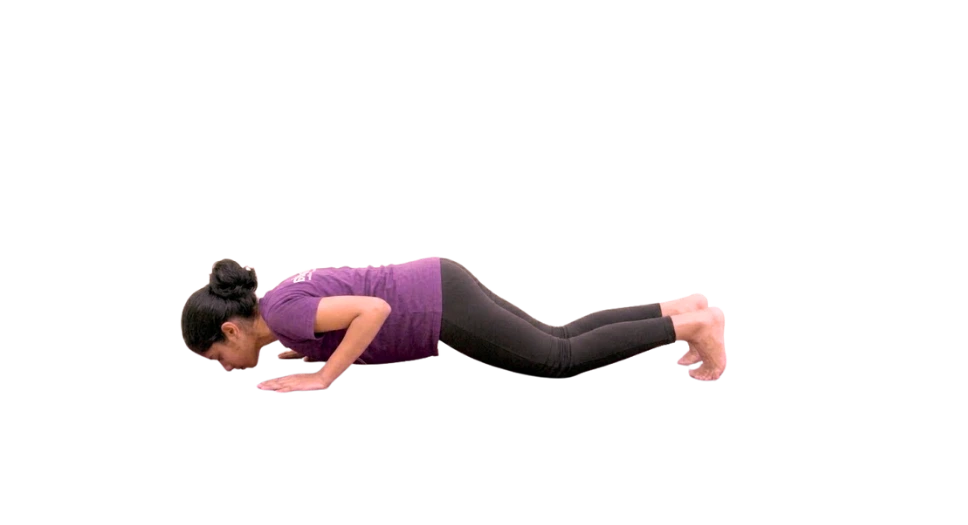
6. Ashtanga Namaskara
Exhaling slowly lower the body on eight limbs of the body – two toes, two knees, chest, two hands and chin. The abdominal region is to be kept slightly above the mat.
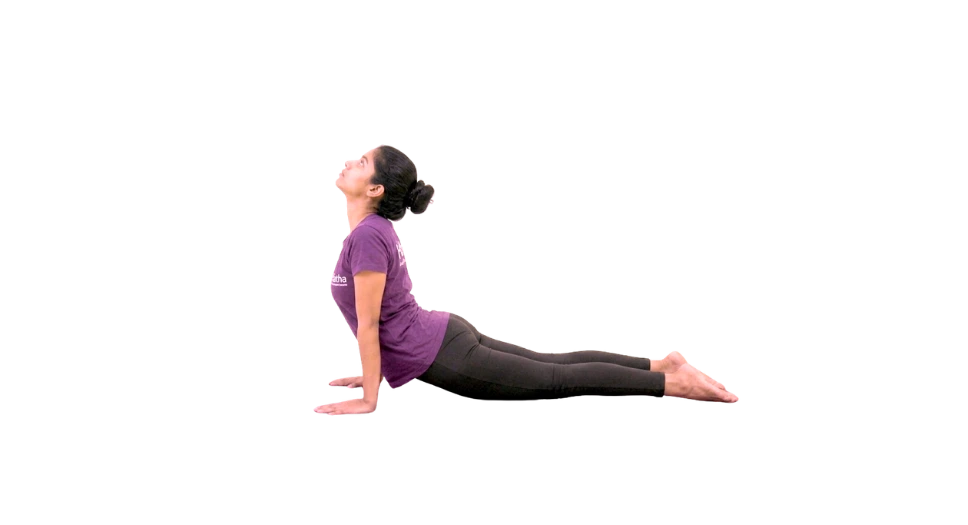
7. Bhujangasana
While inhaling slowly raise your head up, chest up and arch your back making your spine taller straightening your arms but keeping your belly on the mat. You may keep the elbow bent for a few days of practice.
8. Adho Mukha Swan asana
Exhale lift the hips up and take the left leg back with the right leg raising the tail bone up and chest moving towards the feet pressing the arms firmly on the mat in an inverted ‘V’ position.
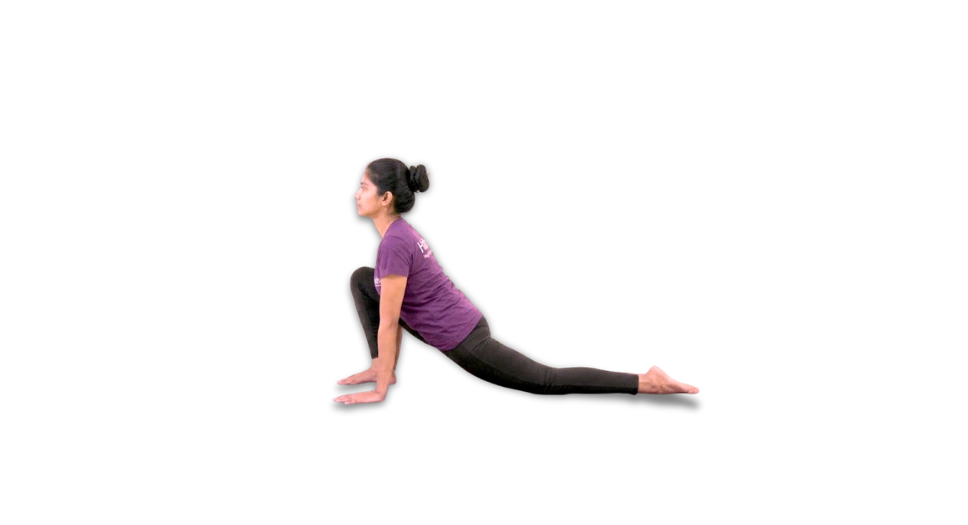
9. Ashwa Sanchalana asana
Inhale and bring the right foot forward in between your arms along the level of hands.
10. Padahastasana
Slowly exhale and bring the left leg forward with the right leg similar to 3rd asana.
11. Hastottanasana
Inhale and raise the arms overhead and backward as 2nd asana.
12. Pranamasana
Slowly exhaling bring the hand in pranam mudra similar to 1st asana.
Precautions
- While practising surya namaskar steps one’s movement should be slow, not jerky.
- Breathing should be steady and rhythmic.
- Forceful inhalation, exhalation and retention strains the lungs and should be avoided.
- Chanting of mantras is not at all mandatory while doing the surya namaskar.
- Different schools of yoga practice surya namaskar differently. There is no right or wrong.
- It should be practiced in the morning time facing the sun but anytime of the day is okay provided you have an empty stomach.
- If one feels nauseous, the practitioner may stop and increase the effort gradually.
Benefits
- Improves blood circulation throughout the body strengthening the heart.
- It is the best sequence for overall muscular and skeletal health
- as maximum number of joints and muscles are used in this sequence.
- Tones the spine, neck, shoulder, arms, hands, wrist, back and leg muscles thereby promoting overall flexibility.
- Tones up the entire digestive tract.
- Regular practice promotes balance in the body as both right and left side of the body are used equally.
- It helps to keep you disease-free and healthy
- Stimulates respiratory system, lymphatic system and spinal nerves.
- Psychologically, it regulates the coordination of body, breath, and mind.
- Mentally it improves your confidence, reasoning ability, decision making ability, sharpens your awareness, increases energy levels, etc.
Deepen Your Practice with Hatha Yoga Institute
If you are ready to move beyond the basics, Hatha Yoga Institute is here to guide you. As a premier Yoga Teacher Training Institute, we bridge the gap between ancient wisdom and modern physiology. Whether you want to master technical asanas or become a certified instructor, our professional programs provide the authentic training you need. Start your journey toward mastery today at hathayogainstitute.com.