Biographical Overview
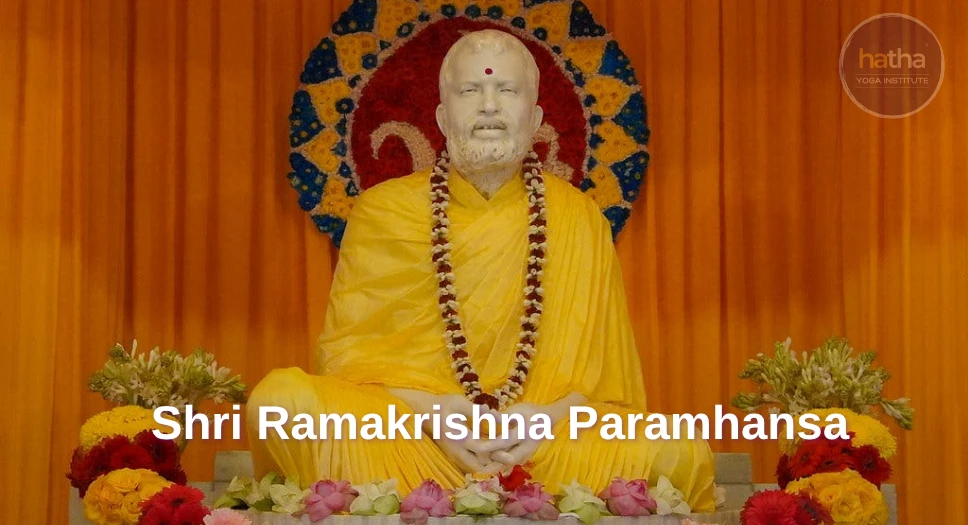
- Shri Ramakrishna Paramhansa
- Date of Birth: February 18, 1836
- Place of Birth: Kamarpukur village, Hooghly District, Bengal Presidency
- Parents: Khudiram Chattopadhyay (Father) and Chandramani Devi (Mother)
- Wife: Saradamoni Devi
- Religious Views: Hinduism; Advaitism;
- Philosophy: Shakto, Advaita Vedanta, Universal Tolerance
- Death: 16, August, 1886
- Place of Death: Cossipore, Calcutta
- Memorial: Kamarpukur village, Hooghly District, West Bengal; Dakshineswar Kali Temple Compound, Kolkata, West Bengal
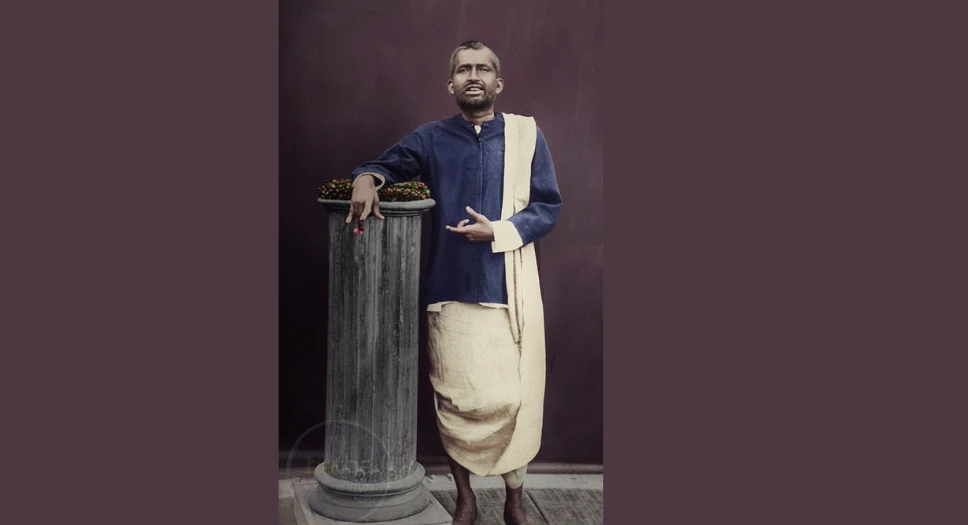
The birth of Gadadhar (Ramakrishna) occurred in a simple, thatched cottage in rural Bengal. His parents were known for their extreme piety; it is said that Khudiram had a vision of Lord Vishnu in Gaya, promising to be born as his son. This spiritual foundation defined his early years in Kamarpukur, a village filled with local shrines, folk music, and wandering monks.
Early Life and Priesthood
As a child, Ramakrishna (his childhood name was Gadadhar) had strong disinclination towards formal education and worldly affairs. He viewed the school system as a mere “bread-winning” mechanism that failed to address the deeper mysteries of existence. Instead of studying arithmetic, he spent his time:
- Sculpting clay images of deities.
- Learning the Puranas and Ramayana from wandering storytellers.
- Immersing himself in nature, where he experienced his first spiritual ecstasy at age seven upon seeing a flight of cranes against a dark storm cloud.
When Sri Ramakrishna was sixteen, his brother Ramkumar took him to Kolkata to assist him in his priestly profession. In 1855 the Kali Temple at Dakshineswar was consecrated and later when Ramkumar died, Ramakrishna was appointed the priest. The temple, built by Rani Rashmoni, was a magnificent complex dedicated to Bhavatarini (the Redeemer of the Universe).
Ramakrishna developed intense devotion to Mother Kali and spent hours in loving adoration of her image. His worship was unconventional; he would weep, sing, and talk to the idol as if she were his own mother. He questioned whether the stone image was truly alive or just a figment of human imagination. His intense longing culminated into the vision of Mother Kali as boundless effulgence engulfing everything around him. He described this as a “shoreless ocean of light” that swept him away in a tide of bliss.
The Period of Intense Sadhana (Spiritual Disciplines)
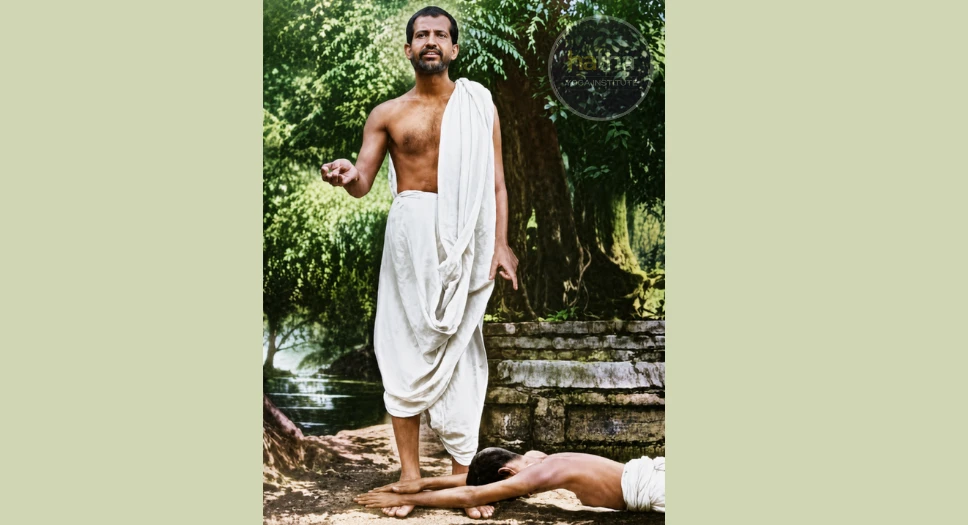
Impelled by a strong inner urge to experience the different aspects of God he followed, with the help of a series of Gurus, the various paths described in the Hindu scriptures, and realized God through each of them.
The Tantric Path
The first teacher to appear at Dakshineswar (in 1861) was Bhairavi Brahmani who was an advanced spiritual adept, well versed in scriptures and made Ramakrishna practice the disciplines of the Tantric path. Under her guidance:
- He mastered the 64 major Tantras.
- He realized the Divine Mother in all things, even in objects typically considered “unclean.”
- The Bhairavi declared him to be an Avatar (Incarnation of God) before an assembly of scholars.
The Path of Non-Duality (Advaita)
Three years later came a monk by name Totapuri, under whose guidance Sri Ramakrishna attained Nirvikalpa Samadhi, the highest spiritual experience mentioned in the Hindu scriptures. Totapuri was a “Naga Sannyasi” who believed only in the formless Absolute. When he asked Ramakrishna to meditate on the formless, Ramakrishna found that the image of Mother Kali kept appearing. Totapuri took a shard of glass, pressed it between Ramakrishna’s eyebrows, and commanded him to focus there. Ramakrishna “cut through” the image of Kali with the sword of knowledge and merged into the Absolute.
- He remained in that state of non-dual existence for six months without the least awareness of even his own body.
- His hair became matted, and birds would perch on his head, thinking he was a statue.
- In this way, Sri Ramakrishna relived the entire range of spiritual experiences of more than three thousand years of Hindu religion.
Breaking Frontiers: The Universal Experience
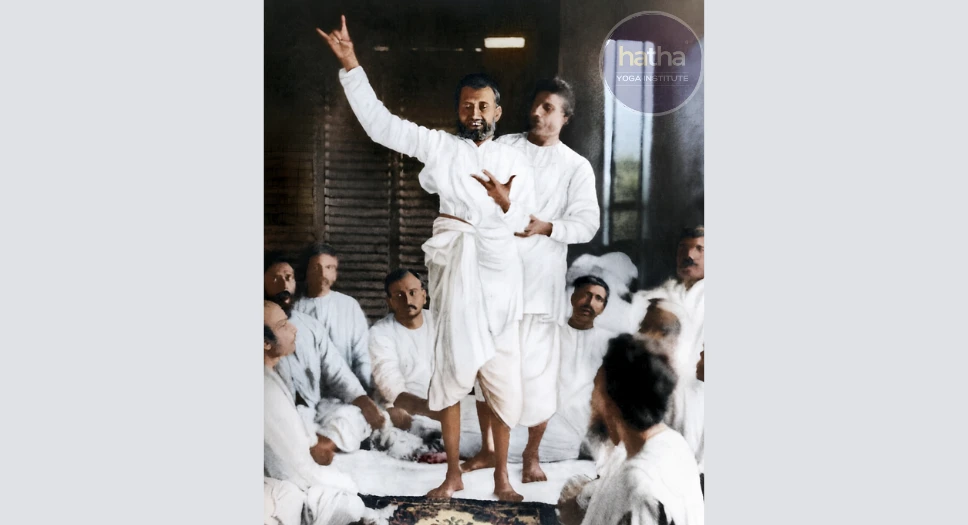
With his unquenchable thirst for God, Sri Ramakrishna broke the frontiers of Hinduism, glided through the paths of Islam and Christianity, and attained the highest realization through each of them in a short span of time. * Islam: In 1866, he practiced Islam under Govinda Roy. He dressed as a Muslim, ate like one, and repeated the name of Allah until he had a vision of a radiant figure that merged into him.
Christianity: In 1874, while looking at a painting of the Madonna and Child, he felt a “divine ray” enter his heart. He spent days thinking only of Jesus, eventually seeing a vision of Christ merging into his own body.
He looked upon Jesus and Buddha as incarnations of God, and venerated the ten Sikh Gurus. He expressed the quintessence of his twelve-year-long spiritual realizations in a simple dictum: Yato mat, tato path “As many faiths, so many paths.” This was not just a philosophy of tolerance, but a testimony of direct experience. He now habitually lived in an exalted state of consciousness in which he saw God in all beings.
The Relationship with the Holy Mother
The Circle of Disciples
As the 1880s began, the “Paramhansa of Dakshineswar” became a magnet for seekers. He had a unique way of teaching—using simple parables like the “parched grain” or the “unmarked boat” to explain complex metaphysical truths.
Out of his many disciples, foremost among them was Narendranath, who years later, as Swami Vivekananda, carried the universal message of Vedanta to different parts of the world, revitalized Hinduism, and awakened the soul of India. * Narendranath’s Transformation: Initially a skeptic and a member of the Brahmo Samaj, Narendra tested the Master. He asked, “Have you seen God?” Ramakrishna replied, “Yes, I see Him more clearly than I see you.”
- The Training at Cossipore: The final months of the Master’s life served as a rigorous training ground for his young disciples, forging them into a monastic brotherhood.
Final Days and Mahasamadhi
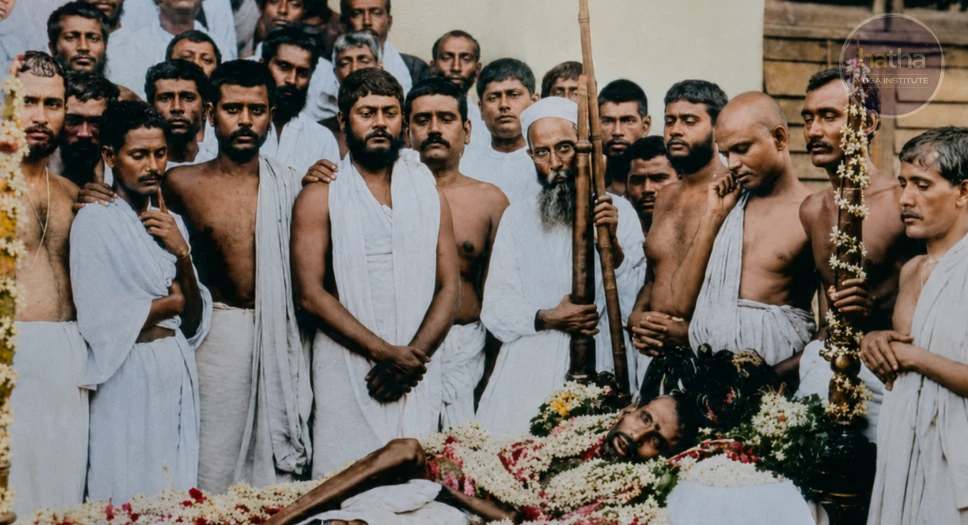
The intense spiritual energy Ramakrishna channeled eventually took a toll on his physical frame. He developed cancer of the throat in 1885. Despite being unable to eat solid food, he continued to speak to the hundreds of people who flocked to see him, saying, “Let the body suffer, but let the mind remain in bliss.”
In the small hours of 16 August 1886 Sri Ramakrishna gave up his physical body, uttering the name of the Divine Mother, and passed into eternity. His passing was not a tragedy but a “Mahasamadhi”—a conscious exit from the body into the infinite.
Legacy and Impact on Modern Thought
The legacy of Shri Ramakrishna is felt today through the Ramakrishna Math and Ramakrishna Mission. His teachings did not create a new sect; rather, they provided a way for people of all religions to deepen their own faith.
Key Contributions to World Spirituality:
- Scientific Validation of Religion: He approached spirituality with the rigor of a scientist, proving that spiritual truths are verifiable through practice.
- Harmonization of Religions: His life is the strongest argument against religious fundamentalism.
- Divinity of the Human Soul: He shifted the focus from a “God in the clouds” to the “God within the heart.”
- Social Service (Seva): His teaching “Service to man is service to God” became the blueprint for modern Hindu social reform.
Sri Ramakrishna remains a beacon of light in a fragmented world, reminding humanity that the goal of life is God-realization and that the paths to that goal are as varied as the seekers themselves. His life was his message, and his message is the eternal truth of Unity in Diversity.