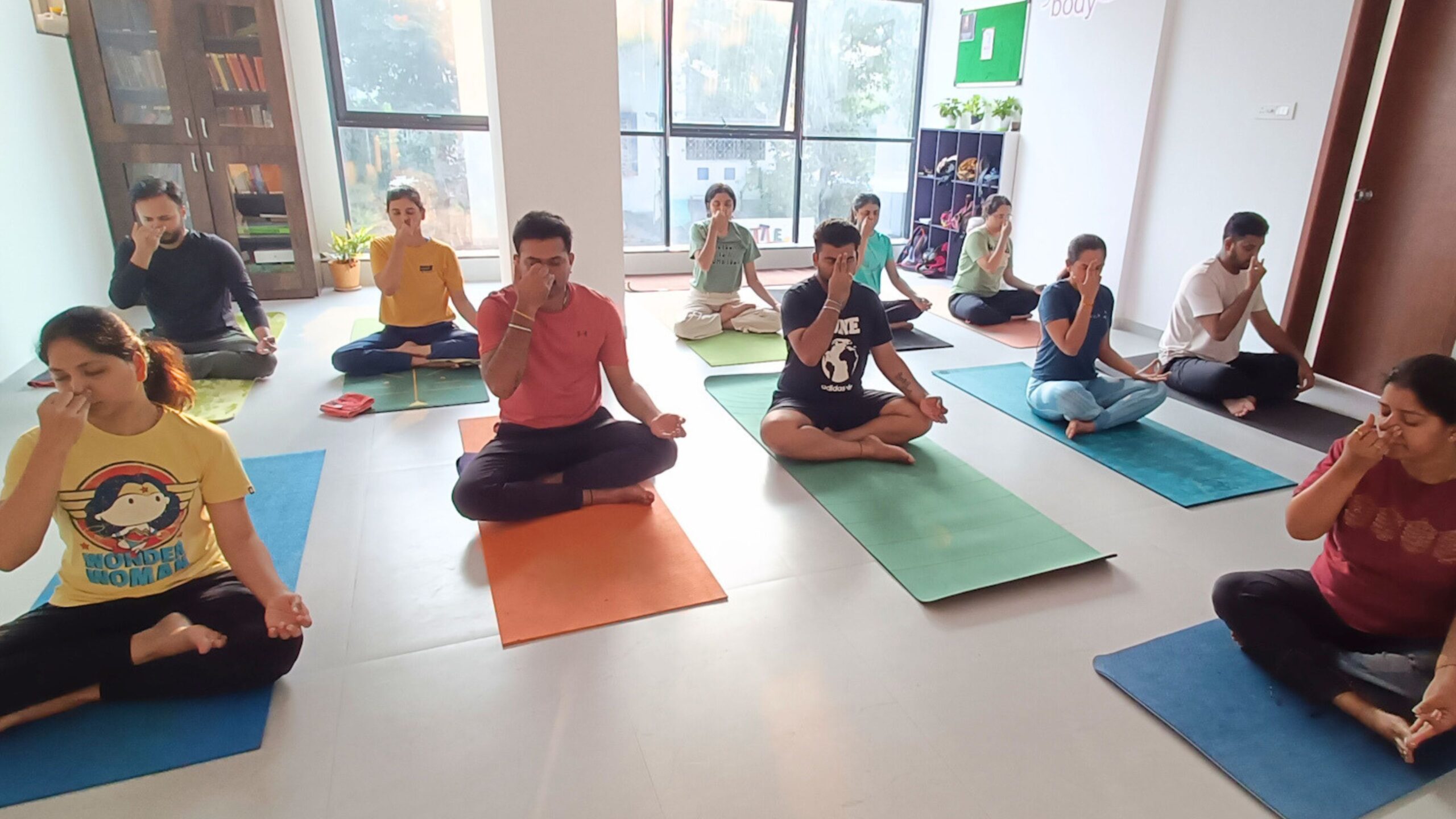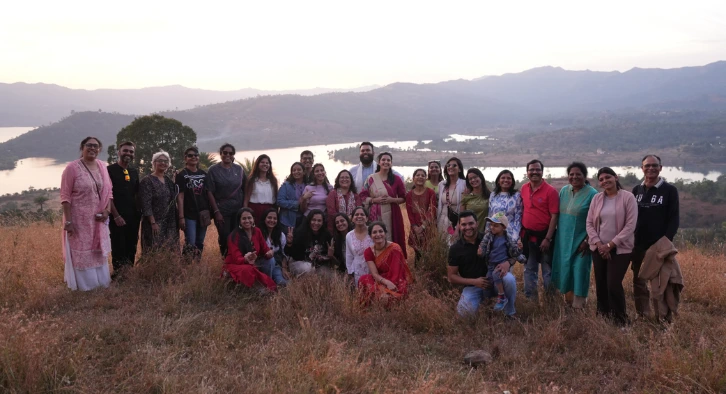
Hosting your own yoga retreat is like a coming-of-age event for many instructors. It is the point where you go beyond teaching the standard hour-long class and give your students an all-encompassing, transcendent experience. Nevertheless, becoming a “leader” requires a mindset change from being merely an instructor who guides classes to being a businessman or woman who ensures everything runs smoothly.
The idea is always a blissful week filled with sun-drenched asanas and meditation sessions. The reality may prove to be a mess, making you feel worn out and broke, if not handled properly. To guarantee that your inaugural yoga and wellness retreat is profitable for you as well as spiritually uplifting for your attendees, you require a game plan.
1. Define Your Unique Value Proposition
Before booking a venue, you must identify the “Why.” With thousands of yoga meditation retreats happening globally, your offering needs a clear focus.
Are you focusing on deep restorative practices? Is it a high-energy health and wellness retreat involving hiking and detoxing? Or perhaps a silent yoga and meditation retreat centered on Vipassana? Defining your niche helps you target the right audience and justifies your pricing.
The Indian Competitive Landscape
In India, the “Source of Yoga,” you aren’t just competing with other teachers; you are competing with historic ashrams in Rishikesh and world-class luxury wellness centers in the Himalayas. To be profitable, your Unique Value Proposition (UVP) must offer something these large institutions cannot: Intimacy and Personal Access.
A large ashram might have 50 students in a hall. Your retreat’s value lies in the fact that you are limiting it to 10–12 people, offering personalized posture corrections, and providing a curated “home-away-from-home” feel. Whether it’s a “Yoga for PCOS” retreat in the Kerala backwaters or a “Corporate Burnout Reset” in the hills of Coorg, your niche is what allows you to charge a premium price.
2. Choosing the Right Yoga Center Retreat
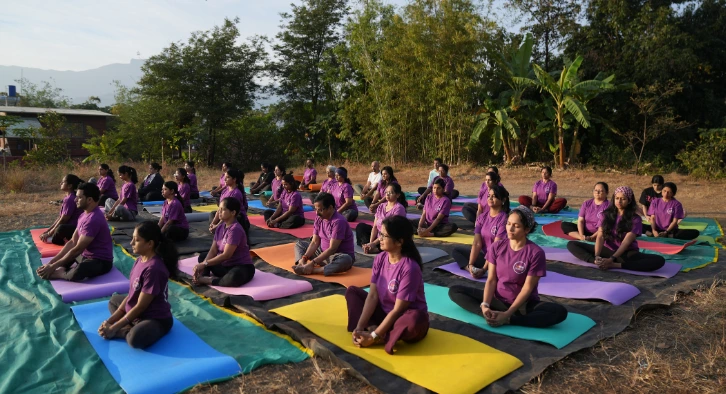
The venue is your biggest expense and your most significant marketing asset. When searching for a yoga center retreat, look beyond the aesthetic.
- Accessibility: Is it near a major airport? If the “hidden gem” requires three bus transfers and a boat, your enrollment might suffer.
- Amenities: Does it provide mats, props, and a dedicated shala?
- Food: For a successful yoga and wellness retreat, the menu is as important as the meditation. Ensure the venue can cater to vegan, gluten-free, or sattvic diets.
Regional Considerations in India
When scouting a venue in India, the “Last Mile” is your biggest hurdle.
- The Noise Factor: India is vibrant, but vibrancy often means noise. Ensure your venue isn’t sharing a wall with a construction site or a temple that uses loudspeakers during festival months.
- Power and Connectivity: In remote parts of Himachal or Goa, power cuts are common. Ensure your venue has a robust generator backup. If your retreat targets “Digital Nomads,” high-speed Wi-Fi is a necessity; if it’s a “Digital Detox,” the lack of Wi-Fi becomes a selling point.
- Local Transport: Don’t let your guests navigate Indian traffic alone. Include “Group Airport Pickups” in your pricing. It reduces guest anxiety and ensures everyone arrives on time for the opening circle.
3. The Financial Blueprint: Pricing for Profit
This is where many first-time hosts falter. To host a profitable retreat, you must account for every “hidden” cost. A simple formula to follow is:
- Fixed Costs: Venue hire, your travel, marketing/ads, and guest teacher fees.
- Variable Costs: Food per head, welcome bags, and excursions.
- Your Buffer: Always add 10–15% for unexpected costs (last-minute cancellations or price hikes).
- Your Profit: Determine what your time and expertise are worth.
Pro Tip: Use “Early Bird” pricing. This generates the initial cash flow needed to pay venue deposits without dipping into your personal savings.
Navigating Indian Taxes (GST) and Payment Gateways
Financial planning in India requires a technical eye on the following:
- GST Impact: Services like yoga retreats often fall under the 18% GST bracket. If you aren’t careful, you might quote a price only to realize later that you owe the government nearly one-fifth of your revenue. Always specify if your price is “Inclusive of Taxes.”
- Payment Fees: If you use Razorpay, Instamojo, or PayPal, they will take 2% to 4% as a transaction fee. Factor this into your “Variable Costs.”
- The “Solo Supplement”: In India, many boutique resorts charge significantly more for single occupancy. Be transparent about “Twin-Sharing” vs. “Private Room” pricing to avoid losing money on solo travelers who refuse to share.
4. Crafting a Balanced Itinerary
A common mistake is over-scheduling. While guests are paying for a yoga meditation retreat, they are also paying for a vacation.
A successful structure usually follows a “Peak and Valley” rhythm:
- Morning: Energizing flow or Pranayama.
- Mid-day: Workshops, free time, or spa treatments.
- Evening: Gentle Yin, Yoga Nidra, or group circles.
By offering a comprehensive health and wellness retreat experience, you provide value that justifies a premium price point, ensuring that guests feel they received more than just “gym yoga.”
Incorporating Indian Heritage
A retreat in India feels incomplete without local cultural integration. Instead of just “free time,” offer:
- Svadhyaya (Self-Study) Hours: Provide prompts for journaling.
- Local Excursions: A silent walk through a tea plantation or attending a local temple ceremony.
- Guest Experts: Bring in a local Ayurvedic doctor for a 1-hour lecture. This increases the “intellectual value” of your retreat and justifies a higher price point.
5. Marketing and Enrollment
Don’t wait for the retreat to be “perfect” before you start selling. Start marketing at least six months in advance.
- Email Marketing: Your existing students are your warmest leads.
- Social Proof: Share behind-the-scenes footage of the venue or snippets of the workshops you’ll be hosting.
- Keywords: Ensure your website uses terms like yoga retreat and yoga and meditation retreat to capture organic search traffic from people looking for their next escape.
The WhatsApp and Instagram Funnel in India
India is a mobile-first market. Your marketing should reflect this:
- WhatsApp Broadcasts: Build a “Waitlist” group. Share exclusive “Early Bird” discounts there first.
- Collaborations: Partner with local Indian fitness or wellness influencers. A single “Collab” reel showing the venue can drive more bookings than a month of paid ads.
- Video Content: People book retreats based on the “Vibe.” Post videos of the shala, the food, and your teaching style. Let them see the face of the person they are trusting their holiday with.
6. The Legal Safety Net (The "Yama" of Business)
One of the most overlooked aspects of yoga retreat planning is the legal structure. In India, consumer protection is taken seriously, and you must protect your business.
Liability Waivers
Never start a retreat without a signed Liability Waiver. In an Indian context, this must cover:
- Physical Health: Acknowledging that the student is fit for the activities.
- Travel Risks: If you are traveling through hilly terrain or using local transport.
- Food Allergies: Especially important if you are serving traditional Indian meals that might contain hidden allergens like nuts or dairy (ghee).
Insurance
Ensure your professional insurance covers you for “Off-Site” teaching. Most studio-based policies in India are location-specific. You need a “Freelance” or “Retreat-Specific” policy that covers you in any part of the country.
7. Curating the On-Site Experience: The "Wow" Factor
Profitability isn’t just about the money you keep; it’s about the students who return. To ensure repeat business, you need to curate the “Little Things.”
The Welcome Kit
In India, “Athithi Devo Bhava” (The Guest is God) is a cultural pillar. Reflect this in your welcome bags:
- A copper water bottle or a hand-poured local candle.
- A high-quality journal with an Indian block-print cover.
- A small bottle of Ayurvedic “Nasya” oil or “Brahmi” tea. These gifts create an immediate emotional connection and perceived high value.
8. Managing Group Dynamics: Facilitation Skills
When people are away from home, doing deep spiritual work, emotions come to the surface. You are the “Anchor” of the group.
Handling Conflict and Sensitivity
- The Opening Circle: Establish the rules of the space. No phones in the shala, respect for silence, and confidentiality.
- Dealing with the “High-Maintenance” Guest: Have a private conversation if someone is disrupting the group energy. Your duty is to the collective experience.
- Solo Travelers: A huge percentage of Indian retreat-goers are solo women. Ensure your transport and venue are vetted for safety to make them feel secure.
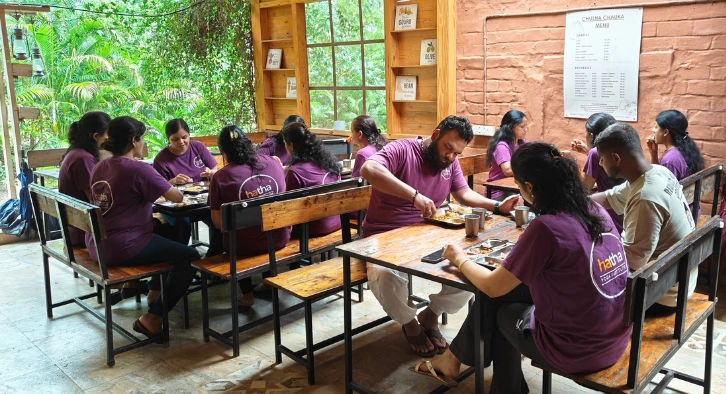
9. Food as Medicine: The Sattvic Experience
In India, the expectations for food are very high. A “Bland” menu will result in poor reviews.
Planning with the Chef
- Seasonal & Local: Use fruits and vegetables that are in season in that specific part of India.
- The “Clean” Cheat Meal: On the final night, offer a more elaborate local Thali that feels celebratory but remains healthy.
Hydration: Provide herbal teas (Ginger, Tulsi, Fennel) throughout the day to help guests cope with the Indian climate.
10. Scaling Your Business: From One to Many
Once your first retreat is a success, you have a blueprint. Now, you need to make it a recurring revenue stream.
The Alumni Program
The cheapest customer to get is the one you already have.
- Priority Booking: Give past guests 48 hours to book your next retreat before you announce it on social media.
- Referral Bonus: Offer a ₹5,000 discount to any alumni who brings a friend.
11. Sustainable Logistics: The Eco-Friendly Retreat
Modern wellness travelers, especially in India’s urban centers, are highly conscious of sustainability.
- Zero Plastic: Eliminate single-use plastic bottles.
- Local Artisans: Hire local musicians for a Kirtan night rather than playing a Spotify playlist.
- Karma Yoga: Consider donating a small portion of your profit to a local NGO in the retreat’s location. This builds “Brand Soul” and resonates deeply with your students.
12. Conclusion: The Path to Success
Profitable retreats aren’t built on luck; they are built on organization. By treating your retreat as a professional business venture while maintaining the heart of a teacher, you create an environment where healing and habit-building can actually happen.
Planning your first retreat in India is a journey of 1,000 details, but the rewards are unparalleled. You are moving from being a teacher to being a visionary. By balancing the “Logic” (GST, contracts, transport) with the “Magic” (meditation, nature, community), you create a profitable business that fuels your soul and changes the lives of your students.
13. Digital Infrastructure: Automating the Admin
To scale your retreat business without burning out, you must treat your digital infrastructure as a silent business partner. Many first-time hosts spend hours manually replying to “What is the price?” on WhatsApp. Instead, use an automated booking system. Tools like Momence, BookRetreats, or even a well-integrated Shopify store allow you to collect payments, send automated confirmation emails, and track your inventory (room availability) in real-time.
For an Indian audience, integrating UPI (Unified Payments Interface) is non-negotiable. Ensure your website or payment link supports GPay, PhonePe, and Paytm to reduce “friction at the checkout.” Furthermore, use a CRM (Customer Relationship Management) tool to segment your audience. You should be able to separate those who have “expressed interest” from those who have “paid a deposit.” By sending automated, personalized reminders to the “interested” group about the approaching Early Bird deadline, you can increase your conversion rate by 30% without sending a single manual text. Digital organization equals mental peace for you as the leader.
14. Crisis Management and Cultural Nuance
No retreat goes exactly as planned, and in India, flexibility is a survival skill. A successful host has a “Plan B” for everything from monsoon delays to sudden gastrointestinal issues among guests. Always carry a comprehensive first-aid kit and have a local doctor’s contact on speed dial. Moreover, understand the cultural nuances of the region where you are hosting. If you are in a small village in Uttarakhand or a temple town in Tamil Nadu, advise your guests on appropriate attire to ensure they remain respectful of local traditions.
This cultural bridge-building is part of your value. If you protect your guests from “culture shock” and navigate the local intricacies for them, they feel a deep sense of safety and gratitude. This emotional safety is what leads to those “life-changing breakthroughs” that yoga retreats are famous for. When your guests see you handling a logistical hiccup (like a late bus or a power cut) with yogic equanimity, you are teaching them yoga through action, not just through instruction. That is the hallmark of a true leader.
Final Checklist for Your First Retreat:
- Financials: Have you included a 15% buffer and GST?
- Logistics: Is the venue within 3 hours of an airport?
- Marketing: Is your WhatsApp “Waitlist” group active?
- Legal: Is your liability waiver signed by every participant?
- Experience: Does your itinerary have enough “White Space” for integration?
Experience Authentic Hatha Yoga
If you are looking for a foundation to deepen your practice or seeking a space that honors the traditional roots of yoga, look no further than the Hatha Yoga Institute.
Dedicated to the authentic teachings of Hatha Yoga, the institute offers a sanctuary for those looking to master their physical and mental well-being. Whether you are a student looking for a transformative yoga and wellness retreat or a practitioner seeking clarity through traditional methods, Hatha Yoga Institute provides the expert guidance and serene environment necessary for true growth.